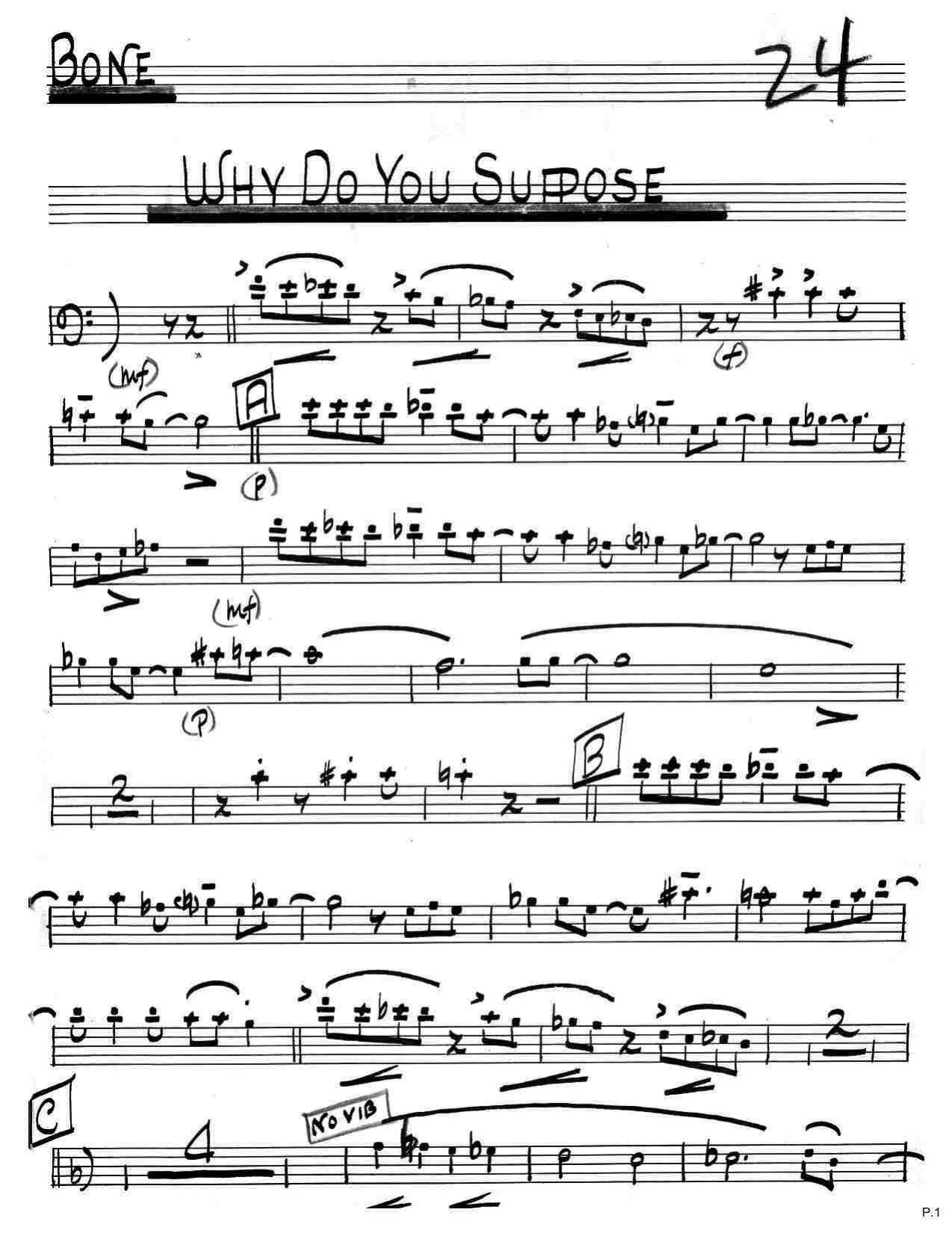
Why Do You Suppose - M. Paich - Dave Pell Octet - Ts,Bs,Trp,Trb+Rhythm (comp. Marty Paich)
Composed by Marty Paich
- Ensemble: Small Ensemble
- Pages: 23
- Instruments (8): Trombone, Trumpet, Baritone Saxophone, Tenor Saxophone, Piano, Guitar, Drums, Bass
- Difficulty: easy
- Content: Individual Parts
- Format: PDF Download (Instant)
- Price: $12.99
"Why Do You Suppose," a lesser-known gem from the prolific pen of West Coast jazz architect Marty Paich, embodies the sophisticated, cool-toned aesthetic that defined the Dave Pell Octet's sound. Composed in the mid-1950s, this piece is a quintessential example of the era's meticulously crafted small-group jazz, characterized by its intricate voicings, understated swing, and melodic clarity. While not a mainstream standard, its inclusion in the Dave Pell Octet's repertoire solidified its place as a cornerstone of West Coast cool, appealing to musicians and aficionados who appreciate thoughtful arrangements and nuanced interplay over overt virtuosity. The original recording, featuring Pell's distinctive tenor saxophone alongside a carefully selected brass and rhythm section, showcases a refined approach to ensemble playing that prioritizes blend, balance, and harmonic richness. This arrangement, meticulously transcribed from the Dave Pell Octet's definitive recording, captures the original's medium-swing feel and sophisticated charm. Set in a comfortable key, likely F or Bb major, it projects a cool, confident mood without ever becoming overtly aggressive. The energy is consistent and flowing, driven by a relaxed, yet propulsive rhythm section. The arranger's approach, though unknown by name, is unmistakably in the vein of Marty Paich himself or a close collaborator, demonstrating an expert command of four-part horn voicings (Tenor Sax, Baritone Sax, Trumpet, Trombone) that are both harmonically rich and surprisingly transparent. Expect tightly knit soli sections that weave intricate counter-melodies, often featuring close-position harmonies that create a signature "cool" sound, distinct from the more open voicings of big band writing. There are no dramatic modulations or extended shout choruses; instead, the focus remains on elegant ensemble work and concise, melodic improvisations. The melody is primarily carried by the full horn section in unison or octaves, often with subtle harmonic fills from the remaining instruments, creating a cohesive and polished sound. Featured solos are typically allocated to the tenor saxophone and trumpet, offering opportunities for melodic improvisation within the West Coast tradition – thoughtful, lyrical, and harmonically aware. Technical challenges lie not in extreme ranges or blistering tempos, but in achieving the precise articulation, blend, and dynamic control required for the ensemble passages. The rewarding aspect of performing this piece comes from mastering its subtle nuances and contributing to a collective sound that is both elegant and deeply swinging. This arrangement is ideally suited for college-level jazz ensembles, advanced community bands, or professional small groups seeking to explore the sophisticated intricacies of West Coast cool jazz. Its emphasis on ensemble precision and harmonic understanding makes it an excellent vehicle for developing musicianship beyond mere technical prowess. Achieving the authentic Dave Pell Octet sound for "Why Do You Suppose" hinges on precision and a relaxed, medium-swing feel. The tempo should be consistently maintained, avoiding any tendency to rush or drag, typically falling between 120-130 BPM. Conductors should emphasize a light, articulate approach to the horn lines, ensuring that the intricate voicings are clear and balanced. The rhythm section needs to establish a solid, unhurried groove; the bass line should be walking smoothly, and the drums should provide subtle propulsion without overpowering the horns. Pay close attention to dynamic contrasts, which are often understated but crucial for shaping phrases. Rehearsal time should focus on tuning the close-position horn voicings, ensuring clean entrances and releases, and developing a cohesive ensemble blend. Solos should be encouraged to be melodic and harmonically informed, reflecting the West Coast aesthetic. Q: What specific instruments are required for this arrangement? A: This arrangement is scored for a 7-instrument small ensemble, including Tenor Saxophone, Baritone Saxophone, Trumpet, Trombone, Piano, Bass, and Drums. Q: What is the difficulty level of this arrangement? A: This arrangement is rated as Medium-Advanced. It requires solid instrumental technique, strong sight-reading skills, and a developed understanding of jazz articulation and ensemble playing. Q: What musical style and historical period does "Why Do You Suppose" represent? A: This piece is a classic example of West Coast Cool Jazz from the mid-1950s, embodying the sophisticated, harmonically rich, and understated swing characteristic of the Dave Pell Octet. Q: What makes this specific arrangement unique or noteworthy? A: This arrangement is a meticulous transcription of the original Dave Pell Octet recording, offering an authentic representation of Marty Paich's sophisticated small-group voicings and the distinctive cool jazz sound of the era. Q: What is the typical performance duration and tempo for this piece? A: The typical performance duration for this arrangement is approximately 3-4 minutes, maintaining a consistent medium-swing tempo of around 120-130 beats per minute.
Questions and answers
- What is included in the Why Do You Suppose - M. Paich - Dave Pell Octet - Ts,Bs,Trp,Trb+Rhythm (comp. Marty Paich) PDF?
- The verified current file contains individual parts across 23 pages.
- How many instruments or parts are listed for Why Do You Suppose - M. Paich - Dave Pell Octet - Ts,Bs,Trp,Trb+Rhythm (comp. Marty Paich)?
- The verified instrumentation list contains 8 entries for this Small Ensemble arrangement.
- Who is credited for Why Do You Suppose - M. Paich - Dave Pell Octet - Ts,Bs,Trp,Trb+Rhythm (comp. Marty Paich)?
- Composer: Marty Paich.
- What difficulty is listed for Why Do You Suppose - M. Paich - Dave Pell Octet - Ts,Bs,Trp,Trb+Rhythm (comp. Marty Paich)?
- The verified difficulty level is easy.
- Can I preview Why Do You Suppose - M. Paich - Dave Pell Octet - Ts,Bs,Trp,Trb+Rhythm (comp. Marty Paich) before buying?
- Yes. The product page provides a preview generated from the current PDF file.
- How is Why Do You Suppose - M. Paich - Dave Pell Octet - Ts,Bs,Trp,Trb+Rhythm (comp. Marty Paich) delivered?
- After successful payment, the digital PDF is made available for download. The displayed price is $12.99.
Musicians Also Search For
Why Do You Suppose - M. Paich - Dave Pell Octet - Ts,Bs,Trp,Trb+Rhythm Marty Paich sheet music • Why Do You Suppose - M. Paich - Dave Pell Octet - Ts,Bs,Trp,Trb+Rhythm Marty Paich small ensemble arrangements • Marty Paich small ensemble charts • Why Do You Suppose - M. Paich - Dave Pell Octet - Ts,Bs,Trp,Trb+Rhythm small ensemble arrangements • Why Do You Suppose - M. Paich - Dave Pell Octet - Ts,Bs,Trp,Trb+Rhythm small ensemble PDF download • Why Do You Suppose - M. Paich - Dave Pell Octet - Ts,Bs,Trp,Trb+Rhythm jazz sheet music • small ensemble sheet music download • Why Do You Suppose - M. Paich - Dave Pell Octet - Ts,Bs,Trp,Trb+Rhythm individual parts download • Why Do You Suppose - M. Paich - Dave Pell Octet - Ts,Bs,Trp,Trb+Rhythm sheet music PDF • buy Why Do You Suppose - M. Paich - Dave Pell Octet - Ts,Bs,Trp,Trb+Rhythm sheet music • download Why Do You Suppose - M. Paich - Dave Pell Octet - Ts,Bs,Trp,Trb+Rhythm PDF • Why Do You Suppose - M. Paich - Dave Pell Octet - Ts,Bs,Trp,Trb+Rhythm jazz charts • Why Do You Suppose - M. Paich - Dave Pell Octet - Ts,Bs,Trp,Trb+Rhythm printable sheet music • small ensemble repertoire PDF