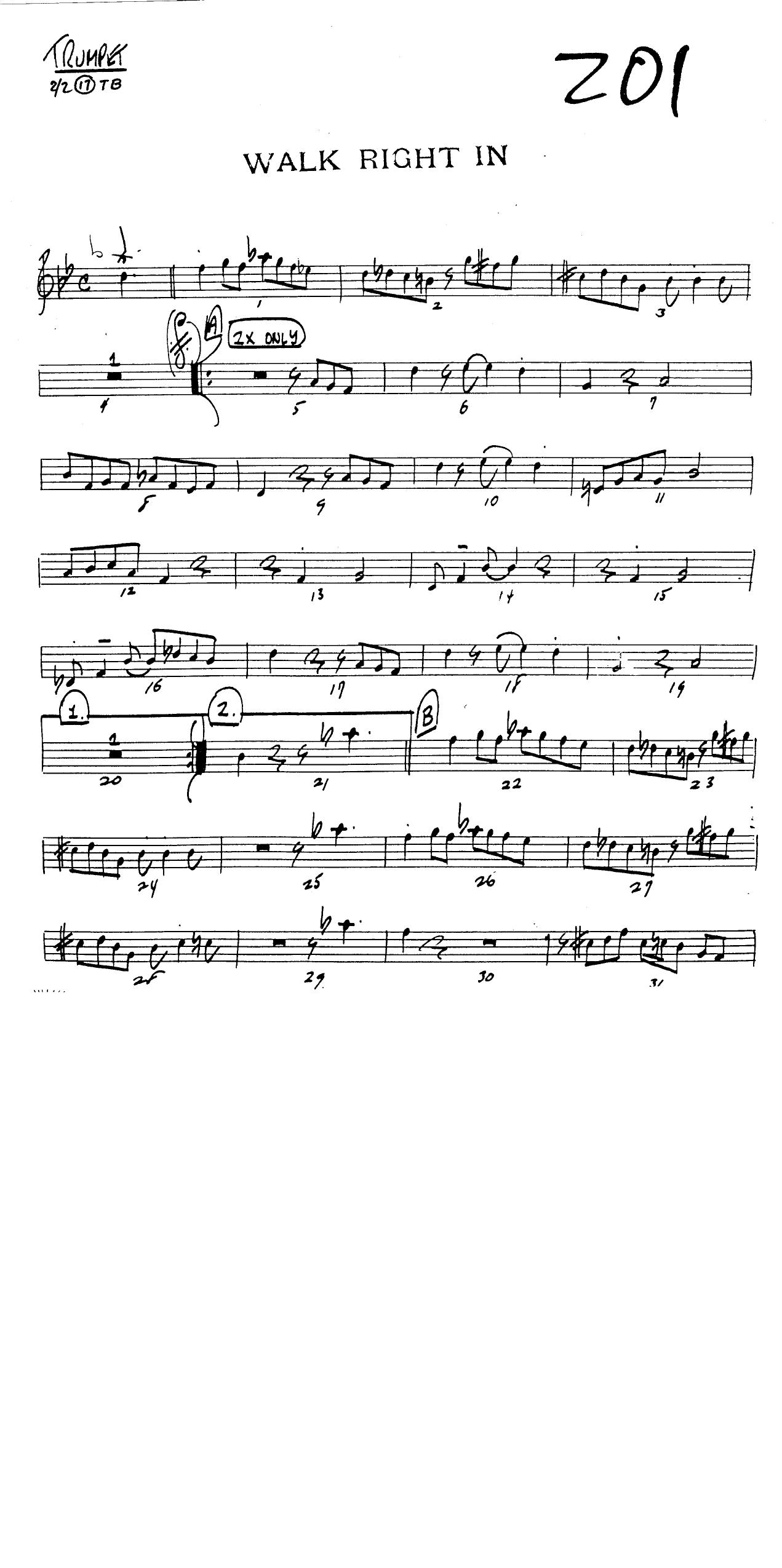
Walk Right In - M. Paich - Dave Pell Octet - Ts,Bs,Trp,Trb+Rhythm (Marty Paich)
Composed by Marty Paich
- Ensemble: Small Ensemble
- Pages: 17
- Instruments (8): Trumpet, Trombone, Tenor Saxophone, Baritone Saxophone, Piano, Guitar, Bass, Drums
- Difficulty: easy
- Content: Individual Parts
- Format: PDF Download (Instant)
- Price: $12.99
Marty Paich's "Walk Right In," originally conceived for the iconic Dave Pell Octet, stands as a quintessential example of West Coast Cool Jazz from the mid-1950s. This era, characterized by its intricate arrangements, sophisticated counterpoint, and often understated yet swinging feel, found its voice in ensembles like Pell's, where Paich's compositional and arranging genius truly shone. While the original recording is a cornerstone of the West Coast sound, this particular arrangement captures the essence of Paich's distinctive style, known for its meticulously crafted voicings and elegant melodic lines. It embodies the cool, laid-back yet intellectually stimulating atmosphere prevalent in Los Angeles jazz during this period, offering a refreshing alternative to the more frenetic bebop emerging from the East Coast. Musically, this arrangement of "Walk Right In" settles into a comfortable medium-swing tempo, typically around 130-140 BPM, in a bright, inviting key (likely F or Bb Major, characteristic of the era for its brass and sax readability). The mood is one of sophisticated buoyancy, a relaxed confidence that belies the underlying complexity of the writing. Expect a light, airy texture, with a strong emphasis on melodic clarity and precise ensemble playing. The energy is consistent and engaging, driven by a walking bass line and a ride cymbal pattern that propels the piece forward without ever feeling rushed. This piece evokes a sense of effortless cool and musical intelligence, perfect for a band looking to explore the nuanced artistry of small-group jazz. The arranger, though unknown, has clearly absorbed Marty Paich's signature techniques. The voicings for the saxophone and brass frontline (Tenor Sax, Baritone Sax, Trumpet, Trombone) are a highlight, often employing close harmony and intricate counter-melodies that weave together seamlessly. Expect frequent call-and-response passages between the brass and saxes, and perhaps a tightly voiced soli section that showcases the ensemble's blend and precision. The melody is typically carried by a lead horn, often the trumpet or tenor sax, with other instruments providing rich harmonic support and rhythmic punctuation. There are likely designated solo sections, offering opportunities for improvisation over the sophisticated chord changes, true to the jazz tradition. The challenges lie in maintaining the precise articulation and balance required for these intricate voicings, as well as navigating the subtle rhythmic nuances of the medium-swing feel. This arrangement is ideally suited for college-level jazz ensembles, advanced community bands, or semi-professional groups looking to delve into the rich repertoire of West Coast Jazz. Its demands on blend, intonation, and rhythmic accuracy make it an excellent training tool for developing ensemble cohesion. The rewarding aspect comes from successfully executing the elegant interplay between the horns and rhythm section, bringing to life the sophisticated charm and understated swing that defines Marty Paich's enduring legacy. The detailed part writing and clear structure make it a valuable addition to any small ensemble's library, offering both a challenge and a deeply satisfying performance experience. To achieve the authentic West Coast Cool sound for "Walk Right In," prioritize a relaxed, yet precise medium-swing feel, aiming for a tempo around 130-140 BPM. The rhythm section should lay down a steady, unhurried groove, with the bass providing a consistent walking line and the drums emphasizing the ride cymbal for propulsion. Articulation is key: horns should strive for a light, detached sound on eighth notes, avoiding overly aggressive attacks. Pay close attention to dynamics, as Paich's arrangements often feature subtle shifts that enhance the melodic contours. Rehearsal time should focus on balancing the intricate horn voicings, ensuring each voice is heard clearly without overpowering the others, especially during soli sections. Intonation within the close harmony voicings is paramount. Encourage soloists to embrace the melodic and harmonic sophistication of the piece, favoring lyrical lines over purely technical displays. Q: What instruments are included in this arrangement? A: This arrangement is scored for a small ensemble featuring Tenor Saxophone, Baritone Saxophone, Trumpet, Trombone, Piano, Bass, and Drums, totaling seven instruments. Q: What is the difficulty level of this arrangement? A: This arrangement is considered advanced intermediate to advanced, suitable for college-level jazz ensembles, experienced community bands, or semi-professional groups due to its intricate voicings, precise articulation demands, and sophisticated harmonic language. Q: What musical style and historical context does "Walk Right In" represent? A: "Walk Right In" is a prime example of West Coast Cool Jazz from the mid-1950s, characterized by its sophisticated arrangements, intricate counterpoint, and a relaxed, understated swing feel, originally popularized by the Dave Pell Octet. Q: What makes this arrangement unique or distinctive? A: This arrangement captures Marty Paich's signature style, known for its meticulously crafted, often close-voiced horn sections, elegant melodic lines, and sophisticated harmonic progressions, creating a refined and intellectually engaging sound. Q: What is the typical performance duration and tempo for this piece? A: While variable with solos, a typical performance duration is around 4-6 minutes. The piece should be performed at a comfortable medium-swing tempo, generally in the range of 130-140 beats per minute.
Questions and answers
- What is included in the Walk Right In - M. Paich - Dave Pell Octet - Ts,Bs,Trp,Trb+Rhythm (Marty Paich) PDF?
- The verified current file contains individual parts across 17 pages.
- How many instruments or parts are listed for Walk Right In - M. Paich - Dave Pell Octet - Ts,Bs,Trp,Trb+Rhythm (Marty Paich)?
- The verified instrumentation list contains 8 entries for this Small Ensemble arrangement.
- Who is credited for Walk Right In - M. Paich - Dave Pell Octet - Ts,Bs,Trp,Trb+Rhythm (Marty Paich)?
- Composer: Marty Paich.
- What difficulty is listed for Walk Right In - M. Paich - Dave Pell Octet - Ts,Bs,Trp,Trb+Rhythm (Marty Paich)?
- The verified difficulty level is easy.
- Can I preview Walk Right In - M. Paich - Dave Pell Octet - Ts,Bs,Trp,Trb+Rhythm (Marty Paich) before buying?
- Yes. The product page provides a preview generated from the current PDF file.
- How is Walk Right In - M. Paich - Dave Pell Octet - Ts,Bs,Trp,Trb+Rhythm (Marty Paich) delivered?
- After successful payment, the digital PDF is made available for download. The displayed price is $12.99.
Musicians Also Search For
Walk Right In - M. Paich - Dave Pell Octet - Ts,Bs,Trp,Trb+Rhythm Marty Paich sheet music • Walk Right In - M. Paich - Dave Pell Octet - Ts,Bs,Trp,Trb+Rhythm Marty Paich small ensemble arrangements • Marty Paich small ensemble charts • Walk Right In - M. Paich - Dave Pell Octet - Ts,Bs,Trp,Trb+Rhythm small ensemble arrangements • Walk Right In - M. Paich - Dave Pell Octet - Ts,Bs,Trp,Trb+Rhythm small ensemble PDF download • Walk Right In - M. Paich - Dave Pell Octet - Ts,Bs,Trp,Trb+Rhythm jazz sheet music • small ensemble sheet music download • Walk Right In - M. Paich - Dave Pell Octet - Ts,Bs,Trp,Trb+Rhythm individual parts download • Walk Right In - M. Paich - Dave Pell Octet - Ts,Bs,Trp,Trb+Rhythm sheet music PDF • buy Walk Right In - M. Paich - Dave Pell Octet - Ts,Bs,Trp,Trb+Rhythm sheet music • download Walk Right In - M. Paich - Dave Pell Octet - Ts,Bs,Trp,Trb+Rhythm PDF • Walk Right In - M. Paich - Dave Pell Octet - Ts,Bs,Trp,Trb+Rhythm jazz charts • Walk Right In - M. Paich - Dave Pell Octet - Ts,Bs,Trp,Trb+Rhythm printable sheet music • small ensemble repertoire PDF