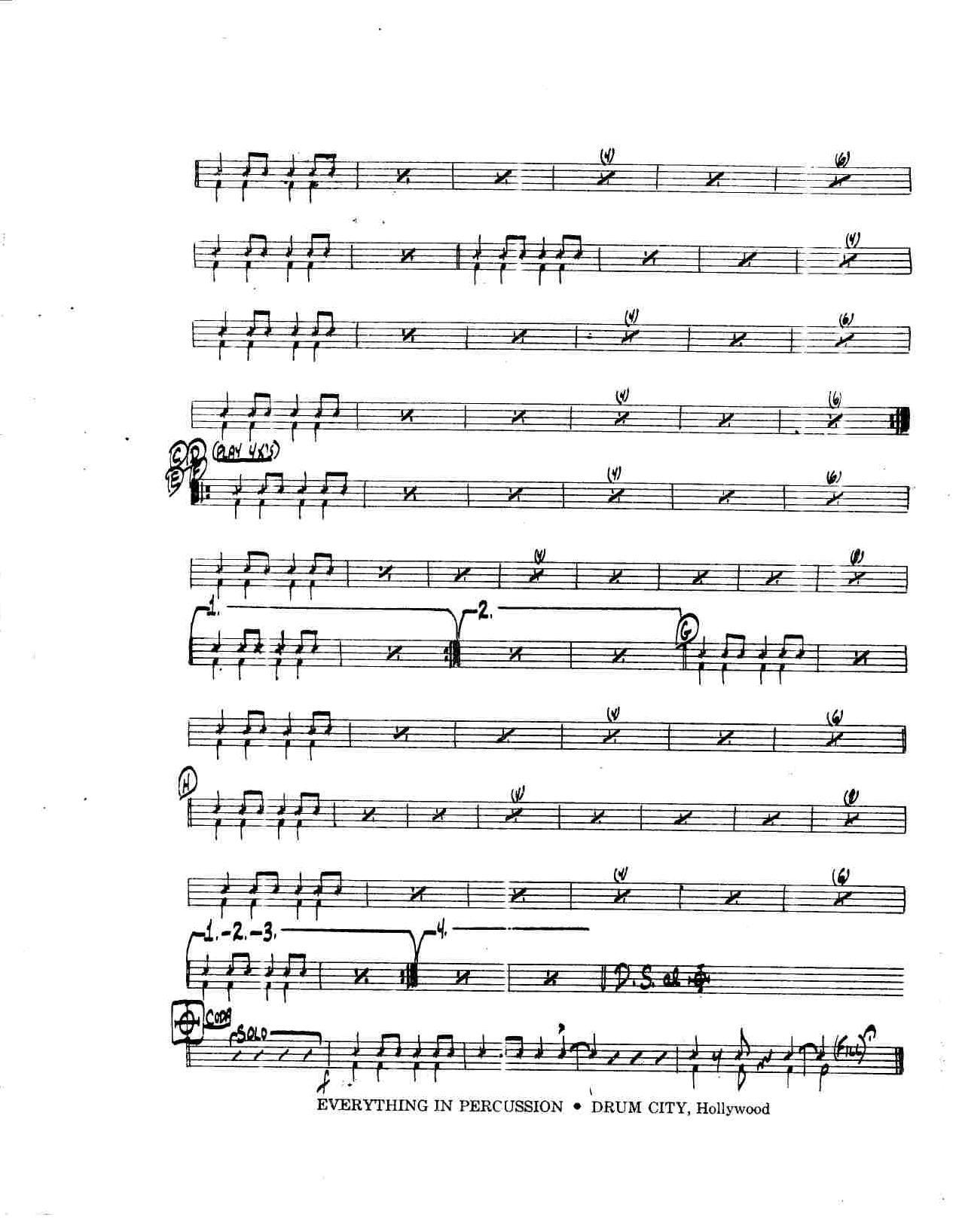
Grey Flannel - Paich - Dave Pell Octet - Ts,Bs,Trp,Trb+Rhythm
Composed by Marty Paich
- Ensemble: Small Ensemble
- Pages: 18
- Instruments (8): Tenor Saxophone, Baritone Saxophone, Trombone, Piano, Guitar, Bass, Drums, Trumpet
- Difficulty: easy
- Content: Individual Parts
- Format: PDF Download (Instant)
- Price: $12.99
Marty Paich's "Grey Flannel" stands as a quintessential example of West Coast Cool Jazz, a style that emerged in the 1950s, characterized by its sophisticated arrangements, intricate counterpoint, and often understated, laid-back delivery. Originally composed and recorded by Paich, a prolific arranger whose work with artists like Mel Tormé, Art Pepper, and Ella Fitzgerald defined an era, "Grey Flannel" gained particular prominence through the Dave Pell Octet. Pell's ensemble, known for its meticulously crafted, chamber-jazz sound, perfectly embodied the intellectual and often introspective character of West Coast jazz. This piece, with its clever melodic lines and harmonic richness, reflects the era's move towards more structured and less improvisational ensemble playing compared to its East Coast counterparts, solidifying its place as a notable, if not widely known, standard within this specific subgenre. This arrangement of "Grey Flannel" captures the medium-slow swing feel that is a hallmark of the original Dave Pell Octet recording. The mood is one of sophisticated coolness and understated elegance, evoking the smoky, intimate atmosphere of a 1950s jazz club. The primary key, likely C minor or a related mode, lends itself to a slightly melancholic yet undeniably groovy energy. The arrangement immediately establishes this character with the melody initially presented by the tenor saxophone, often doubled or harmonized by the baritone saxophone, creating a rich, dark timbre. The trumpet and trombone provide counter-melodies and harmonic support, frequently engaging in tight, interwoven voicings that showcase the arranger's skill in balancing individual lines with a cohesive ensemble sound. While the original arranger for this specific chart is unknown, their approach clearly reveres the West Coast tradition. Expect meticulously crafted soli sections where the horns move in close harmony, demonstrating a keen understanding of Paich's original voicings. There are no abrupt modulations, but rather subtle harmonic shifts that keep the listener engaged without disrupting the smooth flow. Featured solo sections are typically allocated to the tenor saxophone and trumpet, providing opportunities for improvisation over the sophisticated chord changes. The performance challenge lies not in extreme technical demands, but in achieving the precise blend, balance, and rhythmic subtlety required for this style. Each instrumentalist must contribute to the overall texture, ensuring that the intricate lines are clear and the ensemble remains tight and cohesive, particularly in the delicate contrapuntal passages. Performing "Grey Flannel" is immensely rewarding for ensembles capable of embracing its nuanced character. The satisfaction comes from executing the intricate voicings with precision and capturing the cool, laid-back swing feel. The arrangement is ideally suited for college-level jazz ensembles, community big bands with strong sight-reading and intonation, or professional small groups seeking to explore the sophisticated repertoire of the West Coast sound. High school bands with advanced musicians and a dedicated director could also tackle this piece, provided they emphasize careful listening and stylistic authenticity. The detailed scoring and the emphasis on ensemble interplay make it an excellent vehicle for developing musicianship beyond just playing notes. To truly capture the essence of "Grey Flannel," prioritize a consistent medium-slow swing feel, around 100-110 BPM, avoiding any tendency to rush. The rhythmic precision in the ensemble passages is paramount; all eighth notes should be played with a relaxed, legato swing articulation, not too staccato. Intonation within the close voicings, particularly between the saxophones and brass, requires careful attention during rehearsal. Encourage musicians to listen across sections and blend their sounds seamlessly. Dynamic contrasts should be subtle but present, emphasizing the ebb and flow of the melodic lines rather than dramatic shifts. There are no specific extended techniques required, but a warm, focused tone from all instrumentalists will enhance the sophisticated character. Rehearsal time should focus on balancing the intricate counterpoint and ensuring soloists understand the harmonic language of the West Coast style. Q: What instruments are included in this arrangement of "Grey Flannel"? A: This arrangement is scored for a small ensemble of seven instruments: Tenor Saxophone, Baritone Saxophone, Trumpet, Trombone, Piano, Bass, and Drums. Q: What is the difficulty level of this arrangement? A: This arrangement is considered moderately challenging, best suited for college-level jazz ensembles, advanced community bands, or professional small groups. It requires strong sight-reading, good intonation, and an understanding of the West Coast Cool Jazz style. Q: What musical style and historical context does "Grey Flannel" represent? A: "Grey Flannel" is a classic example of West Coast Cool Jazz from the 1950s, originally composed by Marty Paich and popularized by the Dave Pell Octet. It features sophisticated arrangements, intricate voicings, and a laid-back, medium-slow swing feel. Q: What makes this specific arrangement unique or noteworthy? A: This arrangement faithfully captures the sophisticated voicings and medium-slow swing feel characteristic of the original Dave Pell Octet recording. It emphasizes ensemble precision, intricate counterpoint, and provides excellent opportunities for soloists within the West Coast jazz idiom. Q: What is the typical performance duration or tempo for this piece? A: The typical performance duration for "Grey Flannel" is approximately 3-4 minutes, played at a medium-slow swing tempo, generally around 100-110 beats per minute.
Questions and answers
- What is included in the Grey Flannel - Paich - Dave Pell Octet - Ts,Bs,Trp,Trb+Rhythm PDF?
- The verified current file contains individual parts across 18 pages.
- How many instruments or parts are listed for Grey Flannel - Paich - Dave Pell Octet - Ts,Bs,Trp,Trb+Rhythm?
- The verified instrumentation list contains 8 entries for this Small Ensemble arrangement.
- Who is credited for Grey Flannel - Paich - Dave Pell Octet - Ts,Bs,Trp,Trb+Rhythm?
- Composer: Marty Paich.
- What difficulty is listed for Grey Flannel - Paich - Dave Pell Octet - Ts,Bs,Trp,Trb+Rhythm?
- The verified difficulty level is easy.
- Can I preview Grey Flannel - Paich - Dave Pell Octet - Ts,Bs,Trp,Trb+Rhythm before buying?
- Yes. The product page provides a preview generated from the current PDF file.
- How is Grey Flannel - Paich - Dave Pell Octet - Ts,Bs,Trp,Trb+Rhythm delivered?
- After successful payment, the digital PDF is made available for download. The displayed price is $12.99.
Musicians Also Search For
Grey Flannel - Paich - Dave Pell Octet - Ts,Bs,Trp,Trb+Rhythm Marty Paich sheet music • Grey Flannel - Paich - Dave Pell Octet - Ts,Bs,Trp,Trb+Rhythm Marty Paich small ensemble arrangements • Marty Paich small ensemble charts • Grey Flannel - Paich - Dave Pell Octet - Ts,Bs,Trp,Trb+Rhythm small ensemble arrangements • Grey Flannel - Paich - Dave Pell Octet - Ts,Bs,Trp,Trb+Rhythm small ensemble PDF download • Grey Flannel - Paich - Dave Pell Octet - Ts,Bs,Trp,Trb+Rhythm jazz sheet music • small ensemble sheet music download • Grey Flannel - Paich - Dave Pell Octet - Ts,Bs,Trp,Trb+Rhythm individual parts download • Grey Flannel - Paich - Dave Pell Octet - Ts,Bs,Trp,Trb+Rhythm sheet music PDF • buy Grey Flannel - Paich - Dave Pell Octet - Ts,Bs,Trp,Trb+Rhythm sheet music • download Grey Flannel - Paich - Dave Pell Octet - Ts,Bs,Trp,Trb+Rhythm PDF • Grey Flannel - Paich - Dave Pell Octet - Ts,Bs,Trp,Trb+Rhythm jazz charts • Grey Flannel - Paich - Dave Pell Octet - Ts,Bs,Trp,Trb+Rhythm printable sheet music • small ensemble repertoire PDF