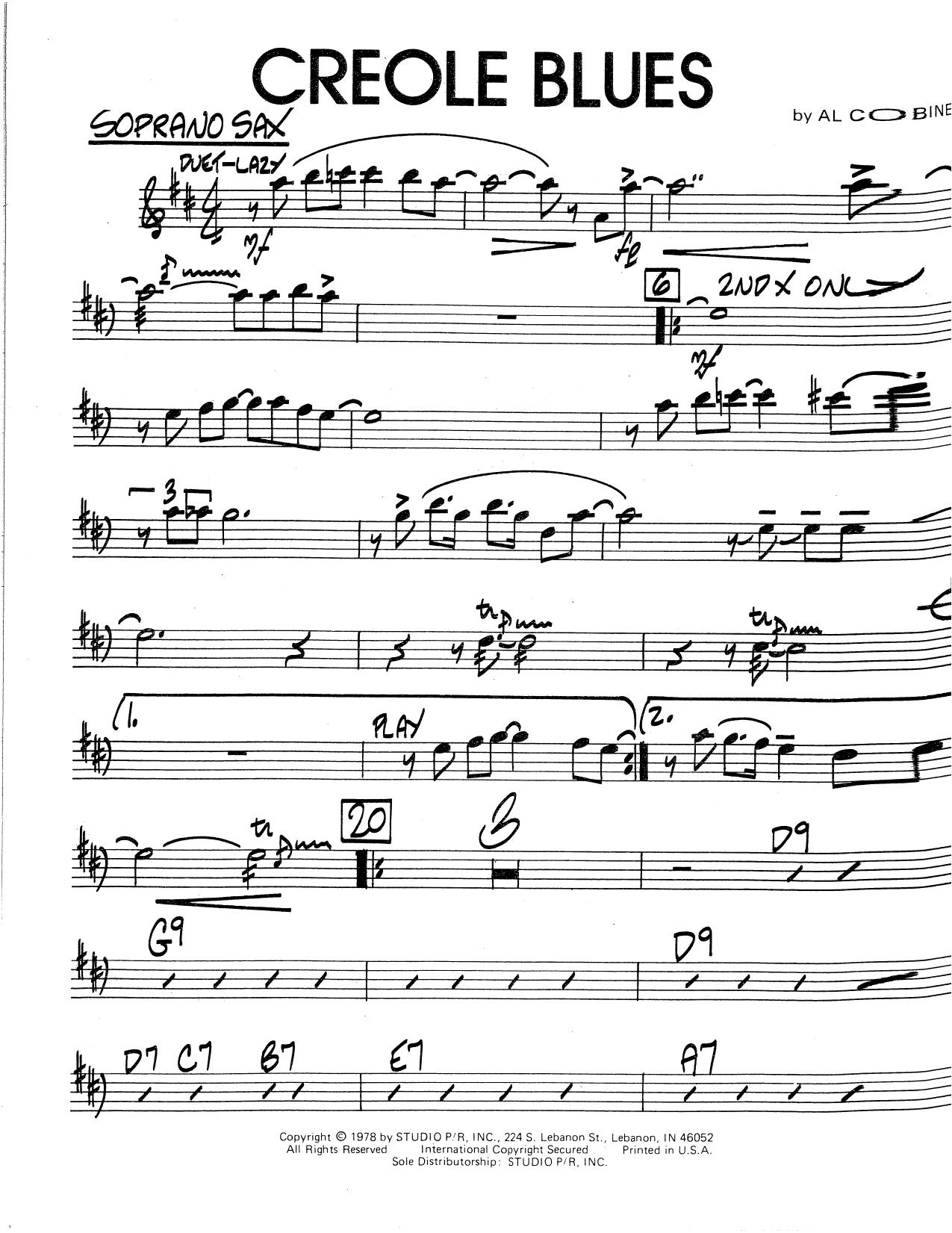
Creole Blues (A.Cobine) sheet music preview

Creole Blues (A.Cobine)

Composed by Jelly Roll Morton

Arranged by Al Cobine

  • Ensemble: Big Band
  • Style: Jazz Standard
  • Pages: 33
  • Instruments (17): Alto Saxophone 1, Alto Saxophone 2, Tenor Saxophone 1, Tenor Saxophone 2, Baritone Saxophone, Trumpet 1, Trumpet 2, Trumpet 3, Trumpet 4, Trombone 1, Trombone 2, Trombone 3, Bass Trombone, Guitar, Piano, Bass, Drums
  • Difficulty: medium
  • Content: Individual Parts
  • Format: PDF Download (Instant)
  • Price: $24.99

Jelly Roll Morton's "Creole Blues" stands as a foundational pillar of early jazz, a testament to the vibrant musical melting pot of New Orleans at the turn of the 20th century. Composed and first recorded by Morton in 1926, this piece encapsulates the nascent stages of jazz, bridging ragtime's syncopated rhythms with the improvisational spirit and blues inflections that would define the genre. It's a quintessential example of the "Spanish Tinge" Morton famously described, blending Caribbean rhythmic sensibilities with traditional blues harmony and a distinct New Orleans polyphony. While not as universally recognized as some of Morton's other works, "Creole Blues" remains a significant jazz standard, revered by historians and musicians for its historical importance and its rich, earthy musical character. It offers a direct lineage to the roots of jazz, showcasing the sophisticated yet raw essence of early jazz composition. Al Cobine's arrangement of "Creole Blues" transforms this historic gem into a compelling big band chart, retaining the original's soulful core while infusing it with the power and color only a large ensemble can provide. Cobine masterfully interprets the piece as a medium-swing blues, typically performed around a comfortable quarter note of 120-132 BPM, allowing for both rhythmic precision and expressive phrasing. The arrangement is primarily in the key of F Major, providing a bright yet bluesy canvas. Cobine's signature approach often involves clear, articulate voicings that respect the melodic integrity of the source material, and here, he employs tight, harmonically rich saxophone soli sections that evoke the ensemble playing of classic big bands. The mood is one of nostalgic swagger and sophisticated blues, evoking the smoky dance halls and vibrant street parades of early jazz. The arrangement opens with a captivating ensemble statement, immediately establishing the bluesy, medium-swing feel. The melody is initially carried by the saxophone section, often doubled or harmonized in rich four-part voicings, before being passed to the brass. Cobine skillfully crafts a dynamic arc, building through well-placed shout choruses that feature the full power of the big band. Featured solo opportunities are strategically placed, offering improvisers a chance to shine over the familiar blues changes. While specific soloists are not dictated, the chart typically provides space for a tenor saxophone and/or trumpet solo, allowing for individual expression within the established blues framework. Technical challenges include precise articulation in the saxophone soli passages, maintaining a consistent medium-swing feel across the rhythm section, and achieving balanced ensemble blend, particularly in the brass shout sections. The rewarding aspect lies in performing a piece with deep historical roots, experiencing the interplay of sections, and delivering a performance that feels both authentic to Morton's spirit and vibrant in a contemporary big band context. This arrangement is ideally suited for advanced high school, collegiate, community, and professional big bands. Its moderate tempo and clear harmonic structure make it accessible for developing improvisers, while the nuanced ensemble writing and dynamic demands offer substantial challenges for more experienced groups. Bands looking to explore the historical lineage of jazz standards through a well-crafted big band lens will find "Creole Blues" an invaluable addition to their repertoire. It provides an excellent vehicle for teaching stylistic authenticity in early jazz and big band performance techniques. "Creole Blues (A.Cobine)" thrives on a relaxed, authentic medium-swing feel, typically around 120-132 BPM. Emphasize a light, driving rhythm section feel, with the bass walking consistently and the drums laying down a classic swing pattern without being overly heavy. Articulation is paramount, especially in the saxophone soli sections; encourage a crisp, unified attack and release, particularly on accented notes. Brass players should focus on warm, blended tones in harmonized passages and bright, powerful projection in the shout choruses, ensuring clean attacks on short notes and controlled releases on longer phrases. While no specific mutes are indicated, plunger mutes could be tastefully employed by trumpets for a bluesier effect during certain ensemble hits or background figures, though this should be a band-wide decision. Rehearsal should focus on rhythmic precision in the ensemble figures, dynamic shaping to build tension and release, and ensuring a cohesive blend between sections. The blues form provides a strong harmonic foundation for soloists, encouraging expressive, historically informed improvisation. Q: What instruments and parts are included in this arrangement? A: This arrangement is scored for a standard 17-piece big band, including Alto Saxophone 1, Alto Saxophone 2, Tenor Saxophone 1, Tenor Saxophone 2, Baritone Saxophone, Trumpet 1, Trumpet 2, Trumpet 3, Trumpet 4, Trombone 1, Trombone 2, Trombone 3, Bass Trombone, Piano, Bass, Drums, and Guitar. Q: What is the difficulty level of "Creole Blues (A.Cobine)"? A: This arrangement is rated as a medium-advanced difficulty. It features intricate ensemble passages, dynamic contrasts, and requires a solid understanding of swing articulation and ensemble blend, making it suitable for advanced high school, collegiate, or community big bands. Q: What is the musical style and historical context of this arrangement? A: This is a big band arrangement of Jelly Roll Morton's "Creole Blues," a significant early jazz standard from 1926. It embodies the medium-swing blues style with a distinct New Orleans "Spanish Tinge," representing the foundational era of jazz. Q: What makes Al Cobine's arrangement of "Creole Blues" unique? A: Al Cobine's treatment uniquely translates Morton's early jazz classic into a vibrant big band setting, featuring sophisticated saxophone soli sections, powerful shout choruses, and clear, articulate voicings that respect the original's bluesy character while expanding its sonic palette. Q: What is the typical performance duration and tempo for this piece? A: "Creole Blues (A.Cobine)" typically performs for approximately 4-5 minutes, depending on the length of improvised solos. It is designed to be played at a comfortable medium-swing tempo, generally between 120-132 beats per minute.

Musicians Also Search For

Creole Blues Al Cobine PDFCreole Blues Al Cobine sheet musicCreole Blues arranged by Al CobineAl Cobine big band chartsAl Cobine jazz arrangements PDFCreole Blues Jelly Roll Morton sheet musicCreole Blues Jelly Roll Morton big band arrangementJelly Roll Morton big band chartsCreole Blues big band arrangementCreole Blues big band PDF downloadCreole Blues jazz ensemble sheet musicbig band sheet music instant downloadCreole Blues individual parts downloadCreole Blues sheet music with partsCreole Blues Jazz Standard chartJazz Standard big band arrangementsbuy Creole Blues sheet music onlinedownload Creole Blues PDFCreole Blues jazz chartbest Al Cobine big band arrangementsJelly Roll Morton songs arranged by Al CobineCreole Blues printable sheet musicbig band repertoire PDF

All arrangements by Al Cobine All Jelly Roll Morton sheet music