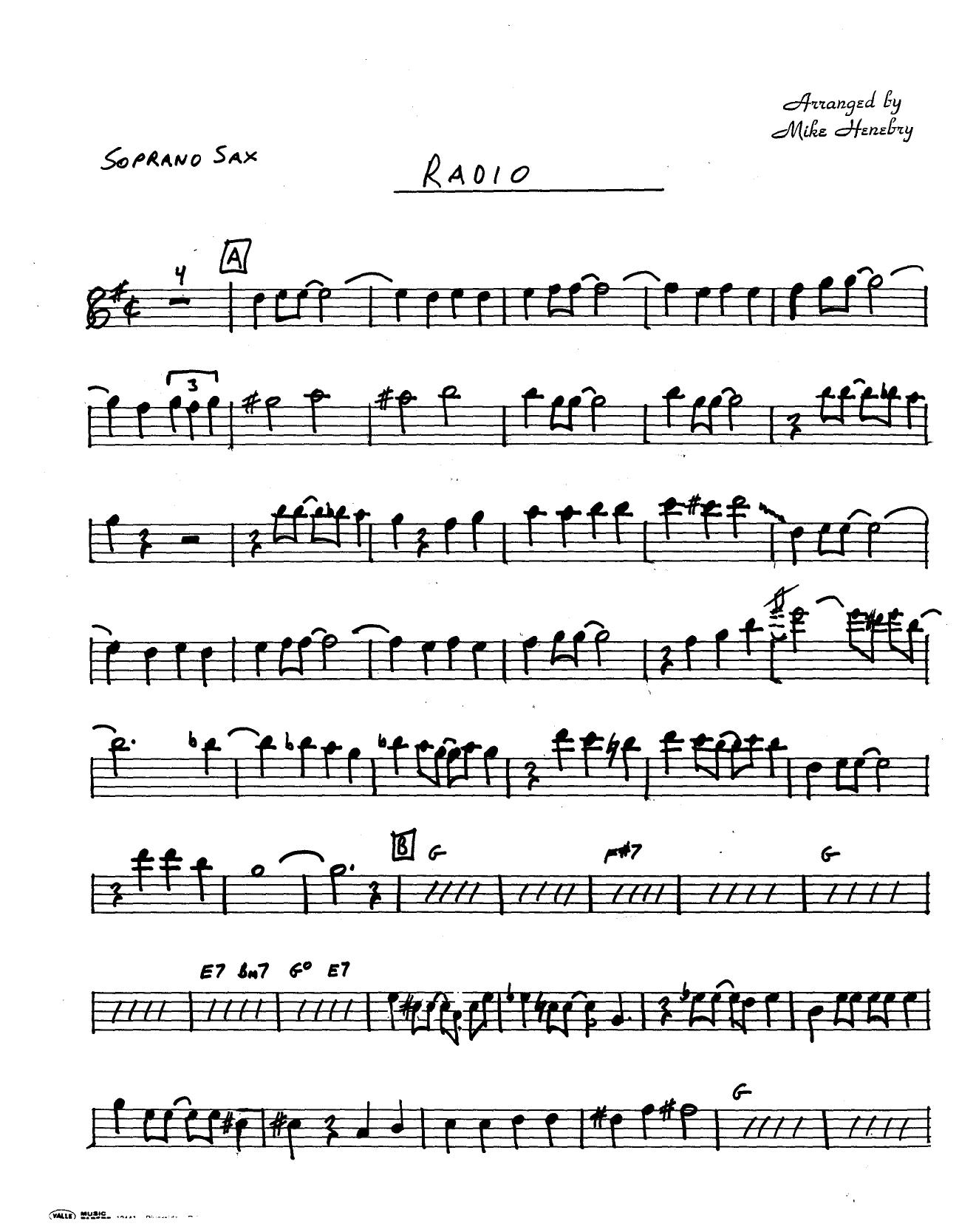
Radio (M.Henebry) sheet music preview

Radio (M.Henebry)

Composed by M. Henebry

Arranged by M.Henebry

  • Ensemble: Dixieland Band
  • Style: Dixieland
  • Pages: 17
  • Instruments (7): Trumpet, Clarinet, Trombone, Piano, Bass, Drums, Banjo
  • Difficulty: easy
  • Content: Individual Parts
  • Format: PDF Download (Instant)
  • Price: $18.99

"Radio (M.Henebry)" transports ensembles directly to the vibrant, syncopated heart of early 20th-century American jazz. While the original composition is a contemporary work by M. Henebry, it is meticulously crafted to evoke the authentic spirit and melodic charm of the Dixieland era, a period roughly spanning the 1910s through the 1920s. This epoch, born in New Orleans, is characterized by its collective improvisation, polyphonic textures, and buoyant, often driving rhythm section. Think of the pioneering sounds of King Oliver's Creole Jazz Band, Jelly Roll Morton, or Louis Armstrong's Hot Five and Seven – ensembles that defined the genre with their spirited interplay and infectious energy. "Radio" captures this essence, offering a fresh, original composition that feels historically resonant, making it a notable piece for its successful homage to a foundational jazz style. Musically, "Radio" is a medium-up tempo Dixieland romp, typically performed around 180-200 BPM, embodying a joyful and effervescent mood. The piece is firmly rooted in a bright, driving 4/4 swing feel, propelled by a walking bass line and a steady, often two-beat rhythm from the piano. The primary key is Bb Major, offering a comfortable and resonant setting for the brass and woodwinds. The arrangement's character is defined by its lively counterpoint and call-and-response figures between the front-line instruments. Expect a mood of unbridled optimism and playful exuberance, characteristic of the era it emulates. The energy is consistently high, encouraging a light, articulate touch from all players to maintain its inherent buoyancy. M. Henebry's arrangement of "Radio" showcases a deep understanding of Dixieland orchestration and idiom. The distinctive approach lies in the artful balance between ensemble passages and opportunities for individual expression, all while maintaining the genre's signature polyphonic texture. Henebry skillfully distributes the melodic material, often featuring the trumpet on the primary melody, with the clarinet weaving intricate obbligato lines above and the trombone providing rhythmic fills and counter-melodies, often utilizing its characteristic glissandi. There are well-defined soli sections where the front line plays harmonized figures in unison rhythm, providing a powerful contrast to the collective improvisation sections. The arrangement includes a dedicated section for featured solos over the form, typically allocated to trumpet, clarinet, and trombone, allowing each voice to shine within the traditional Dixieland framework. Henebry's signature technique here is the authentic recreation of the "tailgate" trombone style and the "ragtime" piano voicings, ensuring an accurate historical sound. "Radio" is a rewarding piece to perform for its infectious energy and the collaborative spirit it fosters. The melody is initially carried by the trumpet, with the clarinet entering with a virtuosic counter-melody. The technical challenges include maintaining rhythmic precision at a brisk tempo, particularly in the collective improvisation sections where clarity of individual lines is paramount. The clarinetist will need agility for the intricate obbligato passages, and the trombonist will need command of slides and smears. The rhythm section must provide a solid, driving foundation without overpowering the melodic lines. This arrangement is ideally suited for high school and college jazz ensembles looking to explore the roots of jazz, as well as community and semi-professional Dixieland bands seeking fresh, authentic repertoire. Its educational value lies in its faithful representation of Dixieland style, offering invaluable insight into early jazz performance practices and ensemble interplay. "Radio (M.Henebry)" demands a bright, unflagging medium-up tempo, ideally around quarter note = 180-200 BPM, with a strong, driving 4/4 swing feel. The rhythm section should focus on a light, articulate touch; the piano should emphasize a two-beat feel in the left hand for authenticity, while the bass provides a consistent, walking foundation. Key technical challenges include maintaining clarity in the collective improvisation sections – encourage players to listen intently and find their voice within the polyphonic texture rather than competing. The clarinet part requires considerable finger dexterity and breath control for the rapid obbligato lines. The trombonist should master precise glissandi and "tailgate" smears for stylistic accuracy. No special mutes are explicitly required, but a straight mute for the trumpet in certain sections could add textural variety if desired. Rehearsal should prioritize rhythmic tightness and dynamic contrast, ensuring the ensemble sections are crisp and the improvised solos are well-supported. Emphasize the joyful, effervescent mood throughout. Q: What instruments are included in the "Radio (M.Henebry)" arrangement? A: This arrangement is scored for a traditional Dixieland Band, including Trumpet, Clarinet, Trombone, Piano, Bass, Drums, and Banjo/Guitar (optional, but highly recommended for authentic texture). Q: What is the difficulty level of this arrangement? A: "Radio (M.Henebry)" is rated as a medium-advanced difficulty. It requires proficient instrumentalists comfortable with brisk tempos, collective improvisation, and the stylistic nuances of Dixieland jazz. Q: What musical style and historical context does "Radio (M.Henebry)" represent? A: "Radio (M.Henebry)" is an original composition crafted in the Dixieland style, paying homage to the vibrant, polyphonic jazz of the 1910s and 1920s, characterized by collective improvisation and a celebratory mood. Q: What makes M. Henebry's arrangement of "Radio" unique? A: This arrangement stands out for its authentic recreation of Dixieland idioms within an original composition, featuring well-balanced collective improvisation, clear melodic distribution, and specific attention to period-accurate voicings and instrumental roles. Q: What is the typical performance duration or tempo for "Radio (M.Henebry)"? A: "Radio (M.Henebry)" is a medium-up tempo piece, ideally performed around 180-200 BPM. A typical performance duration, including solos, would be approximately 3-4 minutes.

Musicians Also Search For

Radio M.Henebry PDFRadio M.Henebry sheet musicRadio arranged by M.HenebryM.Henebry dixieland band chartsM.Henebry jazz arrangements PDFRadio M. Henebry sheet musicRadio M. Henebry dixieland band arrangementM. Henebry dixieland band chartsRadio dixieland band arrangementRadio dixieland band PDF downloadRadio jazz ensemble sheet musicdixieland band sheet music instant downloadRadio individual parts downloadRadio sheet music with partsRadio Dixieland chartDixieland dixieland band arrangementsbuy Radio sheet music onlinedownload Radio PDFRadio jazz chartbest M.Henebry dixieland band arrangementsM. Henebry songs arranged by M.HenebryRadio printable sheet musicdixieland band repertoire PDF

All arrangements by M.Henebry All M. Henebry sheet music