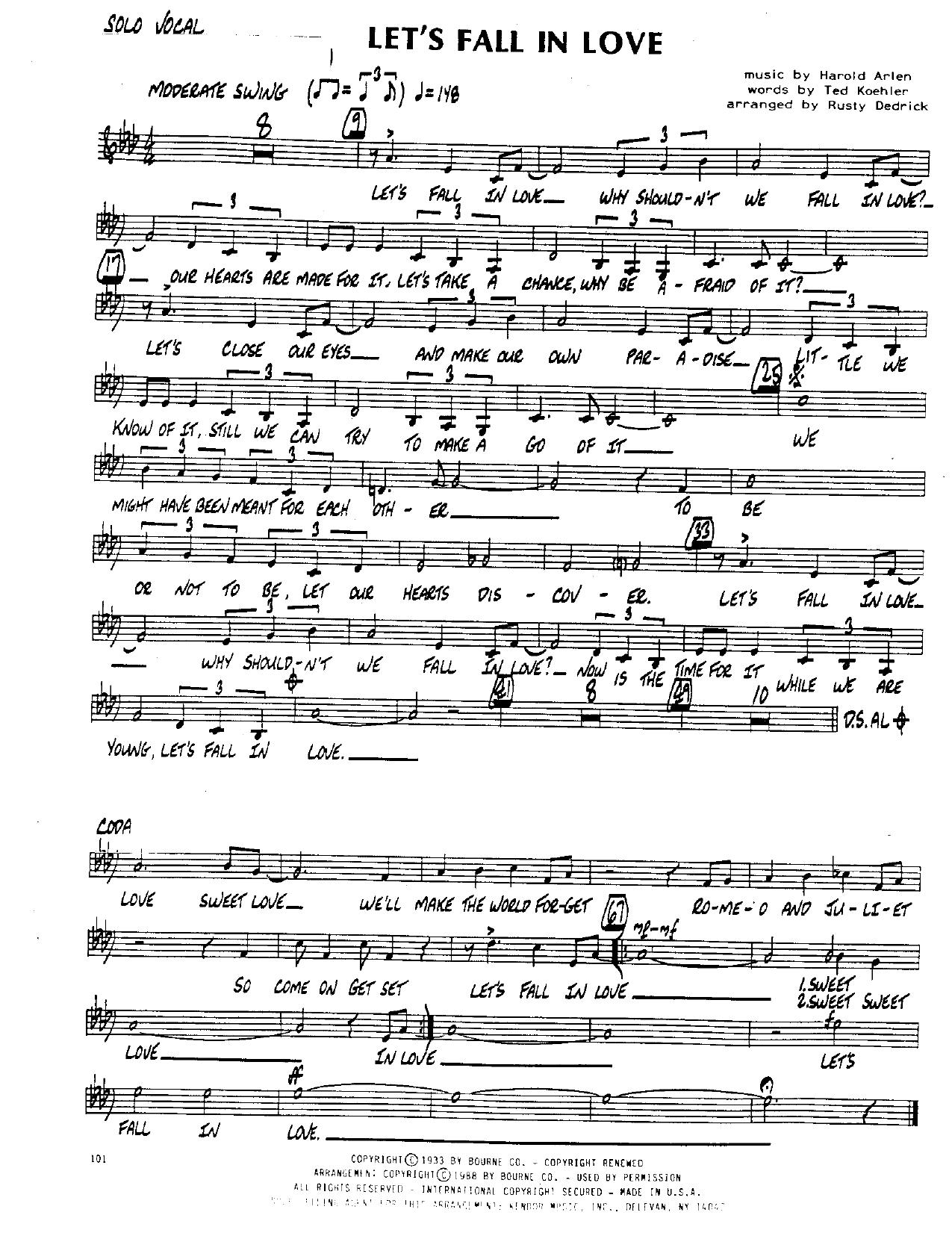
Let's Fall In Love (R.Dedrick) vocal
Compuesto por Harold Arlen
Arreglado por Rusty Dedrick
- Tipo de conjunto: Big Band Vocal
- Estilo: Ballad
- Páginas: 28 páginas
- Instrumentos (18): Solo Vocal, 1st Eb Alto Sax, 2nd Eb Alto Sax, 1st Bb Tenor Sax, 2nd Bb Tenor Sax, Eb Baritone Sax, 1st Bb Trumpet, 2nd Bb Trumpet, 3rd Bb Trumpet, 4th Bb Trumpet, 1st Trombone, 2nd Trombone, 3rd Trombone, 4th Trombone, Bass, Guitar, Piano, Drums
- Dificultad: medium
- Contenido: Partes individuales
- Formato: Descarga PDF (Instantánea)
- Precio: $24.99
Harold Arlen's "Let's Fall In Love", compuesta en 1933 con letra de Ted Koehler, surgió durante la edad de oro de la canción popular estadounidense, una época en la que Tin Pan Alley y Broadway producían un flujo interminable de estándares perdurables. Introducida originalmente en la película *International House* por Buddy Rogers y luego grabada por artistas como Eddie Duchin y Ella Fitzgerald, la canción se convirtió rápidamente en un clásico querido, encarnando el encanto sofisticado y el optimismo romántico de la era anterior a la Segunda Guerra Mundial. Su melodía memorable y emotiva, junto con su sentimiento lírico sincero, han cimentado su lugar en el canon del jazz, convirtiéndola en una favorita perenne tanto para vocalistas como para instrumentalistas. La riqueza armónica de la pieza, caracterizada por sus frecuentes modulaciones y exuberantes cambios de acordes, ofrece un terreno fértil para la interpretación jazzística, permitiendo tanto versiones fieles como improvisaciones imaginativas. El arreglo de Rusty Dedrick de "Let's Fall In Love" para big band y solista vocal captura magistralmente el romance inherente de la canción, al mismo tiempo que le infunde una sensibilidad refinada y contemporánea de big band. Dedrick, conocido por su elegante forma de tocar la trompeta y su sofisticado estilo de arreglos, aborda esta balada centrándose en texturas exuberantes y sutiles extensiones armónicas. El arreglo se establece en un tempo de balada lento y expresivo, típicamente alrededor de 60-70 pulsaciones por minuto (negra), lo que permite que la línea vocal respire y que el conjunto articule cada matiz. Las voces características de Dedrick son evidentes en todo el arreglo, particularmente en las secciones de metales y saxofones, que a menudo tejen contramelodías intrincadas y acordes cálidos y sostenidos que apoyan al vocalista sin opacarlo. El ambiente es de tierna intimidad y pasión discreta, evocando la era clásica de las big bands pero con una paleta armónica moderna. Este arreglo es ideal para conjuntos de jazz de nivel universitario, bandas comunitarias avanzadas y grupos profesionales. Sus exigencias de afinación precisa, dinámicas matizadas y una comprensión armónica sofisticada lo convierten en un excelente vehículo para desarrollar la madurez musical. Ofrece una experiencia gratificante tanto para los intérpretes como para el público, presentando un clásico atemporal envuelto en el estilo distintivo y elegante de Rusty Dedrick.
Preguntas y respuestas
- ¿Qué contiene el PDF de «Let's Fall In Love (R.Dedrick) vocal»?
- El archivo verificado contiene partes individuales en 28 páginas.
- ¿Cuántos instrumentos o partes se indican para «Let's Fall In Love (R.Dedrick) vocal»?
- La lista verificada contiene 18 entradas para este arreglo de Big Band Vocal.
- ¿Qué créditos aparecen para «Let's Fall In Love (R.Dedrick) vocal»?
- Compositor: Harold Arlen. Arreglista: Rusty Dedrick.
- ¿Qué dificultad se indica para «Let's Fall In Love (R.Dedrick) vocal»?
- La dificultad verificada es medium.
- ¿Qué estilo se indica para «Let's Fall In Love (R.Dedrick) vocal»?
- El catálogo indica el estilo Ballad.
- ¿Puedo ver una vista previa de «Let's Fall In Love (R.Dedrick) vocal»?
- Sí. La página del producto muestra una vista previa del PDF actual.
- ¿Cómo se entrega «Let's Fall In Love (R.Dedrick) vocal»?
- Tras confirmar el pago, el PDF digital queda disponible para descargar. El precio mostrado es $24.99.
Los músicos también buscan
Let's Fall In Love Rusty Dedrick PDF • Let's Fall In Love Rusty Dedrick partituras • Let's Fall In Love arreglado por Rusty Dedrick • Rusty Dedrick big band vocal partituras • Rusty Dedrick jazz arreglos PDF • Let's Fall In Love Harold Arlen partituras • Let's Fall In Love Harold Arlen big band vocal arreglos • Harold Arlen big band vocal partituras • Let's Fall In Love big band vocal arreglos • Let's Fall In Love big band vocal PDF descargar • Let's Fall In Love jazz partituras • big band vocal partituras descargar • Let's Fall In Love partes individuales descargar • Let's Fall In Love partituras PDF • Let's Fall In Love Ballad partituras • Ballad big band vocal arreglos • comprar Let's Fall In Love partituras • descargar Let's Fall In Love PDF • mejores Rusty Dedrick big band vocal arreglos • Harold Arlen arreglado por Rusty Dedrick • Let's Fall In Love partituras imprimibles • big band vocal repertorio PDF