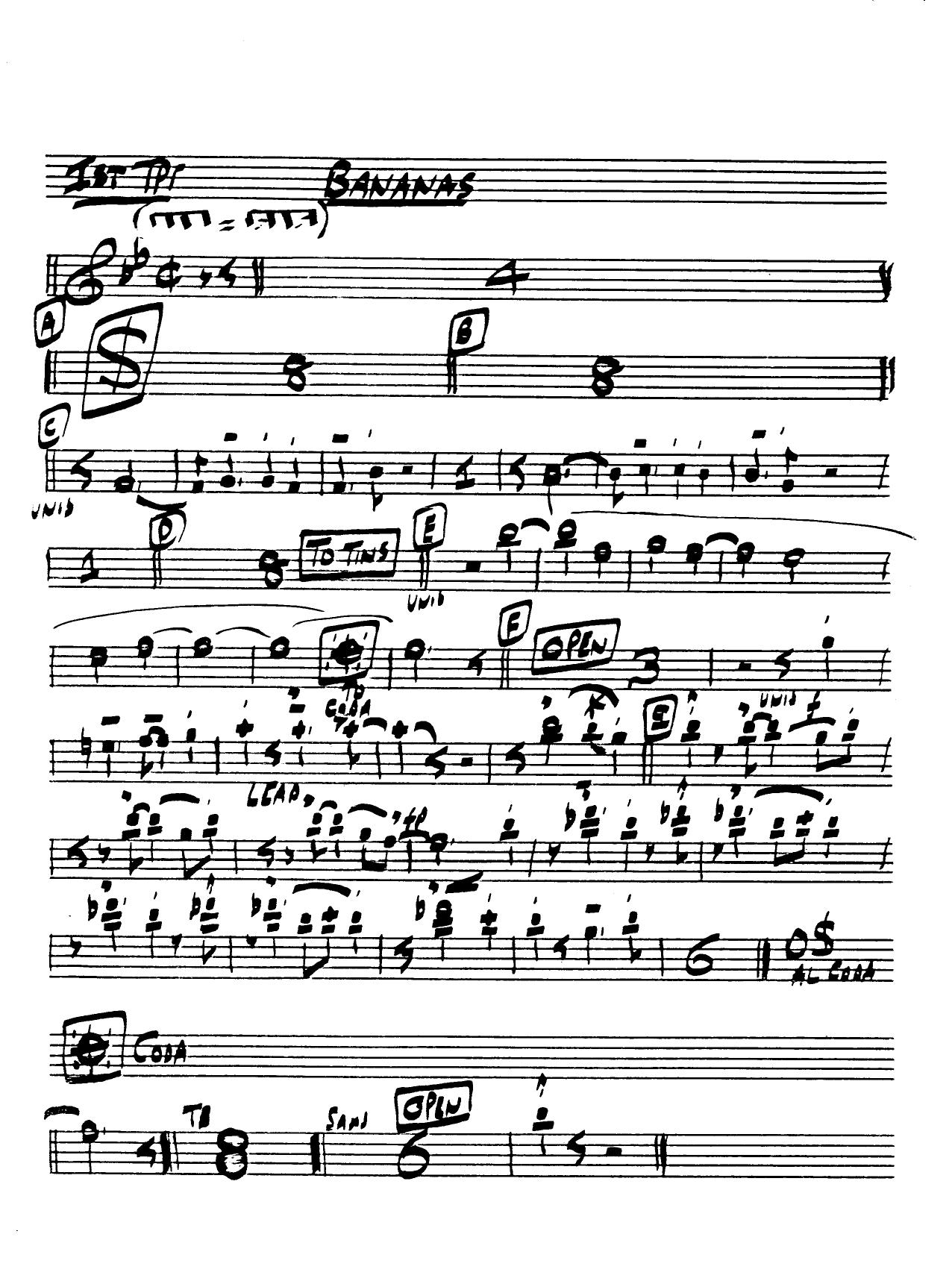
Yes! We Have No Bananas (J.Farley) sheet music preview

Yes! We Have No Bananas (J.Farley)

Composed by Frank Silver

Arranged by John Farley

  • Ensemble: Big Band
  • Pages: 21
  • Instruments (16): 1st Trumpet, 2nd Trumpet, 3rd Trumpet, 4th Trumpet, 1st Trombone, 2nd Trombone, 3rd Trombone, 4th Trombone, 1st Alto Saxophone, 2nd Alto Saxophone, 1st Tenor Saxophone, 2nd Tenor Saxophone, Baritone Saxophone, Bass, Drums, Piano
  • Difficulty: medium
  • Content: Individual Parts
  • Format: PDF Download (Instant)
  • Price: $24.99

Frank Silver and Irving Cohn’s novelty classic "Yes! We Have No Bananas" captured the whimsical, carefree spirit of the early 1920s Tin Pan Alley era, exploding into a massive cultural phenomenon after its publication in 1923. Originally popularized on the vaudeville stage and through early acoustic recordings, the tune quickly transitioned from a playful pop novelty into a staple of early jazz and traditional jazz repertoires. Its instantly recognizable, syncopated melody and tongue-in-cheek lyrical hook made it a natural vehicle for hot jazz interpretations by seminal orchestras of the Jazz Age, embodying the lighthearted escapism of the Roaring Twenties. John Farley’s imaginative big band adaptation breathes new life into this vintage chestnut, recasting it through a vibrant, swinging lens that bridges early jazz charm with modern medium-swing vitality. Set in a bright, driving 4/4 swing feel at around 168 beats per minute, the arrangement radiates an infectious, high-energy mood. The harmonic language playfully stretches traditional triad structures with sly chromatic passing tones and crisp dominant extensions, evoking the sophisticated wit of mid-century small-group arranging while maintaining the robust acoustic footprint of a dynamic horn section. Farley structures the chart to showcase a tightly knit seven-instrument ensemble, balancing punchy ensemble shout choruses with sparkling conversational exchanges between the frontline horns. The alto and tenor saxophones frequently lock in tight parallel motion, carrying the primary melodic weight before handing off crisp counterlines to the trumpet and trombone. A featured piano vamp anchors the rhythm section, laying down a stride-infused comping style that drives the groove forward without cluttering the harmonic texture. The technical demands center primarily on clean articulation, agile fingerwork during rapid scalar passages, and uniform stylistic phrasing across the horn section, making it an exercise in precision and stylistic cohesion. Advanced high school ensembles, collegiate jazz combos, and professional community big bands looking for an engaging, crowd-pleasing change of pace will find this chart exceptionally rewarding. The arrangement offers ample room for individual expression through open solo sections, allowing developing improvisers to stretch out over standard blues-adjacent changes while providing seasoned performers enough rhythmic nuance to keep audiences thoroughly entertained. The key to unlocking the charm of this arrangement lies in achieving an authentic, buoyant swing feel without letting the tempo drag or rush. The eighth notes must be swung loosely and naturally, avoiding a stiff, square execution. Articulation is paramount: encourage the brass section to use crisp tongue-strokes on accented upbeats, utilizing short, dry staccatos to mimic the percussive nature of early jazz styles. Trumpet and trombone players should incorporate subtle plunger mutes or stylistic falls on designated tag endings to enhance the vaudevillian humor of the composition. Rehearsals should initially focus on the rhythm section, ensuring the piano and bass lock in a steady, driving two-beat or four-beat pulse before layering in the horn countermelodies. Pay close attention to dynamic contrast; the transition from the subdued, teasing verse to the explosive, full-ensemble shout chorus requires careful breath support and careful listening across all seven parts to maintain textural balance. Q: What instruments and parts are included in this publication? A: This arrangement is scored for a flexible seven-instrument ensemble comprising Alto Saxophone, Tenor Saxophone, Trumpet, Trombone, Piano, and rhythm section support spanning a comprehensive 21-page score and parts set. Q: What is the difficulty level of this arrangement? A: It is graded as intermediate to advanced (suitable for strong high school, collegiate, and professional community jazz groups), primarily requiring solid swing reading skills, nimble fingerwork for fast scalar runs, and strong stylistic ensemble cohesion. Q: How does this arrangement reflect the historical style of the original tune? A: While retaining the playful, syncopated novelty spirit of Frank Silver's 1923 Tin Pan Alley classic, John Farley’s adaptation reinterprets the material through a sophisticated medium-swing jazz lens complete with crisp counterlines and clever harmonic nods to early jazz orchestration. Q: What makes John Farley’s arrangement unique compared to standard versions? A: Farley's treatment stands out through its clever integration of tight horn solis, witty harmonic extensions, and a transparent seven-part texture that allows every individual player to shine without the sonic congestion of a full 17-piece big band. Q: What is the recommended performance tempo and duration for this piece? A: The arrangement is designed to be played at a bright, driving medium-swing tempo of approximately 168 BPM, resulting in a performance duration of roughly three to four minutes depending on the length of the improvised solos.

Questions and answers

What is included in the Yes! We Have No Bananas (J.Farley) PDF?
The verified current file contains individual parts across 21 pages.
How many instruments or parts are listed for Yes! We Have No Bananas (J.Farley)?
The verified instrumentation list contains 16 entries for this Big Band arrangement.
Who is credited for Yes! We Have No Bananas (J.Farley)?
Composer: Frank Silver. Arranger: John Farley.
What difficulty is listed for Yes! We Have No Bananas (J.Farley)?
The verified difficulty level is medium.
Can I preview Yes! We Have No Bananas (J.Farley) before buying?
Yes. The product page provides a preview generated from the current PDF file.
How is Yes! We Have No Bananas (J.Farley) delivered?
After successful payment, the digital PDF is made available for download. The displayed price is $24.99.

Musicians Also Search For

Yes! We Have No Bananas John Farley PDFYes! We Have No Bananas John Farley sheet musicYes! We Have No Bananas arranged by John FarleyJohn Farley big band chartsJohn Farley jazz arrangements PDFYes! We Have No Bananas Frank Silver sheet musicYes! We Have No Bananas Frank Silver big band arrangementsFrank Silver big band chartsYes! We Have No Bananas big band arrangementsYes! We Have No Bananas big band PDF downloadYes! We Have No Bananas jazz sheet musicbig band sheet music downloadYes! We Have No Bananas individual parts downloadYes! We Have No Bananas sheet music PDFbuy Yes! We Have No Bananas sheet musicdownload Yes! We Have No Bananas PDFYes! We Have No Bananas jazz chartsbest John Farley big band arrangementsFrank Silver arranged by John FarleyYes! We Have No Bananas printable sheet musicbig band repertoire PDF

All arrangements by John Farley All Frank Silver sheet music