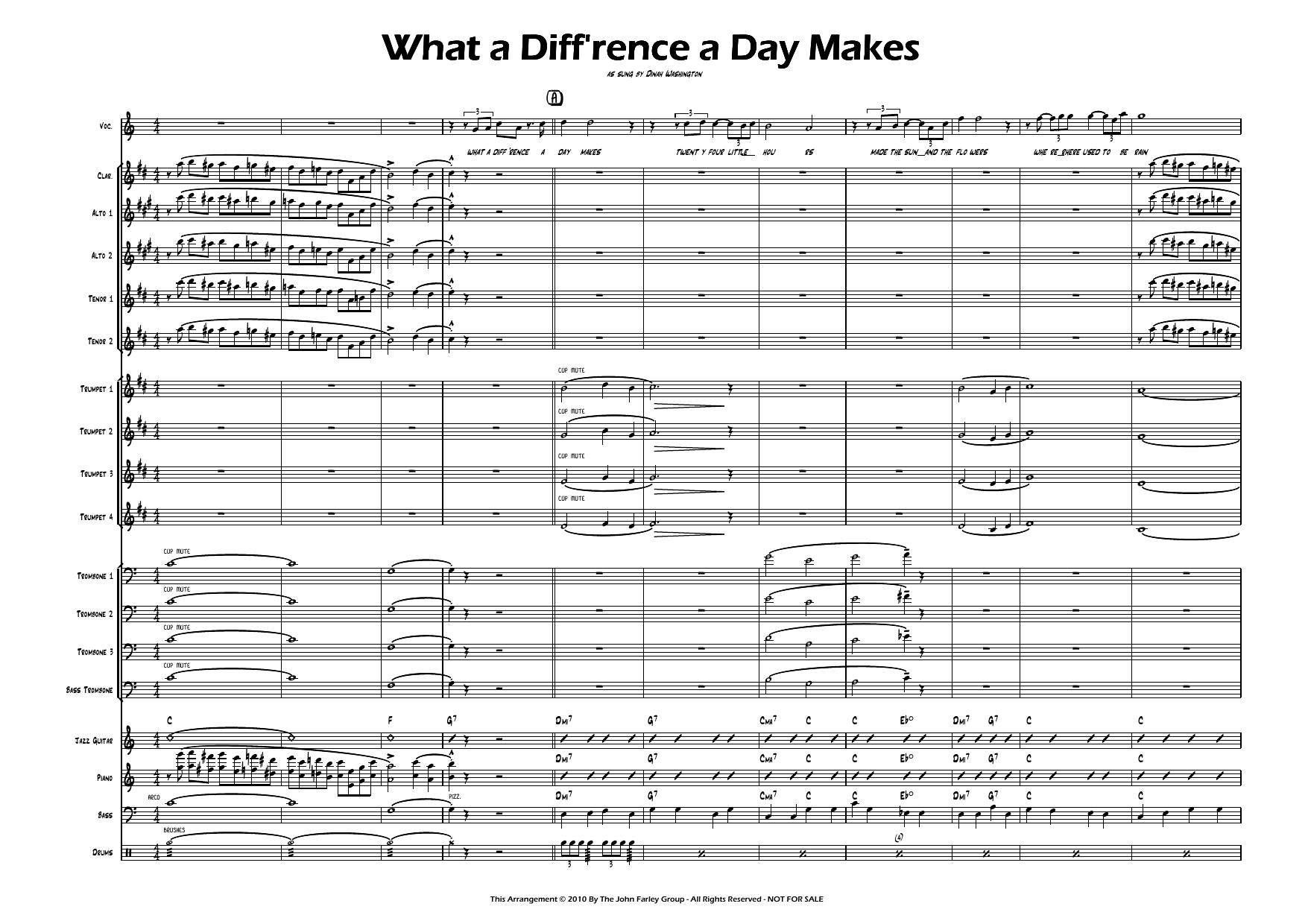
What A Difference A Day Makes (J.Farley)
Composed by Maria Grever
Arranged by John Farley
- Ensemble: Big Band
- Pages: 22
- Instruments (18): Vocals, Clarinet, Alto Saxophone 1, Alto Saxophone 2, Tenor Saxophone 1, Tenor Saxophone 2, Trumpet 1, Trumpet 2, Trumpet 3, Trumpet 4, Trombone 1, Trombone 2, Trombone 3, Bass Trombone, Jazz Guitar, Piano, Bass, Drums
- Difficulty: medium
- Content: Individual Parts
- Format: PDF Download (Instant)
- Price: $24.99
Originally composed in 1934 by Mexican songwriter María Grever with the Spanish title "Cuando vuelva a tu lado," this timeless masterpiece achieved legendary status in the jazz and pop vernacular when Dinah Washington recorded her iconic, Grammy Award-winning upbeat R&B/jazz vocal rendition in 1959. That definitive recording transformed the lush bolero into a vibrant, swinging standard that has since been interpreted by everyone from Esther Phillips to Jamie Cullum. The composition represents a brilliant bridge between Latin American melodic lyricism and mid-century American jazz vocal styling, characterized by its memorable descending bassline, soaring harmonic architecture, and deeply romantic, optimistic lyricism. John Farley’s sophisticated big band adaptation captures the sultry warmth of the late-night club scene while injecting a brisk, infectious medium-swing groove that immediately engages both the ensemble and the audience. Framed around a captivating vocal lead, the chart opens with an inviting, understated rhythm section setup before expanding into rich, lush horn voicings that recall the classic Count Basie and Nelson Riddle writing traditions. The arrangement seamlessly balances sophisticated, extended jazz harmonies—utilizing maj9 and altered dominant colorings—with accessible, driving rhythmic figures that keep the momentum pushing forward. The overall emotional trajectory shifts effortlessly from intimate, conversational vocal verses to exuberant, brass-heavy outbursts of joy. Throughout the chart, the instrumental textures are brilliantly varied. The woodwinds—featuring a doubled line for clarinet and alto saxophones—provide a shimmering, vintage timbre that harkens back to the classic swing era, while the brass section utilizes subtle cup and straight mutes to create dynamic contrast behind the vocalist. A standout feature of Farley's treatment is a cleverly written sax soli that reinterprets the secondary theme with fluid, interlocking lines, leading directly into an electrifying, high-energy shout chorus. Solo opportunities are thoughtfully integrated, allowing a featured instrumentalist—such as tenor saxophone or trumpet—to stretch out over standard changes before returning to the final vocal choruses and a tightly controlled, punchy tag ending. Advanced high school ensembles, collegiate jazz orchestras, and professional community big bands will find this arrangement to be an exceptional centerpiece for concerts, festivals, and vocal showcase sets. While the rhythm section must maintain a steady, buoyant pocket and the brass require solid endurance for the upper-register accents in the shout chorus, the chart is remarkably well-paced and idiomatic. It rewards meticulous attention to dynamic shading, articulation blending, and vocal phrasing, making it an immensely satisfying addition to any modern big band library. Conductors should establish a comfortable, confident medium-swing tempo (approximately 116–120 BPM) right from the downbeat, ensuring the rhythm section lays down a relaxed yet driving quarter-note pulse. The primary technical challenge lies in balancing the vocal soloist against the thick, harmonically rich brass backgrounds; instrumentalists must actively listen under the vocal and drop their dynamics immediately when indicated. Pay close attention to articulation markings—short, crisp staccatos in the saxophones must contrast sharply with the legato, warm phrasing required for the ensemble shout chorus. Trombone sections should utilize gentle cup mutes where marked to achieve a dark, velvety texture during the verse transitions. Rehearsal should begin by isolating the rhythm section to lock in the groove, followed by sectional work on the sax soli to ensure absolute unanimity of intonation and swing eighth-note placement before bringing the full ensemble together. Q: What instruments and parts are included in this arrangement? A: This chart is scored for a standard 18-instrument big band instrumentation, featuring a vocal lead, clarinet, two alto saxophones, two tenor saxophones, a baritone saxophone, four trumpets, four trombones, piano, guitar, bass, and drum set, accompanied by a comprehensive 22-page conductor score. Q: What is the difficulty level of John Farley's big band arrangement? A: This arrangement is graded as intermediate-advanced (Level 4), making it ideal for accomplished high school bands, collegiate jazz ensembles, and professional community big bands looking for a polished vocal feature. Q: What is the historical style and background of this piece? A: The arrangement is set in a classic medium-swing jazz style, drawing inspiration from the iconic 1959 vocal standard adaptation by Dinah Washington while retaining elements of its Latin-infused melodic origins. Q: What makes this specific arrangement unique? A: John Farley uniquely integrates a vintage clarinet-and-alto saxophone texture with modern extended harmonies, featuring a meticulously crafted saxophone soli and a dynamic shout chorus that elevates it above standard stock charts. Q: What is the performance duration and recommended tempo for this piece? A: The arrangement runs approximately 3.5 to 4 minutes in length and is best performed at a buoyant medium-swing tempo of around 116 to 120 beats per minute.
Questions and answers
- What is included in the What A Difference A Day Makes (J.Farley) PDF?
- The verified current file contains a conductor score and individual parts across 22 pages.
- How many instruments or parts are listed for What A Difference A Day Makes (J.Farley)?
- The verified instrumentation list contains 18 entries for this Big Band arrangement.
- Who is credited for What A Difference A Day Makes (J.Farley)?
- Composer: Maria Grever. Arranger: John Farley.
- What difficulty is listed for What A Difference A Day Makes (J.Farley)?
- The verified difficulty level is medium.
- Can I preview What A Difference A Day Makes (J.Farley) before buying?
- Yes. The product page provides a preview generated from the current PDF file.
- How is What A Difference A Day Makes (J.Farley) delivered?
- After successful payment, the digital PDF is made available for download. The displayed price is $24.99.
Musicians Also Search For
What A Difference A Day Makes John Farley PDF • What A Difference A Day Makes John Farley sheet music • What A Difference A Day Makes arranged by John Farley • John Farley big band charts • John Farley jazz arrangements PDF • What A Difference A Day Makes Maria Grever sheet music • What A Difference A Day Makes Maria Grever big band arrangements • Maria Grever big band charts • What A Difference A Day Makes big band arrangements • What A Difference A Day Makes big band PDF download • What A Difference A Day Makes jazz sheet music • big band sheet music download • What A Difference A Day Makes conductor score PDF • What A Difference A Day Makes individual parts download • What A Difference A Day Makes sheet music PDF • buy What A Difference A Day Makes sheet music • download What A Difference A Day Makes PDF • What A Difference A Day Makes jazz charts • best John Farley big band arrangements • Maria Grever arranged by John Farley • What A Difference A Day Makes printable sheet music • big band repertoire PDF