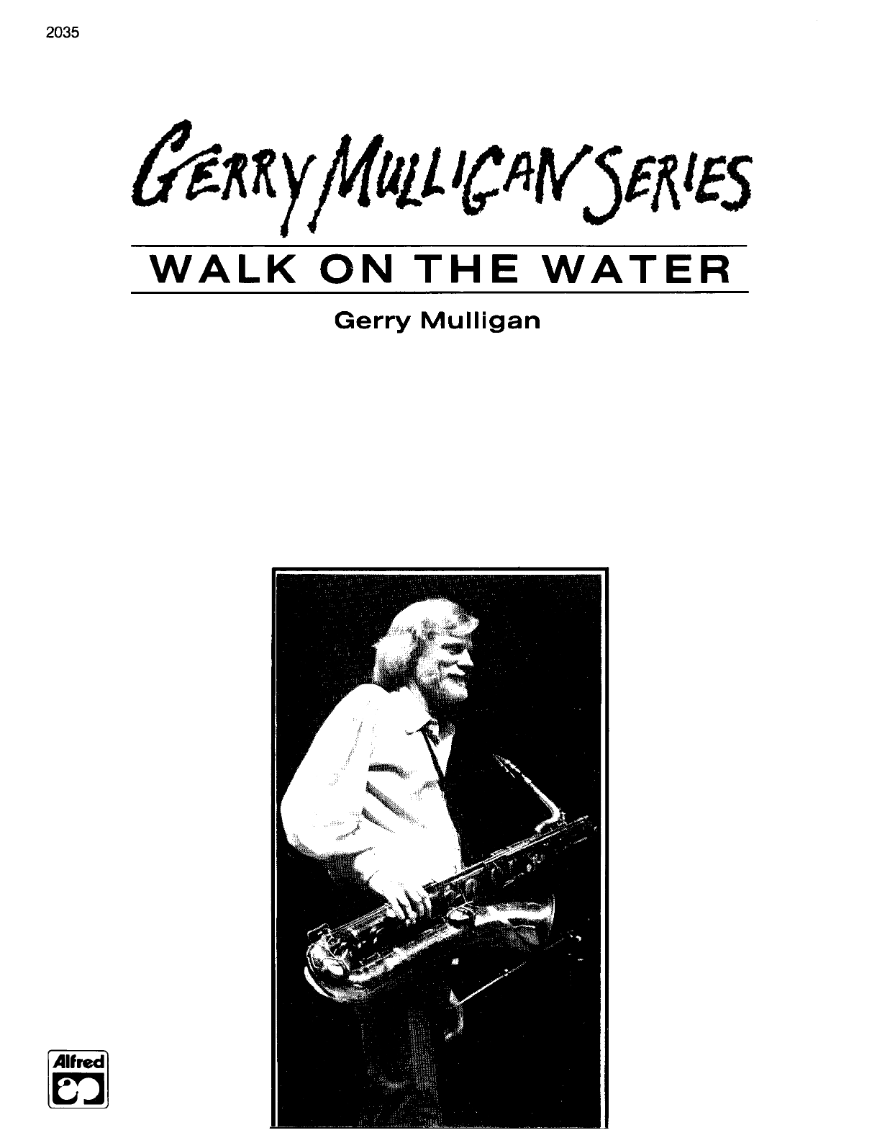
Walk On The Water (G.Mulligan) sheet music preview

Walk On The Water (G.Mulligan)

Composed by Gerry Mulligan

Arranged by Gerry Mulligan

  • Ensemble: Big Band
  • Pages: 64
  • Instruments (21): Conductor, Soprano Saxophone, Alto Saxophone, 1st Tenor Saxophone, 2nd Tenor Saxophone, Clarinet, Baritone Saxophone, Bass Clarinet, 1st Trumpet, 2nd Trumpet, 3rd Trumpet, Flugelhorn, 4th Trumpet, 1st Trombone, 2nd Trombone, 3rd Trombone, 4th Trombone, Piano, Guitar, Bass, Drums
  • Difficulty: advanced
  • Content: Individual Parts
  • Format: PDF Download (Instant)
  • Price: $24.99

Gerry Mulligan’s timeless contribution to West Coast cool jazz finds its ultimate expression in "Walk On The Water," a sophisticated composition that encapsulates the innovative spirit of the 1950s modernist jazz movement. Originally conceived by the baritone saxophone pioneer, this piece showcases the signature counterpoint, linear writing, and unique harmonic density that established Mulligan’s small groups and big band ventures as legendary pillars of modern jazz history. Rather than relying on traditional, heavy-handed East Coast shout structures, the composition breathes with a relaxed yet intellectually rigorous momentum, defining an era where space, timbre, and subtle interplay reigned supreme. Built around a medium-up swinging groove in a bright concert key, "Walk On The Water" radiates an effortless, cool-toned energy that balances intellectual orchestration with an infectious forward drive. The mood shifts fluidly between breezy, cinematic sophistication and driving, bebop-infused intensity. The harmonic landscape is rich with extended chord voicings, modal colorations, and Mulligan’s trademark penchant for open, airy intervals that prevent the texture from ever feeling dense or congested, despite the sophisticated inner-voice movement happening beneath the surface. As both composer and arranger, Mulligan brings his masterclass understanding of low-register anchoring combined with nimble upper-structure counterpoint to this eight-instrument configuration. The arrangement utilizes a tightly knit horn section—featuring alto saxophone, tenor saxophone, baritone saxophone, trumpet, and trombone—to create the illusion of a much larger ensemble through clever voicing and interdependent linear writing. The baritone saxophone frequently acts as a foundational counter-melody driver rather than merely a bass-line generator, while the alto and tenor weave intricate, interlocking harmonies. Solos are seamlessly integrated into the form, allowing individual improvisers space to stretch out over changes that reward lyrical, melodic phrasing just as much as technical dexterity. Advanced high school ensembles, collegiate jazz groups, and professional boutique big bands or little big bands will find this 64-page publication an exceptional vehicle for developing ensemble blend, intonation, and stylistic refinement. Because the orchestration relies heavily on horizontal voice-leading and stylistic cohesion rather than sheer volume, it serves as an unforgiving yet deeply rewarding pedagogical tool for teaching modern jazz articulation. Performing this chart demands crisp swing eighth-notes, immaculate balance across the saxophone and brass tiers, and a mature comprehension of West Coast cool aesthetics, making it a standout programming choice for sophisticated concert settings and festival stages alike. Achieving an authentic realization of "Walk On The Water" requires strict adherence to a relaxed yet driving medium-up swing tempo. Conductors should caution the ensemble against rushing; the groove must feel weightless yet anchored by a steady, buoyant ride cymbal feel. The primary technical challenge lies in the intricate counterpoint and independent horn lines, which demand pristine articulation and dynamic control so that inner voices remain audible beneath the primary melody. Saxophone players should focus on a dry, focused tone without excessive vibrato to honor the West Coast aesthetic, while brass players must blend seamlessly into the saxophone textures during soli passages rather than overpowering them. Rehearsal time should be heavily invested in sectional balance, ensuring that when the baritone saxophone or trombone carries secondary counter-melodies, they project clearly without forcing their tone. Pay close attention to subtle dynamic shadings and articulation markings (such as tenuto and staccato nuances) written throughout the 64 pages of parts to capture Mulligan's witty, conversational phrasing style. Q: What instruments and parts are included in this arrangement? A: This arrangement is scored for an 8-instrument ensemble, specifically featuring Alto Saxophone, Tenor Saxophone, Baritone Saxophone, Trumpet, Trombone, and rhythm section support across a comprehensive 64-page publication. Q: What is the difficulty level of this arrangement? A: This chart is best suited for advanced high school, collegiate, and professional jazz ensembles due to its sophisticated counterpoint, intricate inner-voice independence, and stylistic demands. Q: What is the historical style and context of "Walk On The Water"? A: Composed and arranged by baritone sax icon Gerry Mulligan, this piece epitomizes the 1950s West Coast cool jazz movement, emphasizing linear writing, harmonic sophistication, and relaxed swing over heavy big-band bombast. Q: What makes this specific Gerry Mulligan arrangement unique? A: Its uniqueness lies in Mulligan’s signature voicing for an eight-piece horn lineup, where the baritone saxophone actively drives counter-melodies and creates the sonic illusion of a much larger orchestra through clever transparency. Q: What is the recommended performance tempo and duration? A: The piece is designed to be performed at a bright, driving medium-up swing tempo, typically lasting around 4 to 5 minutes depending on the length of the integrated improvised solos.

Questions and answers

What is included in the Walk On The Water (G.Mulligan) PDF?
The verified current file contains a conductor score and individual parts across 64 pages.
How many instruments or parts are listed for Walk On The Water (G.Mulligan)?
The verified instrumentation list contains 21 entries for this Big Band arrangement.
Who is credited for Walk On The Water (G.Mulligan)?
Composer: Gerry Mulligan. Arranger: Gerry Mulligan.
What difficulty is listed for Walk On The Water (G.Mulligan)?
The verified difficulty level is advanced.
Can I preview Walk On The Water (G.Mulligan) before buying?
Yes. The product page provides a preview generated from the current PDF file.
How is Walk On The Water (G.Mulligan) delivered?
After successful payment, the digital PDF is made available for download. The displayed price is $24.99.

Musicians Also Search For

Walk On The Water Gerry Mulligan PDFWalk On The Water Gerry Mulligan sheet musicWalk On The Water arranged by Gerry MulliganGerry Mulligan big band chartsGerry Mulligan jazz arrangements PDFWalk On The Water Gerry Mulligan big band arrangementsWalk On The Water big band arrangementsWalk On The Water big band PDF downloadWalk On The Water jazz sheet musicbig band sheet music downloadWalk On The Water conductor score PDFWalk On The Water individual parts downloadWalk On The Water sheet music PDFbuy Walk On The Water sheet musicdownload Walk On The Water PDFWalk On The Water jazz chartsbest Gerry Mulligan big band arrangementsWalk On The Water printable sheet musicbig band repertoire PDF

All arrangements by Gerry Mulligan All Gerry Mulligan sheet music