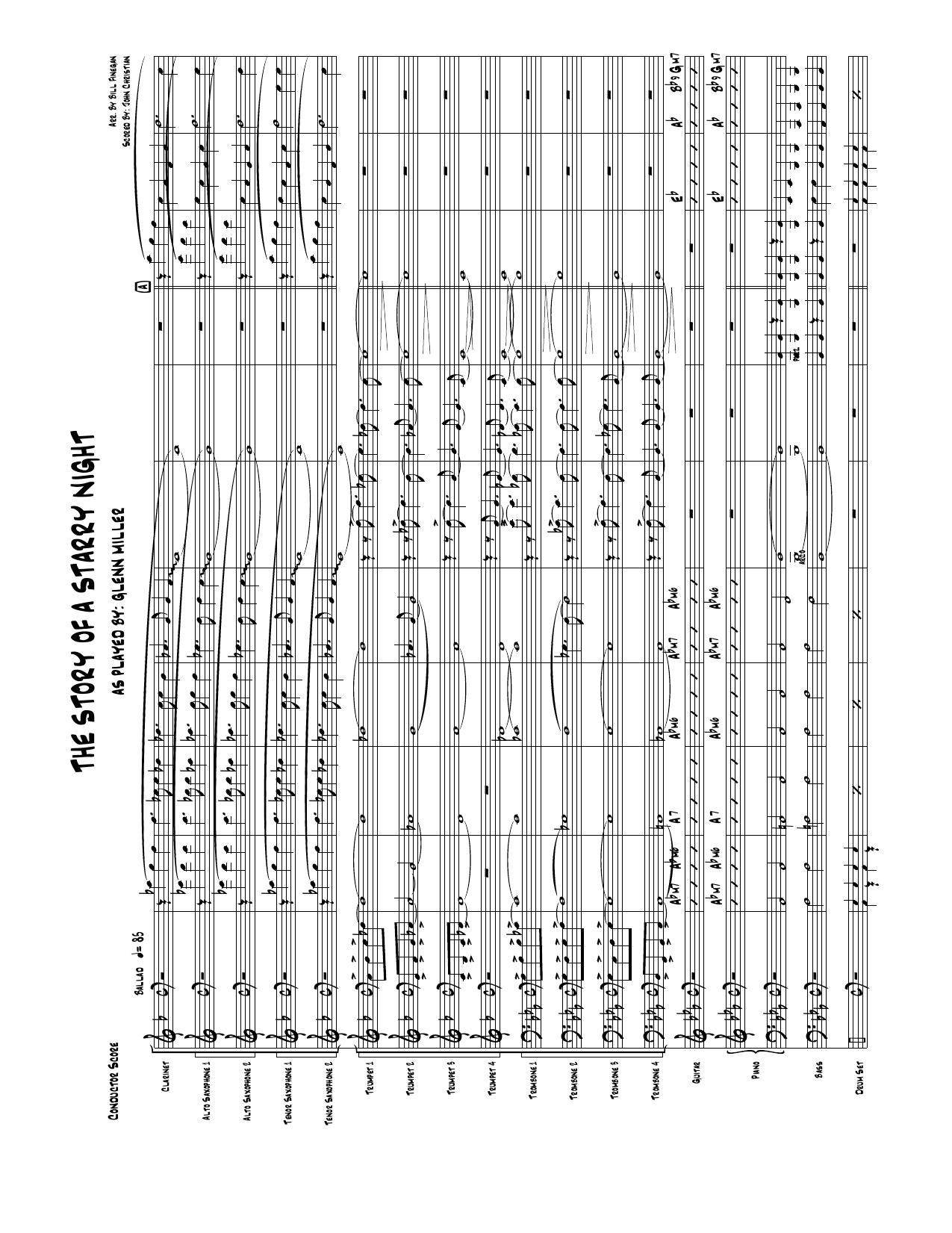
The Story Of A Starry Night (J.Christian) sheet music preview

The Story Of A Starry Night (J.Christian)

Composed by John Christian

Arranged by J.Christian

  • Ensemble: Big Band
  • Pages: 32
  • Instruments (19): Clarinet, 1st Alto Saxophone, 2nd Alto Saxophone, 1st Tenor Saxophone, 2nd Tenor Saxophone, Baritone Saxophone, 1st Trumpet, 2nd Trumpet, 3rd Trumpet, 4th Trumpet, 1st Trombone, 2nd Trombone, 3rd Trombone, 4th Trombone, Guitar, Piano, Bass, Drums, Vocal
  • Difficulty: medium
  • Content: Individual Parts
  • Format: PDF Download (Instant)
  • Price: $24.99

Melodic inspiration drawn from Pyotr Ilyich Tchaikovsky’s *Pathétique* Symphony underwent a remarkable transformation during the swing era, famously adapted into the popular song "The Story Of A Starry Night" and recorded by Glenn Miller and His Orchestra in 1941. This timeless melody bridges late-romantic classical grandeur with the sophisticated harmonic vocabulary of mid-century big band jazz. The piece captures the quintessential late-night ballroom atmosphere of the World War II era, balancing a poignant, sweeping nostalgia with a steady, rhythmic pulse that honors its dance-orchestra origins while offering substantial artistic depth for modern jazz ensembles. Rich, luminous voicings define J.Christian’s contemporary big band treatment, establishing a lush sonic landscape right from the opening measures. The arrangement opens with a rubato atmospheric intro before settling into a supple, flowing medium-swing groove in 4/4 time. The emotional arc moves from introspective and melancholic to soaring and triumphant, driven by shimmering brass pads and intricate reed counterpoint. Extended harmonies—including major-seventh extensions, ninth-and-eleventh chord colorations, and subtle chromatic passing tones—infuse the classic melody with a sophisticated, contemporary jazz flavor without losing sight of the familiar thematic material. Textural variety anchors the chart, featuring a tightly knit saxophone soli that reinterprets the core melody with fluid grace, followed by a dynamic ensemble shout chorus that builds steadily in volume and harmonic tension before resolving into a peaceful, evocative coda. The lead trumpet and tenor saxophone share primary melodic duties, while an open solo section allows a featured soloist to improvise over a accessible yet stimulating harmonic progression. Technical demands center on blend, intonation, and stylistic cohesion rather than sheer velocity, requiring players to maintain a warm, centered tone throughout sustained ensemble passages and navigate subtle dynamic shifts with precision. Advanced high school ensembles, collegiate jazz orchestras, and accomplished community big bands will find this arrangement an ideal vehicle for developing stylistic maturity, section balance, and emotional expression. The 32-page score and parts provide a well-paced, rewarding rehearsal experience that gives directors plenty of material to refine phrasing, vibrato control, and swing subdivision. Audiences will instantly connect with the familiar romantic themes, while musicians will appreciate the clever reharmonizations and idiomatic writing that make this chart a standout addition to any concert program. Balancing the delicate rubato opening with the subsequent locked-in swing groove requires close attention from the rhythm section, particularly the drummer, who should maintain a subtle, feather-light ride cymbal pattern during the head. The tempo should settle comfortably around a relaxed medium swing (approx. 116 BPM), ensuring that the eighth-note lines never feel rushed or stiff. Brass players should prioritize a warm, round tone over excessive volume during the exposed introductory choruses, saving the heavier dynamic pushes for the climax of the shout chorus. Articulation is key: instruments must execute marked accents and staccato notes uniformly across sections to preserve the buoyant rhythmic drive. Directors should encourage the saxophones to lean into the lyrical lines of their soli section with a connected, legato approach, treating the phrases as if they were being sung by a vocalists. Pay careful attention to intonation in the upper-register trumpet harmonies and ensure the bass line remains deeply anchored to the piano's comping voicings throughout the modal shifts. Q: What specific instruments and parts are included in this arrangement? A: The chart is scored for an 8-instrument big band instrumentation, featuring Alto Saxophone, Tenor Saxophone, Baritone Saxophone, Trumpet, Trombone, and a complete rhythm section rhythm framework across its 32 pages of music. Q: What is the overall difficulty level of this arrangement? A: This arrangement is graded as intermediate-to-advanced, making it well-suited for high school extension groups, collegiate bands, and community jazz orchestras looking to develop blend and harmonic nuance. Q: What is the historical background and musical style of the piece? A: Based on the 1941 tune popularized by Glenn Miller—itself derived from Tchaikovsky's 6th Symphony—this arrangement embraces a sophisticated medium-swing jazz style steeped in the rich tradition of the big band era. Q: What makes J.Christian’s arrangement unique compared to other versions? A: This treatment stands out through its lush extended harmonies, intricate reed soli sections, and a seamless blend of romantic classical themes with modern jazz reharmonization techniques. Q: What is the performance duration and recommended tempo for the piece? A: The arrangement runs approximately 4 to 5 minutes in length and is best performed at a relaxed medium-swing tempo around 116 beats per minute to maintain its emotional depth and rhythmic pocket.

Questions and answers

What is included in the The Story Of A Starry Night (J.Christian) PDF?
The verified current file contains a conductor score and individual parts across 32 pages.
How many instruments or parts are listed for The Story Of A Starry Night (J.Christian)?
The verified instrumentation list contains 19 entries for this Big Band arrangement.
Who is credited for The Story Of A Starry Night (J.Christian)?
Composer: John Christian. Arranger: J.Christian.
What difficulty is listed for The Story Of A Starry Night (J.Christian)?
The verified difficulty level is medium.
Can I preview The Story Of A Starry Night (J.Christian) before buying?
Yes. The product page provides a preview generated from the current PDF file.
How is The Story Of A Starry Night (J.Christian) delivered?
After successful payment, the digital PDF is made available for download. The displayed price is $24.99.

Musicians Also Search For

The Story Of A Starry Night J.Christian PDFThe Story Of A Starry Night J.Christian sheet musicThe Story Of A Starry Night arranged by J.ChristianJ.Christian big band chartsJ.Christian jazz arrangements PDFThe Story Of A Starry Night John Christian sheet musicThe Story Of A Starry Night John Christian big band arrangementsJohn Christian big band chartsThe Story Of A Starry Night big band arrangementsThe Story Of A Starry Night big band PDF downloadThe Story Of A Starry Night jazz sheet musicbig band sheet music downloadThe Story Of A Starry Night conductor score PDFThe Story Of A Starry Night individual parts downloadThe Story Of A Starry Night sheet music PDFbuy The Story Of A Starry Night sheet musicdownload The Story Of A Starry Night PDFThe Story Of A Starry Night jazz chartsbest J.Christian big band arrangementsJohn Christian arranged by J.ChristianThe Story Of A Starry Night printable sheet musicbig band repertoire PDF

All arrangements by J.Christian All John Christian sheet music