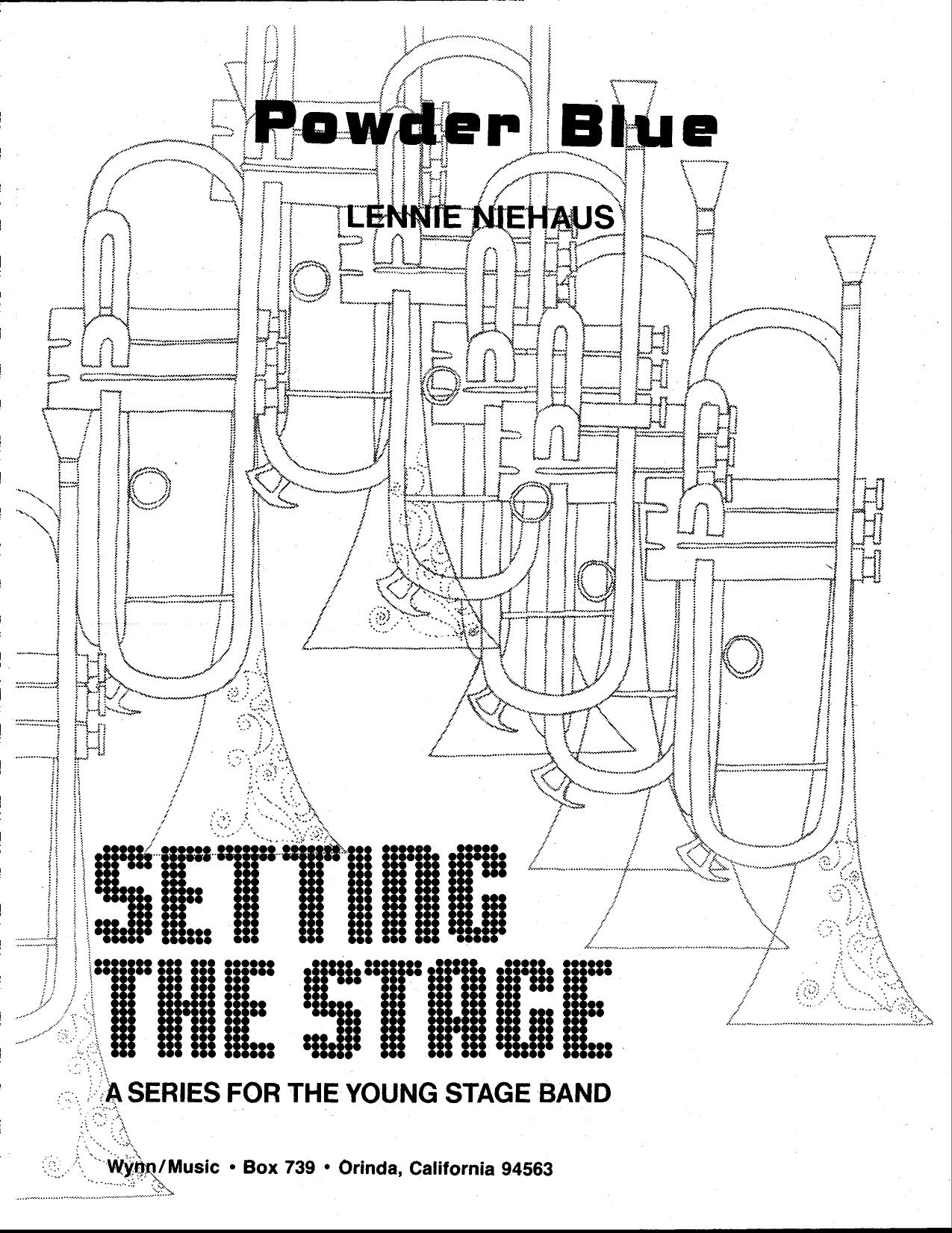
Powder Blue (L.Niehaus) sheet music preview

Powder Blue (L.Niehaus)

Composed by Lennie Niehaus

Arranged by Lennie Niehaus

  • Ensemble: Big Band
  • Pages: 51
  • Instruments (17): 1st Eb Alto Saxophone, 2nd Eb Alto Saxophone, 1st Bb Tenor Saxophone, 2nd Bb Tenor Saxophone, Eb Baritone Saxophone, 1st Bb Trumpet, 2nd Bb Trumpet, 3rd Bb Trumpet, 4th Bb Trumpet, 1st Trombone, 2nd Trombone, 3rd Trombone, 4th Trombone, Guitar, Piano, Bass, Drums
  • Difficulty: advanced
  • Content: Individual Parts
  • Format: PDF Download (Instant)
  • Price: $24.99

Lennie Niehaus’s "Powder Blue" stands as a quintessential exemplar of West Coast cool jazz, capturing the sophisticated, urbane aesthetic that defined California modern jazz during the 1950s. Emerging from Niehaus’s prolific tenure as both a premier alto saxophonist in the Stan Kenton Orchestra and a master arranger-composer, this chart reflects the streamlined counterpoint, harmonic clarity, and relaxed yet intellectually rigorous swing that characterized the modern Los Angeles jazz scene. While not a conventional Tin Pan Alley standard, compositions by Niehaus like "Powder Blue" have earned revered status among connoisseurs of modern big band literature for their intricate linear writing and distinctive West Coast cool sensibility. Delivered at a relaxed medium-swing tempo, "Powder Blue" exudes an effortless, cool-toned sophistication rather than aggressive bebop intensity. The harmonic landscape relies on lush, extended chord voicings—frequent use of major sevenths, ninths, and added-sixth chords—that evoke a calm, introspective, yet undeniably hip mood. The arrangement opens with a clean, understated statement of the theme, avoiding dense brass clusters in favor of transparent, airy textures that let the melodic lines breathe. The emotional character shifts fluidly between breezy urban coolness and moments of rich, harmonically complex warmth, particularly during the ensemble transitions. True to Lennie Niehaus’s signature compositional voice, the arrangement showcases masterclass-level saxophone writing, heavily influenced by his classical counterpoint background and his deep idiomatic understanding of the horn. The saxophones function as an agile, unified choir, navigating intricate bebop-infused lines with remarkable linear independence. Rather than relying on traditional, explosive Kenton-esque shout choruses, Niehaus crafts sophisticated ensemble *solis* and developmental counter-melodies where the brass and reeds interweave seamlessly. The melody is predominantly carried by the saxophone section, supported by subtle, tasteful harmonic jabs from the brass, while the rhythm section is expected to maintain a feather-light, driving swing feel rooted in the West Coast tradition. Advanced high school, collegiate, and professional big bands will find "Powder Blue" an exceptional vehicle for developing sectional blend, intonation, and stylistic refinement. While the individual note ranges are generally accessible—avoiding extreme high-register demands typically found in aggressive contemporary charts—the primary challenges lie in rhythmic precision, stylistic articulation, and maintaining a relaxed, buoyant swing feel at a moderate tempo. Solo opportunities are provided for featured improvisers, allowing trumpet or saxophone soloists to stretch out over accessible yet stimulating chord changes. Performing this chart rewards ensembles that prioritize clean execution, transparent balance, and a refined sense of ensemble phrasing. Conductors approaching "Powder Blue" must prioritize a light, horizontal conception of swing rather than a heavy, vertical downbeat-heavy accentuation. The ideal tempo is a comfortable medium swing; pushing the tempo too hard destroys the breezy, West Coast cool atmosphere Niehaus meticulously crafted. The primary technical challenge rests within the saxophone section, which must execute intricate, bebop-derived linear passages with absolute uniformity in articulation and intonation. Reeds should aim for a smooth, legato-connected swing style, keeping tongue strokes soft and articulation light. Brass players need to practice restraint; muted passages and delicate background figures must never overpower the lead melodic voices in the saxophones. For rehearsal, start by having the rhythm section lock in a steady, unhurried groove with a crisp ride cymbal pattern and subtle, interactive comping from the piano and guitar. Next, rehearse the saxophone section unaccompanied to isolate the intricate counterpoint before integrating the brass. Pay close attention to dynamic balance during ensemble transitional phrases, ensuring that inner-voice harmonies speak clearly without obscuring the primary melodic line. Q: What instrumentation and parts are included in this big band arrangement of "Powder Blue"? A: This arrangement is scored for a standard 16-instrument big band instrumentation, featuring 5 saxophones (Alto Sax 1, Alto Sax 2, Tenor Sax 1, Tenor Sax 2, Baritone Sax), standard brass, and a complete rhythm section comprising piano, guitar, bass, and drums, spanning a total of 51 pages of score and parts. Q: What is the difficulty level of Lennie Niehaus's "Powder Blue"? A: This chart is best suited for advanced high school, collegiate, and professional big bands due to its sophisticated linear writing, demanding stylistic requirements, and the need for refined sectional intonation and balance. Q: What musical style and historical era does this piece represent? A: "Powder Blue" is a definitive masterwork of the 1950s West Coast cool jazz movement, blending sophisticated bebop-influenced harmonic language with the relaxed, transparent textures pioneered by arrangers associated with the California modern jazz scene. Q: What makes this specific Lennie Niehaus arrangement unique? A: The arrangement is distinguished by Niehaus's signature counterpoint-driven saxophone writing, lush extended chord voicings, and an absence of heavy brass shouting in favor of intricate, airy ensemble solis and sophisticated linear development. Q: What is the recommended performance duration and tempo for this arrangement? A: The piece is written in a 4/4 meter and is designed to be performed at a relaxed, comfortable medium-swing tempo, typically resulting in a performance duration of approximately 3 to 4 minutes depending on solo choruses.

Questions and answers

What is included in the Powder Blue (L.Niehaus) PDF?
The verified current file contains a conductor score and individual parts across 51 pages.
How many instruments or parts are listed for Powder Blue (L.Niehaus)?
The verified instrumentation list contains 17 entries for this Big Band arrangement.
Who is credited for Powder Blue (L.Niehaus)?
Composer: Lennie Niehaus. Arranger: Lennie Niehaus.
What difficulty is listed for Powder Blue (L.Niehaus)?
The verified difficulty level is advanced.
Can I preview Powder Blue (L.Niehaus) before buying?
Yes. The product page provides a preview generated from the current PDF file.
How is Powder Blue (L.Niehaus) delivered?
After successful payment, the digital PDF is made available for download. The displayed price is $24.99.

Musicians Also Search For

Powder Blue Lennie Niehaus PDFPowder Blue Lennie Niehaus sheet musicPowder Blue arranged by Lennie NiehausLennie Niehaus big band chartsLennie Niehaus jazz arrangements PDFPowder Blue Lennie Niehaus big band arrangementsPowder Blue big band arrangementsPowder Blue big band PDF downloadPowder Blue jazz sheet musicbig band sheet music downloadPowder Blue conductor score PDFPowder Blue individual parts downloadPowder Blue sheet music PDFbuy Powder Blue sheet musicdownload Powder Blue PDFPowder Blue jazz chartsbest Lennie Niehaus big band arrangementsPowder Blue printable sheet musicbig band repertoire PDF

All arrangements by Lennie Niehaus All Lennie Niehaus sheet music