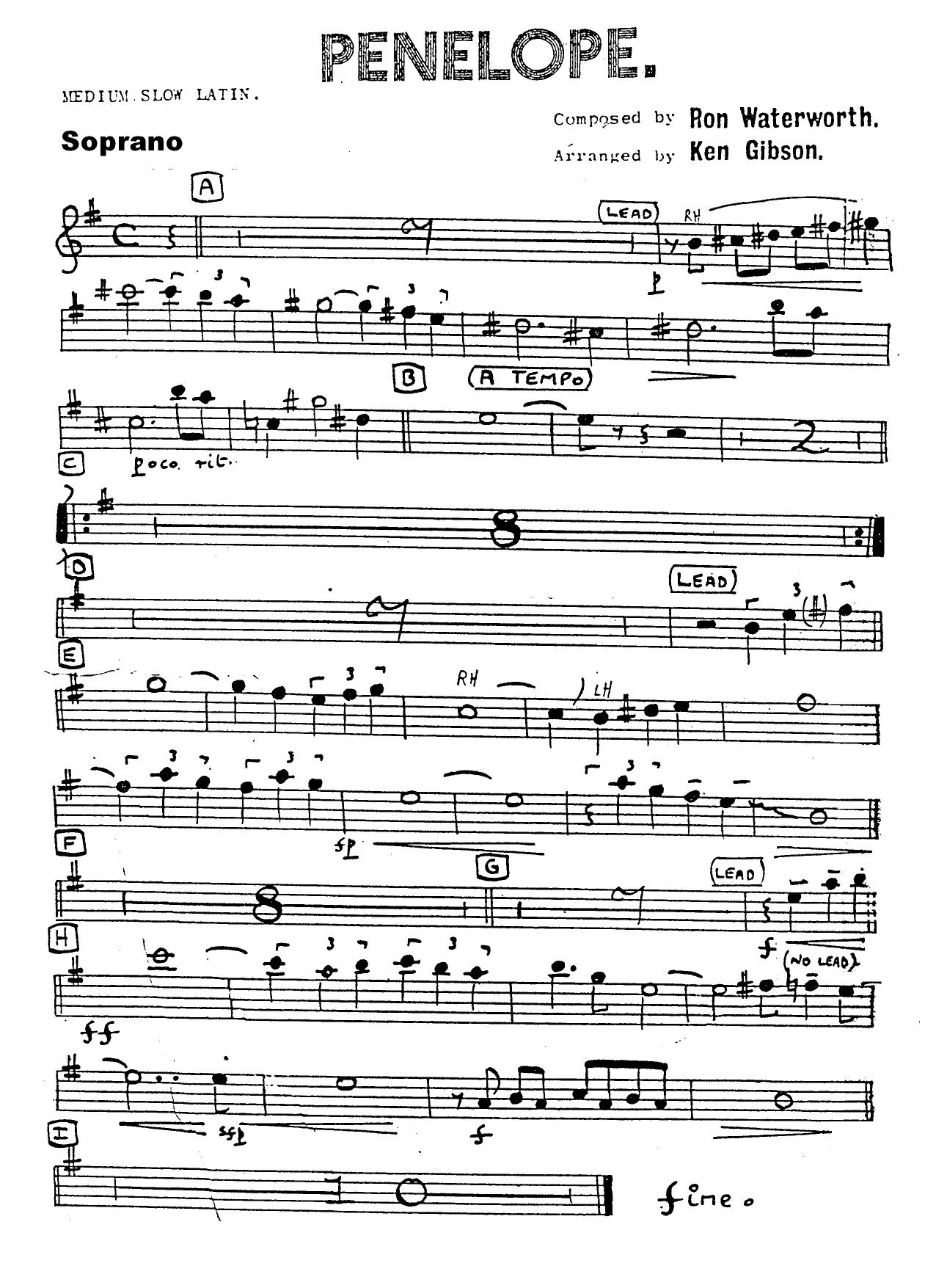
Penelope (K.Gibson) sheet music preview

Penelope (K.Gibson)

Composed by K. Gibson

Arranged by K.Gibson

  • Ensemble: Big Band
  • Style: Jazz Standard
  • Pages: 25
  • Instruments (17): Soprano, Alto (2), Tenor 1, Tenor 2, Baritone, TPT 1, TPT 2, TPT 3, TPT 4, Trombone 1, Tmb 2, Tmb 3, Tmb 4, Guitar, Piano, Bass Guitar, Drums
  • Difficulty: medium
  • Content: Individual Parts
  • Format: PDF Download (Instant)
  • Price: $24.99

"Penelope," composed and arranged by K. Gibson, stands as a sophisticated contribution to the contemporary large ensemble repertoire, bridging the expressive lyricism of modern mainstream jazz with the dynamic punch of classic big band tradition. Written in a vibrant post-bop idiom, the composition captures the evocative harmonic language associated with late-twentieth-century jazz innovators while maintaining an infectious, forward-driving rhythmic momentum. The piece honors the lineage of small-group modal jazz standards expanded into a grand, cinematic canvas, echoing the textural depth found in the works of master arrangers who wrote for the Vanguard Jazz Orchestra and major contemporary repertory bands. From the outset, the arrangement establishes a captivating medium-up swing groove set in a comfortable yet challenging concert key that allows the brass section to bloom and the woodwinds to navigate intricate scalar passages with clarity. The mood fluctuates gracefully between introspective, lush harmonic suspensions and high-energy, brass-heavy outbursts that demand absolute precision. The emotional arc moves from a mysterious, unfolding modal introduction to a triumphant, life-affirming climax, evoking both the poignant nostalgia of classic balladry and the exhilarating pulse of urban nightlife. K. Gibson’s distinctive approach treats the 17-piece big band not merely as a block-chord machine, but as a living, breathing chamber orchestra of jazz. The chart features meticulously crafted sax soli sections that showcase interlocking counterpoint, requiring absolute rhythmic unison across the reed section—including the soaring soprano saxophone lead and the anchoring baritone. Harmonic extensions are handled with modern sophistication; upper-structure triads sit atop altered dominants, creating a rich harmonic tapestry that challenges the rhythm section to provide a supportive yet elastic foundation. A driving, multi-tiered shout chorus serves as the structural peak, deploying dynamic contrast and angular sectional interleaving to build incredible tension before resolving into a triumphant restatement of the primary theme. Melodic duties are shared fluidly across the ensemble, moving organically from the lead alto and tenor saxophone chairs to conversational brass interventions. Open solo sections provide a prime platform for feature improvisers on tenor saxophone and trumpet, framed by clever background figures that build in intensity behind the soloist without muddying the texture. Technical demands include agile fingerwork in the woodwinds, wide interval leaps in the trumpet section, and a rhythm section adept at shifting fluidly between understated comping and explosive propulsion. Advanced collegiate ensembles, premier high school jazz bands, and professional community big bands will find this arrangement an immensely rewarding centerpiece for a concert program, offering sophisticated musicality that engages both discerning audiences and rigorous players alike. Navigating K. Gibson’s "Penelope" successfully requires a keen focus on internal rhythmic subdivision and dynamic control. The primary tempo should be established firmly by the drummer on the ride cymbal, maintaining a crisp, driving medium-up swing feel that never drags. The key technical challenge lies in the execution of the intricate sax soli; players must articulate eighth-note lines with a consistent modern jazz phrasing style, keeping upbeat accents light and forward-leaning. Conductors should pay close attention to balance during the harmonically dense ensemble passages, ensuring that the inner voices of the trombones do not obscure the primary melodic line carried by the trumpets and saxophones. Dynamics are meticulously marked; sudden drops from fortissimo to mezzo-piano must be executed with discipline to highlight the rich harmonic colorings. Mutes are not strictly mandated across the board, but subtle cup mutes in the trumpet section during the transitional interludes can enhance the textural variety. Rehearsal time is best spent isolating the syncopated rhythm section figures and ensuring the bass and drums lock in tightly before layering the horns on top. Q: What instruments and parts are included in this big band arrangement? A: The chart is scored for a standard 17-piece big band instrumentation, featuring 5 saxophones (Soprano Saxophone, Alto Saxophone 2, Tenor Saxophone 1, Tenor Saxophone 2, Baritone Saxophone), 4 trumpets, 4 trombones, and a full four-piece rhythm section consisting of piano, guitar, bass, and drums. Q: What is the difficulty level of this arrangement? A: This arrangement is rated as advanced, making it best suited for collegiate jazz ensembles, advanced high school bands, and professional or top-tier community big bands that are comfortable with complex modern harmonies and shifting metric feels. Q: What is the musical style and historical context of "Penelope"? A: Composed by K. Gibson, the piece is a modern jazz standard in the post-bop tradition, combining the modal exploration and sophisticated harmonic language of late-20th-century jazz with the dynamic energy of contemporary big band writing. Q: What makes this arrangement by K. Gibson unique? A: The arrangement stands out due to its intricate counterpoint, sophisticated upper-structure chord voicings, a deeply integrated saxophone soli, and a multi-tiered shout chorus that treats the 17-piece ensemble like a dynamic jazz chamber orchestra. Q: What is the performance duration and recommended tempo for this piece? A: While performance time can vary slightly depending on the length of the improvised solos, the piece runs approximately 6 to 7 minutes at a brisk, driving medium-up swing tempo.

Questions and answers

What is included in the Penelope (K.Gibson) PDF?
The verified current file contains individual parts across 25 pages.
How many instruments or parts are listed for Penelope (K.Gibson)?
The verified instrumentation list contains 17 entries for this Big Band arrangement.
Who is credited for Penelope (K.Gibson)?
Composer: K. Gibson. Arranger: K.Gibson.
What difficulty is listed for Penelope (K.Gibson)?
The verified difficulty level is medium.
What style is listed for Penelope (K.Gibson)?
The catalog lists the style as Jazz Standard.
Can I preview Penelope (K.Gibson) before buying?
Yes. The product page provides a preview generated from the current PDF file.
How is Penelope (K.Gibson) delivered?
After successful payment, the digital PDF is made available for download. The displayed price is $24.99.

Musicians Also Search For

Penelope K.Gibson PDFPenelope K.Gibson sheet musicPenelope arranged by K.GibsonK.Gibson big band chartsK.Gibson jazz arrangements PDFPenelope K. Gibson sheet musicPenelope K. Gibson big band arrangementsK. Gibson big band chartsPenelope big band arrangementsPenelope big band PDF downloadPenelope jazz sheet musicbig band sheet music downloadPenelope individual parts downloadPenelope sheet music PDFPenelope Jazz Standard chartsJazz Standard big band arrangementsbuy Penelope sheet musicdownload Penelope PDFPenelope jazz chartsbest K.Gibson big band arrangementsK. Gibson arranged by K.GibsonPenelope printable sheet musicbig band repertoire PDF

All arrangements by K.Gibson All K. Gibson sheet music