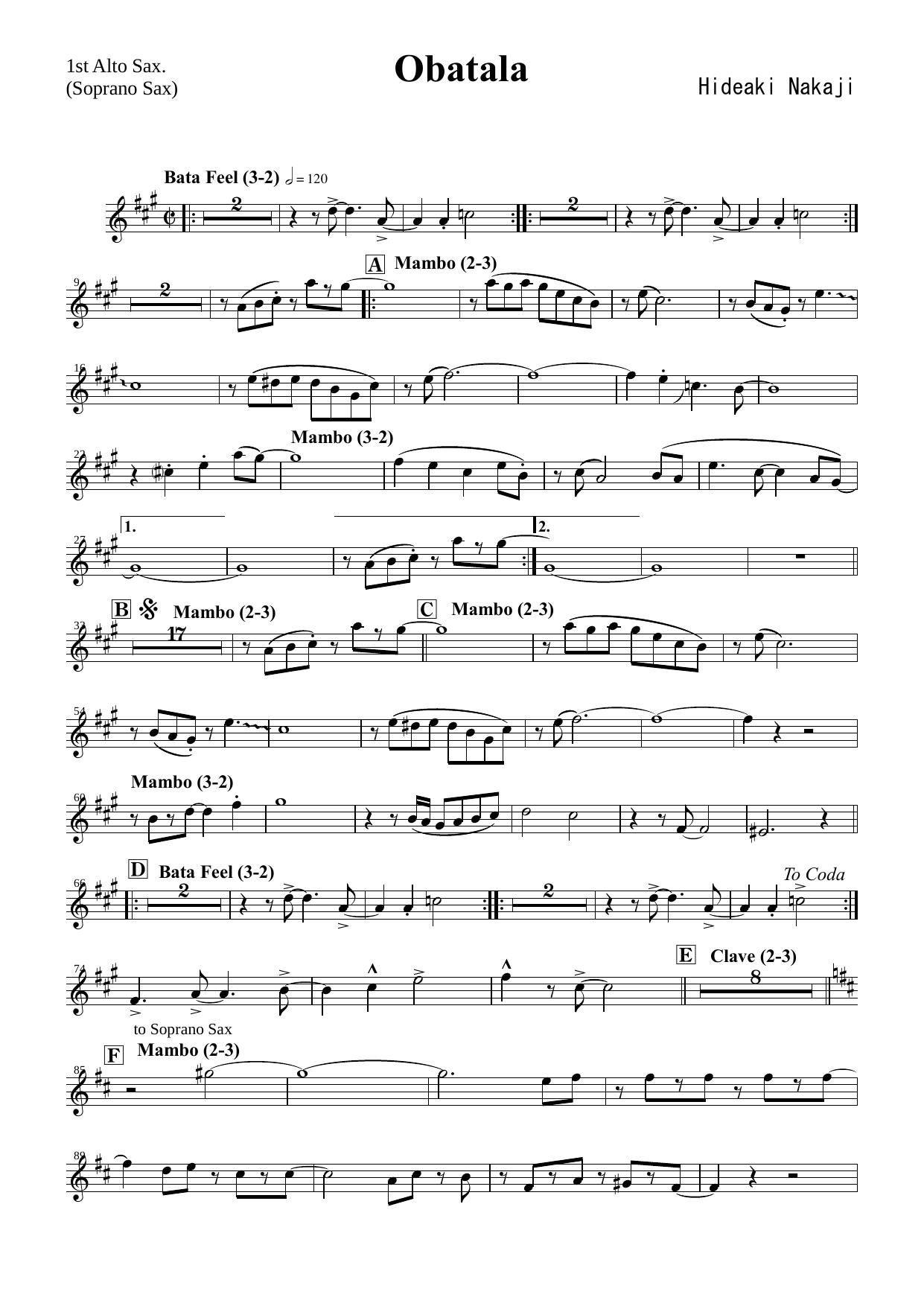
Obatala (Hideaki Nakaji)
Composed by Hideaki Nakaji
Arranged by Hideaki Nakaji
- Ensemble: Big Band
- Style: Jazz Standard
- Pages: 48
- Instruments (17): 1st Alto Saxophone (Soprano Saxophone), 2nd Alto Saxophone, 1st Tenor Saxophone, 2nd Tenor Saxophone, Baritone Saxophone, 1st Trumpet, 2nd Trumpet, 3rd Trumpet, 4th Trumpet, 1st Trombone, 2nd Trombone, 3rd Trombone, Bass Trombone, Guitar, Piano, Bass, Drums
- Difficulty: medium
- Content: Individual Parts
- Format: PDF Download (Instant)
- Price: $24.99
Written by celebrated trombonist and composer Hideaki Nakaji, renowned for his foundational work with the Orquesta de la Luz and the Nettai Jazz Orchestra, "Obatala" stands as a premier modern Latin-jazz composition. Originally conceived for Nakaji's vanguard ensembles and expanded for full 17-piece big band instrumentation, the piece draws its title from the West African and Caribbean deity, channeling a rich, spiritual, and high-octane rhythmic intensity. Emerging from the vibrant Tokyo contemporary Latin-jazz scene, this work bridges traditional Afro-Caribbean percussion frameworks with sophisticated, modern big band arranging techniques, earning widespread acclaim among collegiate and advanced performance ensembles. Driven by an infectious, high-energy Latin-mambo and afro-cuban groove, the composition crackles with vibrant syncopation and dynamic contrast. The harmonic language is lush and contemporary, utilizing extended chord voicings, sharp modal shifts, and punchy counter-lines that evoke the sultry, sun-drenched atmosphere of tropical jazz. The emotional arc surges from tension-filled rhythmic breakdowns to euphoric, wide-open ensemble explosions. Nakaji expertly leverages the full big band color palette, setting bright brass stabs against fluid, cascading woodwind lines that mimic the call-and-response patterns native to folkloric Latin performance traditions. Nakaji’s distinctive arranging approach shines through clever section interleaving and rhythm-section integration. Rather than treating the rhythm section as mere accompaniment, the chart relies on interlocking montuno patterns, crisp piano tumbaos, and intricate percussion layering to propel the horns. Solid brass shouts are balanced by tight, harmonized sax solis that demand exceptional articulation and stylistic unity. The writing ensures that every section—from the soaring lead trumpet to the anchoring baritone saxophone—plays an active role in driving the forward momentum, featuring sophisticated voice-leading and dynamic shading that keep performers and audiences thoroughly engaged. The melodic presentation is shared dynamically across the ensemble, frequently highlighting featured solo spaces for saxophone, trombone, and percussion. Technically demanding due to its rapid tempo shifts, aggressive syncopation, and high register requirements for the brass, the chart rewards diligent preparation with an immensely satisfying, crowd-pleasing payoff. Brass ranges ascend to moderate-high intervals (trumpets reaching up to D above the staff, trombones moving comfortably into the tenor upper register), while woodwinds navigate rapid-fire chromatic runs. Advanced high school, collegiate, and professional jazz orchestras will find this chart an exceptional vehicle for developing stylistic versatility, stamina, and ensemble synchronization. Success with this arrangement hinges on achieving an authentic, driving Latin-jazz groove rather than a rigid swing feel. The rhythm section—piano, bass, drums, and auxiliary percussion—must lock in tightly on the underlying tumbao and montuno patterns before the horns enter; the drummer and percussionists should maintain a clear dialogue using timbales, congas, and cowbells to drive the ensemble's momentum. Conductors should pay close attention to articulation markings: staccato notes in the brass must be clipped and punchy, while scalar woodwind passages require smooth, legato execution to contrast the aggressive rhythmic hits. Brass players should avoid overblowing during high-register shout choruses, ensuring balanced blend across the sections. Rehearsals should initially isolate the tricky syncopated figures at a reduced tempo, gradually building up to the performance marking while keeping the eighth-note subdivision even and rock-solid. Q: What instruments and parts are included in this arrangement? A: This 48-page big band publication includes a full 17-instrument instrumentation: 2 Alto Saxophones, 2 Tenor Saxophones, 1 Baritone Saxophone, 4 Trumpets, 4 Trombones, Piano, Guitar, Bass, Drums, and Auxiliary Percussion. Q: What is the difficulty level of this arrangement? A: It is rated as medium-difficult, making it best suited for advanced high school, collegiate, and professional big bands with strong rhythm section players and experienced soloists. Q: What is the musical style and historical background of the piece? A: Composed by Japanese Latin-jazz specialist Hideaki Nakaji, the piece fuses contemporary big band jazz harmony with traditional Afro-Caribbean and mambo rhythmic grooves. Q: What makes this specific arrangement unique? A: It features Nakaji’s signature compositional style, blending intricate horn solis, authentic folkloric percussion integration, and sophisticated extended harmonies rarely found in standard repertoire charts. Q: What is the expected performance tempo and duration? A: The chart moves at a brisk, energetic Latin tempo that generally yields a performance duration of approximately 5 to 6 minutes, depending on the length of the open solo sections.
Questions and answers
- What is included in the Obatala (Hideaki Nakaji) PDF?
- The verified current file contains individual parts across 48 pages.
- How many instruments or parts are listed for Obatala (Hideaki Nakaji)?
- The verified instrumentation list contains 17 entries for this Big Band arrangement.
- Who is credited for Obatala (Hideaki Nakaji)?
- Composer: Hideaki Nakaji. Arranger: Hideaki Nakaji.
- What difficulty is listed for Obatala (Hideaki Nakaji)?
- The verified difficulty level is medium.
- What style is listed for Obatala (Hideaki Nakaji)?
- The catalog lists the style as Jazz Standard.
- Can I preview Obatala (Hideaki Nakaji) before buying?
- Yes. The product page provides a preview generated from the current PDF file.
- How is Obatala (Hideaki Nakaji) delivered?
- After successful payment, the digital PDF is made available for download. The displayed price is $24.99.
Musicians Also Search For
Obatala Hideaki Nakaji PDF • Obatala Hideaki Nakaji sheet music • Obatala arranged by Hideaki Nakaji • Hideaki Nakaji big band charts • Hideaki Nakaji jazz arrangements PDF • Obatala Hideaki Nakaji big band arrangements • Obatala big band arrangements • Obatala big band PDF download • Obatala jazz sheet music • big band sheet music download • Obatala individual parts download • Obatala sheet music PDF • Obatala Jazz Standard charts • Jazz Standard big band arrangements • buy Obatala sheet music • download Obatala PDF • Obatala jazz charts • best Hideaki Nakaji big band arrangements • Obatala printable sheet music • big band repertoire PDF