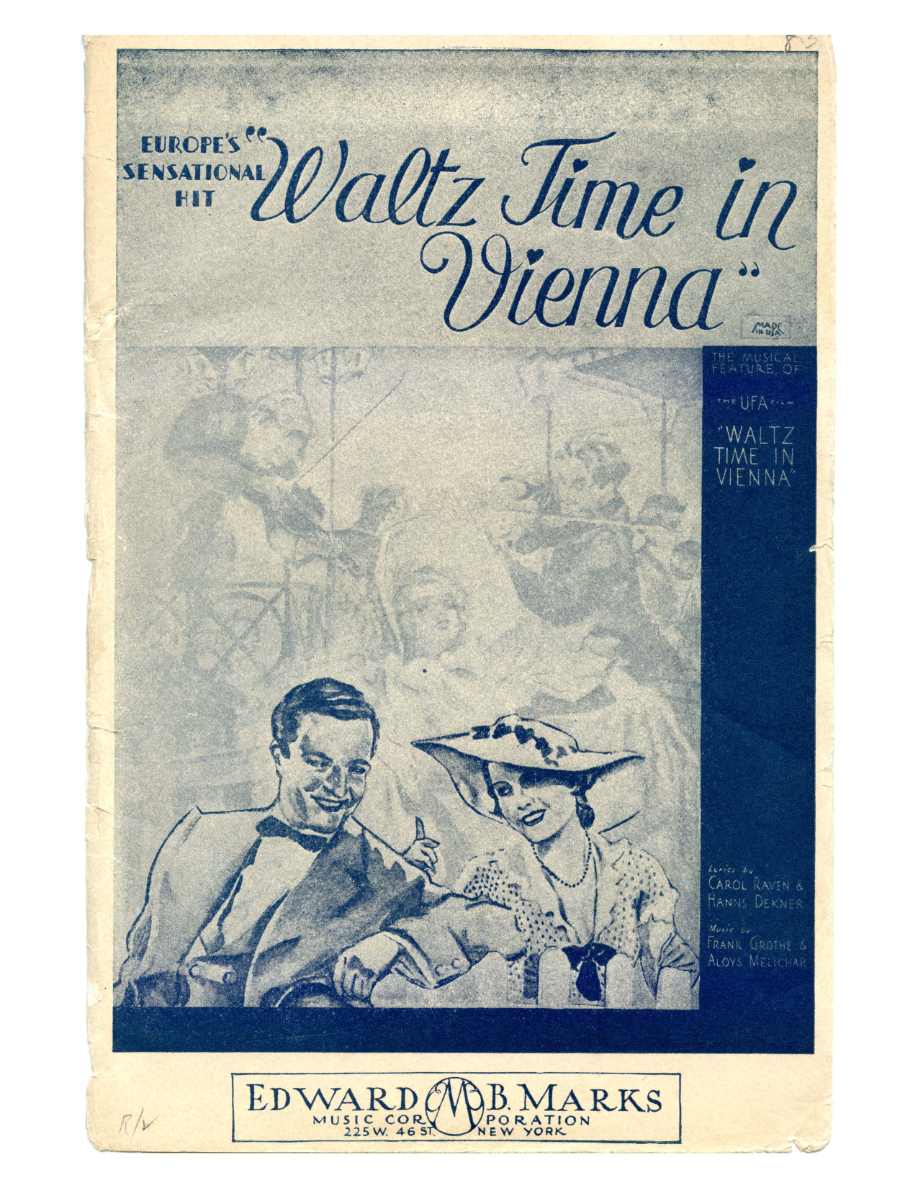
Waltz Time In Vienna (A.Bleyer) sheet music preview

Waltz Time In Vienna (A.Bleyer)

Composed by A. Bleyer

Arranged by A. Bleyer

  • Ensemble: Big Band
  • Style: Waltz
  • Pages: 34
  • Instruments (17): Alto Saxophone 1, Alto Saxophone 2, Tenor Saxophone 1, Tenor Saxophone 2, Baritone Saxophone, Trumpet 1, Trumpet 2, Trumpet 3, Trumpet 4, Trombone 1, Trombone 2, Trombone 3, Bass Trombone, Piano, Bass, Drums, Guitar
  • Difficulty: medium
  • Content: Individual Parts
  • Format: PDF Download (Instant)
  • Price: $24.99

"Waltz Time In Vienna," composed and arranged by A. Bleyer, stands as a captivating and historically resonant big band chart that elegantly bridges the European classical waltz tradition with the swinging dynamism of American jazz. While the specific original composition date isn't widely publicized, the title itself evokes the golden age of Viennese waltz, suggesting a piece that either predates the big band era and is reinterpreted, or is a contemporary jazz composition deeply inspired by those classical forms. Given the big band instrumentation, it most likely emerged during the mid-20th century, a period when jazz arrangers frequently explored diverse harmonic and rhythmic landscapes, often incorporating elements from classical music or folk traditions into the burgeoning big band sound. This piece is less about being a jazz standard in the conventional sense and more about showcasing a unique stylistic fusion, offering a refreshing departure from typical swing or blues forms. Musically, "Waltz Time In Vienna" is, as its name implies, firmly rooted in a 3/4 time signature, delivering a sophisticated and often buoyant waltz feel rather than a traditional swing. The tempo is best described as a medium-bright waltz, allowing for both lyrical melodic lines and sparkling rhythmic interplay without feeling rushed. The key, likely in a major mode, contributes to an overall mood of elegance, perhaps even a touch of nostalgia or romanticism, but always infused with an underlying jazz sensibility. Listeners can expect rich, full-bodied harmonies characteristic of big band writing, with sections that evoke the grandeur of a ballroom alongside moments of intricate jazz improvisation. The energy level fluctuates, building from graceful statements to more powerful, brass-driven climaxes, creating a dynamic and engaging listening experience that avoids monotony. A. Bleyer's arrangement of "Waltz Time In Vienna" is particularly distinctive in its masterful integration of classical waltz characteristics with jazz orchestration techniques. Bleyer, known for a sophisticated harmonic palette, employs lush, often close-voiced harmonies in the saxophone and brass sections, creating a warm and cohesive sound. The melody is typically introduced by the saxophone section, often with a lyrical and flowing quality, before being picked up by the brass for a more assertive statement. Soli sections for the saxophones are prominent, showcasing intricate counterpoint and harmonized lines that demand precision and blend. While specific solo sections are not explicitly detailed, the arrangement likely provides opportunities for improvised solos over the waltz changes, offering a soloist the chance to explore melodic and harmonic ideas within this unique rhythmic framework. The piece culminates in a powerful shout chorus, characteristic of big band writing, where the full ensemble delivers a harmonically rich and rhythmically driving statement before a refined, conclusive ending. Performing "Waltz Time In Vienna" is a rewarding experience for a big band seeking to expand its repertoire beyond conventional jazz forms. The primary technical challenges lie in maintaining a consistent and authentic waltz feel throughout the ensemble, ensuring precise articulation, and achieving excellent blend and balance within the densely voiced sections. The saxophones will need strong ensemble playing for the soli passages, and the brass will require good breath support and dynamic control for the sustained melodic lines and powerful shout sections. This arrangement is well-suited for advanced high school, college, community, and professional jazz ensembles. Its unique blend of styles offers an educational opportunity to explore rhythmic subtlety and harmonic sophistication, making it an excellent choice for bands looking to present a polished, distinctive, and musically rich performance. Conductors should emphasize a consistent, flowing waltz feel, avoiding any tendency to rush or drag the triplet subdivisions. The tempo should be a medium-bright waltz, around 144-156 beats per minute for the dotted half note, allowing for both lyrical expression and rhythmic clarity. Articulation is key: ensure brass attacks are precise but not overly aggressive, and saxophone lines are legato where indicated, with clear phrasing. Pay close attention to dynamic contrasts, building from elegant piano sections to powerful forte climaxes in the shout chorus. Rehearsal time should be dedicated to the saxophone soli passages to achieve tight ensemble and blend, and to the brass section for precise entrances and sustained tone. There are no special mute requirements, but clean releases and sustained notes are crucial for the piece's sophisticated character. Q: What instruments and parts are included in this arrangement? A: This big band arrangement includes parts for 17 instruments: Alto Saxophone 1 & 2, Tenor Saxophone 1 & 2, Baritone Saxophone, Trumpet 1-4, Trombone 1-4, Piano, Bass, Drums, and Guitar. Q: What is the difficulty level of "Waltz Time In Vienna"? A: "Waltz Time In Vienna" is suitable for advanced high school, college, community, and professional jazz ensembles due to its sophisticated harmonic language, intricate ensemble passages, and the requirement for a nuanced waltz feel. Q: What musical style and historical context does this arrangement represent? A: This arrangement blends the elegance of the classical Viennese waltz with the harmonic and rhythmic characteristics of mid-20th century big band jazz, offering a unique fusion rather than a traditional jazz standard. Q: What makes A. Bleyer's arrangement of "Waltz Time In Vienna" unique? A: A. Bleyer's treatment stands out for its masterful integration of a consistent waltz feel into a big band setting, featuring lush voicings, intricate saxophone soli sections, and dynamic contrasts that showcase a sophisticated blend of classical and jazz elements. Q: What is the typical performance duration or tempo for this piece? A: The typical performance duration for "Waltz Time In Vienna" is approximately 4-5 minutes, performed at a medium-bright waltz tempo, generally around 144-156 beats per minute for the dotted half note.

Musicians Also Search For

Waltz Time In Vienna A. Bleyer PDFWaltz Time In Vienna A. Bleyer sheet musicWaltz Time In Vienna arranged by A. BleyerA. Bleyer big band chartsA. Bleyer jazz arrangements PDFWaltz Time In Vienna A. Bleyer big band arrangementWaltz Time In Vienna big band arrangementWaltz Time In Vienna big band PDF downloadWaltz Time In Vienna jazz ensemble sheet musicbig band sheet music instant downloadWaltz Time In Vienna individual parts downloadWaltz Time In Vienna sheet music with partsWaltz Time In Vienna Waltz chartWaltz big band arrangementsbuy Waltz Time In Vienna sheet music onlinedownload Waltz Time In Vienna PDFWaltz Time In Vienna jazz chartbest A. Bleyer big band arrangementsWaltz Time In Vienna printable sheet musicbig band repertoire PDF

All arrangements by A. Bleyer All A. Bleyer sheet music