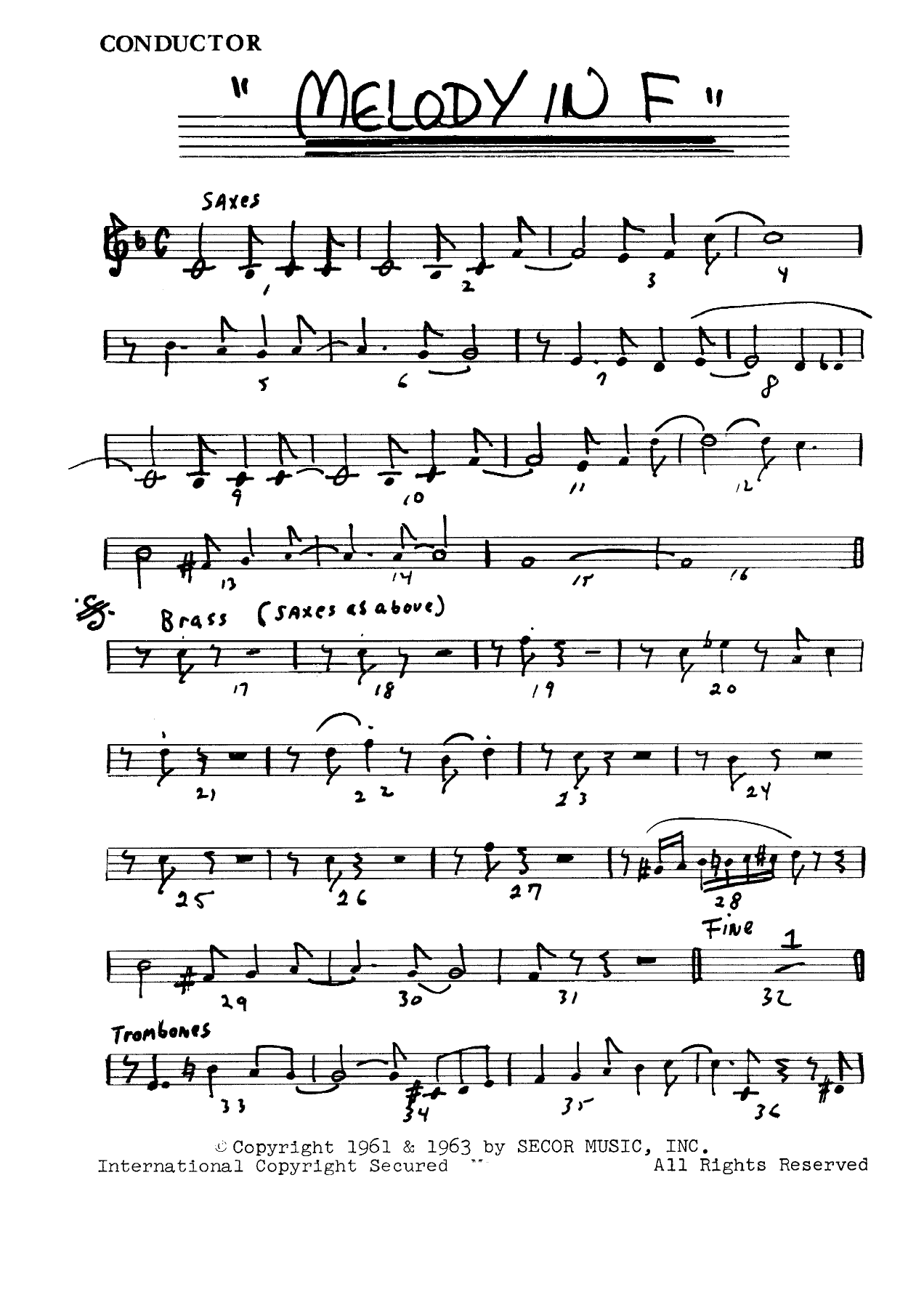
Melody In F (B.May) sheet music preview

Melody In F (B.May)

Composed by Anton Rubinstein

Arranged by B.May

  • Ensemble: Big Band
  • Style: Jazz Standard
  • Pages: 42
  • Instruments (18): Conductor, 1st Alto Saxophone, 2nd Alto Saxophone, 1st Tenor Saxophone, 2nd Tenor Saxophone, Baritone Saxophone, 1st Trumpet, 2nd Trumpet, 3rd Trumpet, 4th Trumpet, 1st Trombone, 2nd Trombone, 3rd Trombone, 4th Trombone, Piano, Guitar, Bass, Drums
  • Difficulty: medium
  • Content: Individual Parts
  • Format: PDF Download (Instant)
  • Price: $24.99

Anton Rubinstein's "Melody in F," originally composed in 1852 as part of his *Two Melodies for Piano, Op. 3, No. 1*, stands as a quintessential example of 19th-century Romantic salon music. While its origins are deeply rooted in the classical tradition, its enduring melodic beauty and harmonic simplicity made it ripe for reinterpretation in the burgeoning jazz era. The piece gained significant traction as a jazz standard through various adaptations, particularly in the early to mid-20th century, where its lyrical theme provided a fertile ground for improvisation and reharmonization. It represents a fascinating bridge between classical melodicism and jazz's expressive freedom, often appearing in the repertoires of swing and traditional jazz ensembles who sought to imbue familiar tunes with new rhythmic and harmonic life. The original's gentle, flowing character, typically performed at a moderate tempo, lends itself beautifully to a medium swing interpretation, allowing the inherent grace of the melody to shine through a new rhythmic lens. B.May's big band arrangement of "Melody in F" masterfully transforms Rubinstein's classic into a vibrant, medium-swing jazz chart, set primarily in the key of F major. The arrangement opens with a warm, inviting brass chorale, immediately establishing a sophisticated yet accessible mood. B.May's signature approach to voicings is evident throughout, employing rich, often close-voiced harmonies in the saxophone section that provide a lush foundation, contrasted by bright, articulate brass figures. The arrangement features a compelling interplay between sections, with the melody initially carried by the alto saxophone 1, offering a lyrical and expressive lead. This is followed by a beautifully crafted soli section for the saxophones, showcasing intricate lines that weave around the original theme, demonstrating B.May's penchant for sophisticated ensemble writing that challenges without overwhelming. The chart builds dynamically, incorporating a meticulously constructed shout chorus that elevates the energy without sacrificing the piece's inherent melodic charm. B.May expertly utilizes dynamic contrasts and rhythmic variations to maintain interest, ensuring that the arrangement feels fresh and engaging from start to finish. Featured solo opportunities are strategically placed for tenor saxophone and trumpet, allowing skilled improvisers to explore the harmonic landscape while remaining true to the piece's melodic essence. These solo sections are supported by well-crafted background figures that provide harmonic and rhythmic propulsion. The technical challenges are primarily centered around ensemble precision, blend, and articulation, particularly in the saxophone soli and the brass shout chorus. The rewarding aspect of performing this arrangement lies in its ability to present a familiar melody in a fresh, compelling jazz context, offering both musicians and audiences a delightful musical experience. This arrangement is ideally suited for college and advanced high school jazz ensembles, as well as community and professional big bands looking for a sophisticated yet approachable chart that showcases both ensemble cohesion and individual soloistic flair. Conductors should emphasize a relaxed, medium-swing feel from the outset, ensuring a consistent rhythmic pulse without rushing the melodic lines. The primary technical challenge lies in achieving precise articulation and blend within the saxophone soli, which requires careful attention to dynamics and phrasing. Encourage saxophones to play with a unified sound, focusing on matching tone and attack. The brass section should strive for clarity and control, particularly in the shout chorus, where strong attacks and sustained releases are crucial. Trumpet and trombone sections should be mindful of balancing their sound to support the lead lines without overpowering them. There are no special techniques like plunger mutes or falls indicated, focusing instead on clean, expressive playing. Rehearsal time should be dedicated to isolating the saxophone soli and the brass shout chorus to ensure rhythmic accuracy and harmonic balance. Encourage soloists to listen to the ensemble backgrounds and interact dynamically. Q: What instruments and parts are included in this arrangement? A: This big band arrangement includes parts for 17 instruments: Alto Saxophone 1, Alto Saxophone 2, Tenor Saxophone 1, Tenor Saxophone 2, Baritone Saxophone, Trumpet 1, Trumpet 2, Trumpet 3, Trumpet 4, Trombone 1, Trombone 2, Trombone 3, Trombone 4, Piano, Bass, Drums, and Guitar. A full conductor score is also included. Q: What is the difficulty level of "Melody In F (B.May)"? A: This arrangement is rated as medium-advanced. It is suitable for college, advanced high school, community, and professional big bands due to its sophisticated voicings, intricate ensemble passages, and featured solo opportunities. Q: What is the musical style and historical context of this piece? A: This arrangement is a medium-swing jazz interpretation of Anton Rubinstein's "Melody in F," a 19th-century classical piece that became a popular jazz standard. It blends classical melodicism with a traditional big band jazz aesthetic. Q: What makes B.May's arrangement of "Melody In F" unique? A: B.May's arrangement is unique for its rich, close-voiced saxophone soli, dynamic shout chorus, and sophisticated reharmonization of the classical theme. It combines a respectful treatment of the original melody with contemporary big band jazz elements. Q: What is the approximate performance duration and recommended tempo for this arrangement? A: The approximate performance duration is 4-5 minutes, depending on the length of the improvised solos. The recommended tempo is a medium swing, around 120-130 beats per minute, allowing for a relaxed yet driving feel.

Questions and answers

What is included in the Melody In F (B.May) PDF?
The verified current file contains a conductor score and individual parts across 42 pages.
How many instruments or parts are listed for Melody In F (B.May)?
The verified instrumentation list contains 18 entries for this Big Band arrangement.
Who is credited for Melody In F (B.May)?
Composer: Anton Rubinstein. Arranger: B.May.
What difficulty is listed for Melody In F (B.May)?
The verified difficulty level is medium.
What style is listed for Melody In F (B.May)?
The catalog lists the style as Jazz Standard.
Can I preview Melody In F (B.May) before buying?
Yes. The product page provides a preview generated from the current PDF file.
How is Melody In F (B.May) delivered?
After successful payment, the digital PDF is made available for download. The displayed price is $24.99.

Musicians Also Search For

Melody In F B.May PDFMelody In F B.May sheet musicMelody In F arranged by B.MayB.May big band chartsB.May jazz arrangements PDFMelody In F Anton Rubinstein sheet musicMelody In F Anton Rubinstein big band arrangementsAnton Rubinstein big band chartsMelody In F big band arrangementsMelody In F big band PDF downloadMelody In F jazz sheet musicbig band sheet music downloadMelody In F conductor score PDFMelody In F individual parts downloadMelody In F sheet music PDFMelody In F Jazz Standard chartsJazz Standard big band arrangementsbuy Melody In F sheet musicdownload Melody In F PDFMelody In F jazz chartsbest B.May big band arrangementsAnton Rubinstein arranged by B.MayMelody In F printable sheet musicbig band repertoire PDF

All arrangements by B.May All Anton Rubinstein sheet music