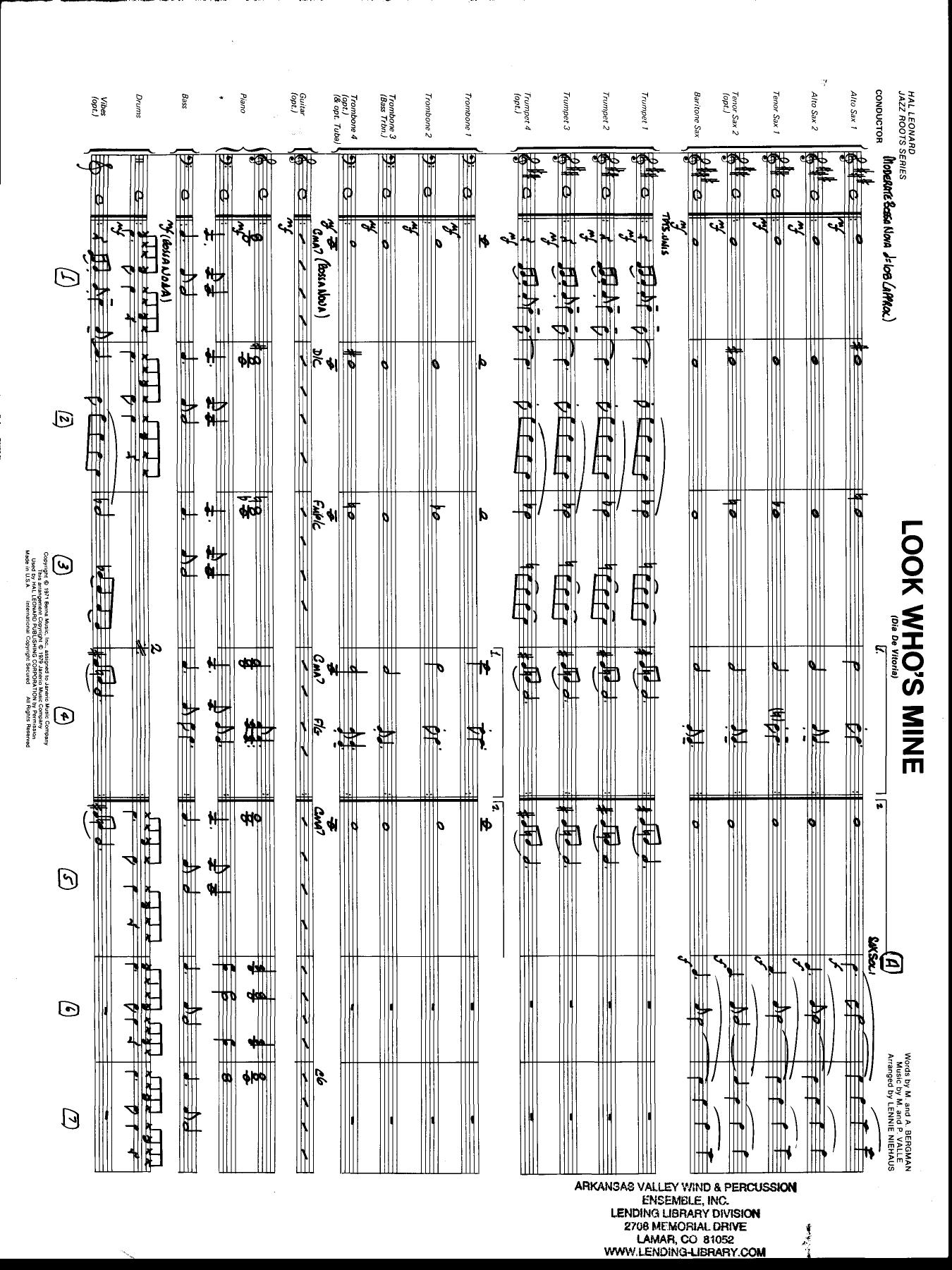
Look Who's Mine (L.Niehaus)
Composed by Lennie Niehaus
Arranged by Lennie Niehaus
- Ensemble: Big Band
- Pages: 55
- Instruments (19): 1st Eb Alto Saxophone, 2nd Eb Alto Saxophone, 1st Bb Tenor Saxophone, 2nd Bb Tenor Saxophone (Opt.), Eb Baritone Saxophone, 1st Bb Trumpet, 2nd Bb Trumpet, 3rd Bb Trumpet, 4th Bb Trumpet (Opt.), 1st Trombone, 2nd Trombone, 3rd Trombone (Bass Trombone), 4th Trombone (Opt.), Tuba (Opt.), Bass, Drums, Vibes (Opt.), Piano, Guitar (Opt.)
- Difficulty: advanced
- Content: Individual Parts
- Format: PDF Download (Instant)
- Price: $24.99
Lennie Niehaus remains one of the West Coast jazz movement’s most definitive architects, bridging the gap between sophisticated bop vocabulary and pristine big band counterpoint. Emerging from his seminal tenure as a saxophonist and arranger for Stan Kenton’s groundbreaking orchestras, Niehaus developed a compositional voice defined by immaculate linear writing, intricate harmonic structures, and an economic yet deeply swinging aesthetic. "Look Who's Mine" encapsulates this mature West Coast style, offering a masterclass in modern big band writing that avoids cluttered orchestration in favor of transparent, sparkling textures and interlocking horn lines. Driven by a crisp, infectious medium-swing groove in 4/4 time, the composition radiates an effortless sophistication and upbeat optimism. The harmonic landscape balances accessible modal extensions with clever chromatic voice-leading, evoking the sun-drenched, intellectually stimulating atmosphere of 1950s and 60s Los Angeles jazz clubs. Rather than relying on sheer volume to generate excitement, the chart builds its emotional arc through clever dynamic contrast, rhythmic displacement, and subtle shifts in texture that keep both the performers and the audience thoroughly engaged from the first downbeat to the final chord. Niehaus treats the 16-piece ensemble with chamber-like precision, granting distinct independence to every section while maintaining a cohesive, driving ensemble sound. The arrangement features tightly integrated saxophone soli passages that demand immaculate intonation and light, articulation-driven phrasing characteristic of the Cool School. Brass writing is transparent yet punchy, utilizing warm open horns and tasteful harmonies rather than aggressive, high-note pyrotechnics. A standout structural feature is the development section, where Niehaus crafts a conversational interplay between the rhythm section and staggered horn entries, leading naturally into an inspired solo vehicle for the designated soloist before building toward a clever, understated shout chorus. Advanced high school ensembles, collegiate jazz orchestras, and professional repertory bands will find an ideal balance of intellectual challenge and sheer stylistic satisfaction here. While the individual parts do not demand extreme technical bravura or high-register endurance, success requires exceptional ensemble listening, crisp articulation, and a refined sense of swing sub-division. Musicians who master the subtle stylistic nuances of this chart will unlock a quintessential example of West Coast jazz writing that rewards careful rehearsal and elevates any concert program. Achieving success with this arrangement requires prioritizing rhythmic precision, dynamic balance, and stylistic unity over sheer volume. The tempo should anchor comfortably in a driving medium swing; avoid rushing the quarter-note pulse, as the chart relies heavily on laid-back, conversational eighth-note phrasing. The primary technical challenge lies in the execution of Niehaus’s linear counterpoint and close-interval harmonies within the saxophone and brass sections. Conductors should ensure that inner voices project clearly without overpowering the lead players. Articulation is paramount: encourage short, detached notes to be light and pointed, while longer notes maintain a sustained, vocal quality without excessive vibrato. The rhythm section serves as the engine room; the drummer should maintain a feather-light ride cymbal pattern with crisp hi-hat chicks on beats two and four, while the bassist walks a steady, acoustic-style line that locks tightly with the piano's comping voicings. Pay close attention to dynamic markings, particularly the sudden sub-ito piano drops, which provide the chart with its characteristic dramatic tension and forward momentum. Q: What specific instrumentation and parts are included in this arrangement? A: Scoring is written for a standard 16-instrument big band lineup, comprising 2 alto saxophones, 2 tenor saxophones, baritone saxophone, trumpet and trombone sections, along with a full rhythm section (piano, bass, drums, and optional guitar). Q: What is the overall difficulty level of this chart? A: This arrangement is graded as intermediate to advanced (Level 4), making it exceptionally well-suited for advanced high school, collegiate, and professional jazz ensembles that excel at swing articulation and ensemble blend. Q: What style does this piece represent, and who is the composer? A: Composed and arranged by West Coast jazz icon Lennie Niehaus, the piece exemplifies the sophisticated, cool-school big band style characterized by linear counterpoint, clean voicings, and a driving medium-swing feel. Q: What makes this specific arrangement unique within a big band library? A: It stands out for its chamber-like transparency, avoiding heavy brass-heavy climaxes in favor of intricate horn interlock, smart harmonic voice-leading, and an emphasis on linear melodic interplay. Q: What is the suggested performance tempo and duration for this arrangement? A: The chart is designed for a brisk, driving medium-swing tempo (approx. quarter note = 120-132 BPM) and spans a total of 55 comprehensive pages across the full conductor score and individual instrumental parts.
Questions and answers
- What is included in the Look Who's Mine (L.Niehaus) PDF?
- The verified current file contains a conductor score and individual parts across 55 pages.
- How many instruments or parts are listed for Look Who's Mine (L.Niehaus)?
- The verified instrumentation list contains 19 entries for this Big Band arrangement.
- Who is credited for Look Who's Mine (L.Niehaus)?
- Composer: Lennie Niehaus. Arranger: Lennie Niehaus.
- What difficulty is listed for Look Who's Mine (L.Niehaus)?
- The verified difficulty level is advanced.
- Can I preview Look Who's Mine (L.Niehaus) before buying?
- Yes. The product page provides a preview generated from the current PDF file.
- How is Look Who's Mine (L.Niehaus) delivered?
- After successful payment, the digital PDF is made available for download. The displayed price is $24.99.
Musicians Also Search For
Look Who's Mine Lennie Niehaus PDF • Look Who's Mine Lennie Niehaus sheet music • Look Who's Mine arranged by Lennie Niehaus • Lennie Niehaus big band charts • Lennie Niehaus jazz arrangements PDF • Look Who's Mine Lennie Niehaus big band arrangements • Look Who's Mine big band arrangements • Look Who's Mine big band PDF download • Look Who's Mine jazz sheet music • big band sheet music download • Look Who's Mine conductor score PDF • Look Who's Mine individual parts download • Look Who's Mine sheet music PDF • buy Look Who's Mine sheet music • download Look Who's Mine PDF • Look Who's Mine jazz charts • best Lennie Niehaus big band arrangements • Look Who's Mine printable sheet music • big band repertoire PDF