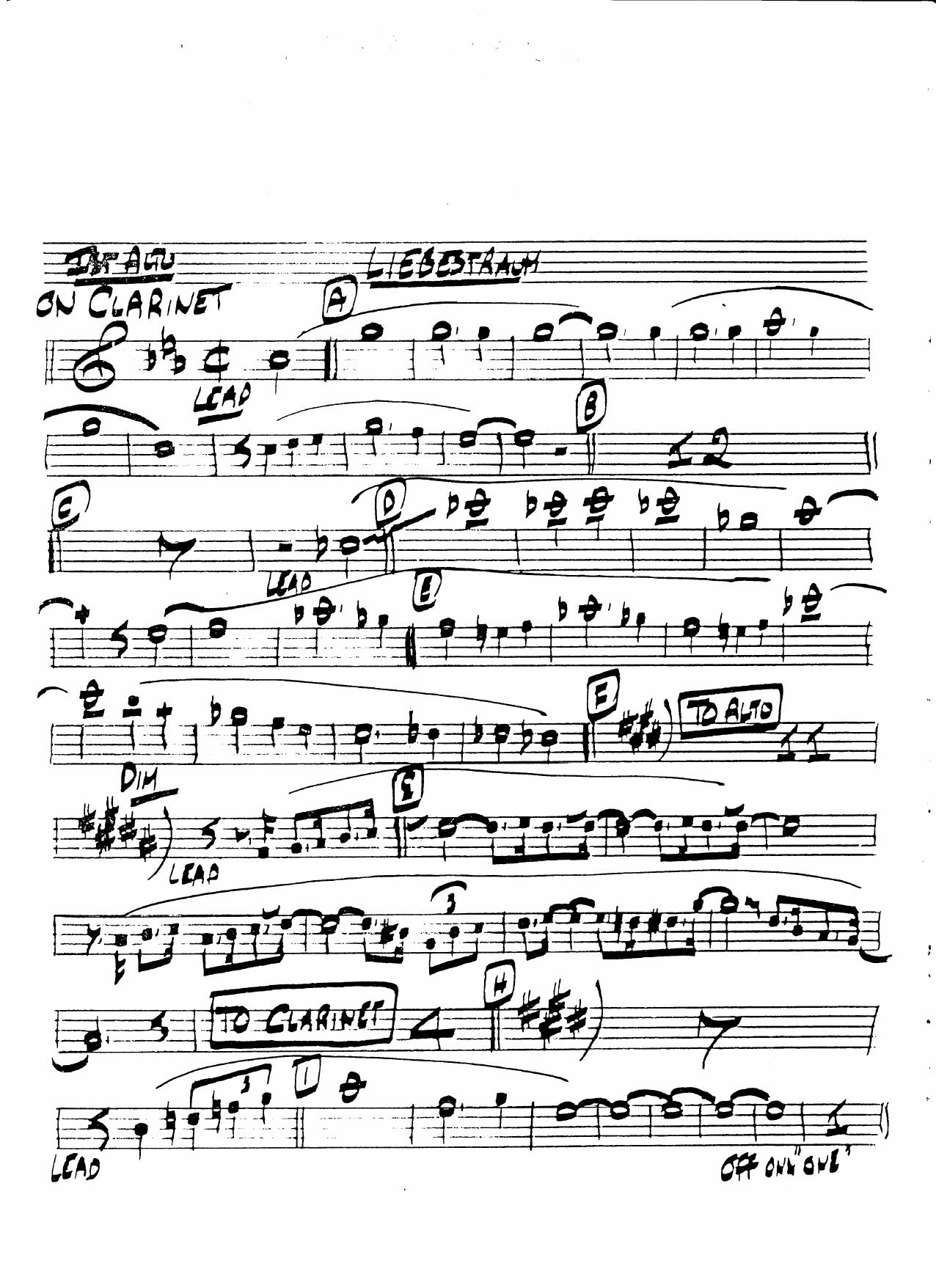
Liebestraum (J.Farley) sheet music preview

Liebestraum (J.Farley)

Composed by Franz Liszt

Arranged by John Farley

  • Ensemble: Big Band
  • Pages: 17
  • Instruments (16): 1st Alto Saxophone (doubling Clarinet), 2nd Alto Saxophone, 1st Tenor Saxophone, 2nd Tenor Saxophone, Baritone Saxophone (doubling Alto Saxophone), 1st Trumpet, 2nd Trumpet, 3rd Trumpet, 4th Trumpet, 1st Trombone, 2nd Trombone, 3rd Trombone, 4th Trombone, Piano, Bass, Drums
  • Difficulty: easy
  • Content: Individual Parts
  • Format: PDF Download (Instant)
  • Price: $24.99

Franz Liszt originally conceived his *Liebestraum No. 3 in A-flat major* (Dreams of Love) in 1850 as a set of three piano nocturnes, transforming a previously penned art song into one of the most enduringly romantic melodies of the 19th-century Romantic era. While Liszt’s original salon piece is a cornerstone of classical piano literature characterized by soaring cantabile lines and cascading cadenzas, arranger John Farley seizes upon its lush harmonic framework to reimagine the work through a sophisticated contemporary jazz lens. By translating the expressive, rubato-heavy piano textures into a full big band palette, Farley bridges the gap between European classical impressionism and mid-century modal jazz harmony. Farley’s contemporary jazz ballad treatment unfolds at a relaxed, breath-taking tempo (around 66 BPM), anchored by a subtle, floating 12/8 contemporary jazz-waltz feel that gently pushes and pulls beneath the ensemble. The mood shifts seamlessly from introspective and melancholic to breathtakingly cinematic, evoking the twilight warmth of a late-night West Coast session combined with the rich, dense voicings reminiscent of the Gil Evans or Bob Brookmeyer repertoires. The key signature retains a nod to the original’s tonal color while incorporating extended tertian harmonies, altered dominants, and lush chromatic mediant shifts that give the traditional melody a sophisticated, modern harmonic depth. The arrangement opens with a delicate, rubato flugelhorn and tenor saxophone dialogue that states the iconic theme before the rhythm section establishes the underlying groove. Farley distributes the melodic weight thoughtfully across the ensemble; the sax soli in the middle section features exquisite four-part writing that highlights tight, intertwined counterpoint, while the brass section provides warm, muted cushion pads. A soaring tenor saxophone feature takes center stage for the primary improvised solo, supported by rich, cascading backgrounds from the full ensemble. The climax of the chart arrives in a restrained, gorgeous shout chorus that avoids heavy-handed bombasts, opting instead for soaring upper-structure triads and a gorgeous harmonic expansion that resolves into a peaceful, lingering coda. Advanced high school ensembles with mature sections, college jazz orchestras, and professional community big bands will find this 17-page chart an exceptional showcase for developing dynamic control, intonation, and expressive rubato playing. Because the piece relies heavily on balance, transparent textures, and precise stylistic interpretation rather than sheer velocity, it offers a refreshing, sophisticated change of pace for festival setlists or formal concert programs, rewarding both the performers and the audience with a profoundly emotional musical journey. Navigating John Farley’s jazz interpretation of *Liebestraum* requires exceptional listening across all sections, as rhythmic precision within a loose, floating 12/8 meter is paramount. Conductors should emphasize that the tempo must breathe; avoid a rigid mechanical click, and instead encourage the rhythm section to push and pull gently behind the soloists while maintaining a rock-solid pulse. The primary technical challenge lies in the dynamic contrast and intonation of extended voicings, particularly during the dense brass pads and the exposed saxophone soli. Saxophonists must strive for a seamless, vocal-like legato articulation, avoiding harsh accents unless specifically marked. Trumpets and trombones should utilize warm cup or bucket mutes where indicated to achieve the velvety, impressionistic timbre required for the ensemble backgrounds. During rehearsal, isolate the rhythm section first to lock in the hypnotic underlying groove before layering the horn sections. Pay meticulous attention to the balance of the inner voices in the saxophones, ensuring the lead alto does not cover the rich, lower-register harmonies of the baritone and tenor. Finally, treat the dynamic swells as organic waves, allowing the climax of the chart to bloom naturally without forcing the tone. Q: What instruments and parts are included in this arrangement? A: This chart is scored for an 8-instrument big band instrumentation, featuring Alto Saxophone, Tenor Saxophone, Baritone Saxophone, Trumpet, and Trombone parts, alongside a complete rhythm section. Q: What is the difficulty level of this John Farley arrangement? A: It is pitched at an advanced level, best suited for college jazz orchestras, professional big bands, and high school groups with strong players capable of handling sophisticated modal harmonies and expressive rubato phrasing. Q: What style and historical era does this piece draw from? A: It merges 19th-century Romantic classical piano literature—specifically Franz Liszt's 1850 nocturne—with contemporary, sophisticated jazz ballad styling and lush, impressionistic harmonies. Q: What makes this particular arrangement unique? A: John Farley successfully translates Liszt's rubato piano cadenzas and soaring melodies into a transparent, modal jazz-waltz framework complete with inventive sax soli writing and a restrained, elegant shout chorus. Q: What is the performance duration and tempo of the piece? A: The arrangement is performed at a slow, contemplative ballad tempo of approximately 66 BPM in a 12/8 jazz-waltz feel, with a total duration of roughly 4 to 5 minutes depending on solo lengths.

Questions and answers

What is included in the Liebestraum (J.Farley) PDF?
The verified current file contains individual parts across 17 pages.
How many instruments or parts are listed for Liebestraum (J.Farley)?
The verified instrumentation list contains 16 entries for this Big Band arrangement.
Who is credited for Liebestraum (J.Farley)?
Composer: Franz Liszt. Arranger: John Farley.
What difficulty is listed for Liebestraum (J.Farley)?
The verified difficulty level is easy.
Can I preview Liebestraum (J.Farley) before buying?
Yes. The product page provides a preview generated from the current PDF file.
How is Liebestraum (J.Farley) delivered?
After successful payment, the digital PDF is made available for download. The displayed price is $24.99.

Musicians Also Search For

Liebestraum John Farley PDFLiebestraum John Farley sheet musicLiebestraum arranged by John FarleyJohn Farley big band chartsJohn Farley jazz arrangements PDFLiebestraum Franz Liszt sheet musicLiebestraum Franz Liszt big band arrangementsFranz Liszt big band chartsLiebestraum big band arrangementsLiebestraum big band PDF downloadLiebestraum jazz sheet musicbig band sheet music downloadLiebestraum individual parts downloadLiebestraum sheet music PDFbuy Liebestraum sheet musicdownload Liebestraum PDFLiebestraum jazz chartsbest John Farley big band arrangementsFranz Liszt arranged by John FarleyLiebestraum printable sheet musicbig band repertoire PDF

All arrangements by John Farley All Franz Liszt sheet music