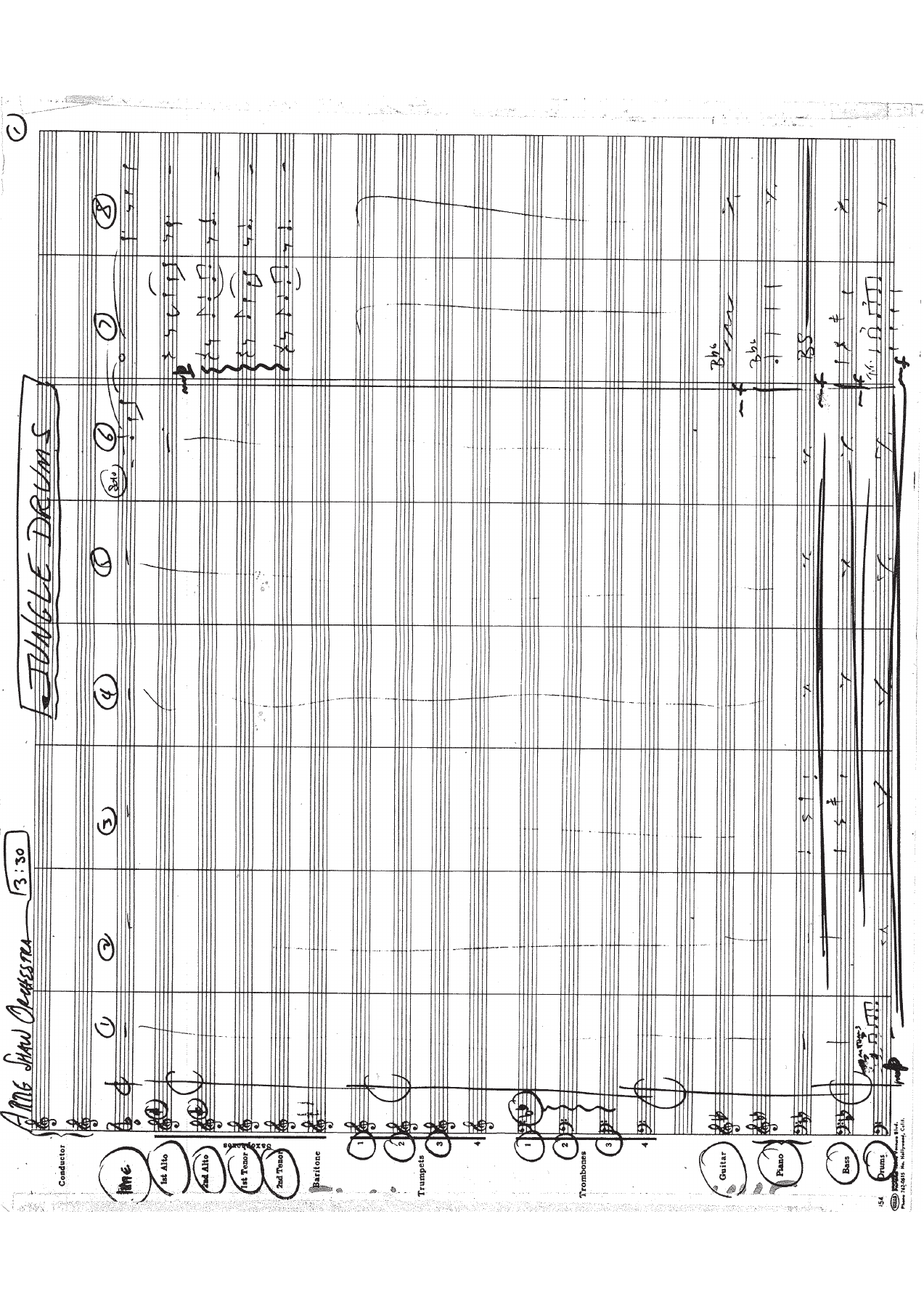
Jungle Drums (J.Gray) sheet music preview

Jungle Drums (J.Gray)

Composed by Ernesto Lecuona

Arranged by Artie Shaw

  • Ensemble: Big Band
  • Style: Jazz Standard
  • Pages: 63
  • Instruments (18): Clarinet, Alto Saxophone 1, Alto Saxophone 2, Tenor Saxophone 1, Tenor Saxophone 2, Baritone Saxophone, Trumpet 1, Trumpet 2, Trumpet 3, Trumpet 4, Trombone 1, Trombone 2, Trombone 3, Trombone 4, Piano, Guitar, Bass, Drum Set
  • Difficulty: advanced
  • Content: Individual Parts
  • Format: PDF Download (Instant)
  • Price: $24.99

Ernesto Lecuona's "Jungle Drums," originally known as "Danza Lucumí" from his 1928 "Andalucía Suite," is a captivating piece that bridges classical composition with Afro-Cuban rhythms. While Lecuona's original piano work painted vivid soundscapes of Cuban folklore, it was its transformation into a jazz standard that truly cemented its place in the American musical lexicon. The piece gained significant traction in the big band era, particularly through recordings by artists like Artie Shaw, who recognized its exotic appeal and rhythmic drive. Its evocative title and pulsating rhythms made it a natural fit for the burgeoning swing and Latin-influenced jazz of the 1930s and 40s, embodying the era's fascination with global sounds blended with American jazz sensibilities. The composition's enduring appeal lies in its memorable, syncopated melodic lines and its inherent rhythmic vitality, making it a perennial favorite for both performers and audiences. Artie Shaw's masterful arrangement of "Jungle Drums (J.Gray)" is a vibrant, medium-up tempo Latin-swing hybrid, primarily set in a minor key (likely D minor, typical for this piece) that perfectly captures the original's mysterious and energetic character. Shaw, known for his sophisticated harmonic palette and meticulous scoring, treats the piece with a blend of exoticism and swinging precision. Expect rich, often close-voiced saxophone soli sections that weave Lecuona's haunting melodies with Shaw's signature harmonic extensions. The arrangement likely features a compelling contrast between the driving, percussive Latin-infused rhythms in the rhythm section and the smooth, yet powerful, brass and sax lines. Shaw's arrangements often showcase a dynamic interplay between sections, building intensity through layered orchestration and strategic use of brass fanfares and woodwind counter-melodies, culminating in a powerful shout chorus that is both exhilarating and harmonically intriguing. The arrangement unfolds with the iconic melody typically introduced by the saxophones, often in unison or tight harmony, immediately establishing the piece's exotic allure. Solo opportunities are likely featured for a tenor saxophone, and potentially a clarinet, reflecting Shaw's own instrumental prowess and the common practice of the era. The technical challenges lie in maintaining the precise rhythmic integrity of the Latin groove, especially in the rhythm section, and executing the intricate, often fast-paced soli passages with clarity and blend. Brass players will need strong articulation and dynamic control for the punctuating figures and powerful ensemble sections. What makes this arrangement particularly rewarding to perform is the sheer joy of its rhythmic drive and the opportunity to delve into a classic big band chart that offers both technical challenge and immense musical satisfaction, transporting both performers and listeners to the golden age of swing. This Artie Shaw arrangement is ideally suited for advanced high school, collegiate, community, and professional big bands. Its demands for rhythmic precision, ensemble blend, and stylistic authenticity require a band with solid fundamental skills and an appreciation for classic big band repertoire. The complexity of the voicings and the dynamic range necessary for an authentic performance make it a rewarding project for ensembles looking to expand their stylistic versatility and tackle a sophisticated, yet accessible, piece from the big band canon. Approaching Artie Shaw's "Jungle Drums" requires meticulous attention to rhythmic detail and stylistic nuance. The core challenge lies in establishing and maintaining the medium-up tempo Latin groove, which should feel both driving and fluid, not rigid. The rhythm section must lock into a precise, yet swinging, 4/4 feel, emphasizing the clave-like patterns without overstating them. Drummers should focus on a crisp, syncopated Latin-influenced beat, while bass and piano provide a solid harmonic and rhythmic foundation. Saxophone soli sections demand excellent intonation and blend, particularly in the close voicings, requiring careful listening across the section. Brass players should articulate sharply but not harshly, ensuring clean attacks and releases, especially during the powerful shout chorus. Soloists should embrace the piece's exotic, minor-key character, utilizing expressive phrasing and rhythmic flexibility. Rehearsal time should be dedicated to isolating rhythmic figures and ensuring all sections understand their role in contributing to the overall rhythmic tapestry. Dynamic contrast is crucial; build tension through crescendos and release it with well-placed diminuendos. Q: What instruments and parts are included in this arrangement? A: This arrangement includes parts for a standard 17-piece big band: Alto Saxophone 1, Alto Saxophone 2, Tenor Saxophone 1, Tenor Saxophone 2, Baritone Saxophone, Trumpet 1, Trumpet 2, Trumpet 3, Trumpet 4, Trombone 1, Trombone 2, Trombone 3, Trombone 4, Piano, Bass, Drums, and Guitar. The total page count is 63. Q: What is the difficulty level of Artie Shaw's "Jungle Drums" arrangement? A: This arrangement is considered advanced, suitable for college-level, advanced community, or professional big bands. It demands strong rhythmic precision, excellent ensemble blend, and sophisticated harmonic understanding from all sections. Q: What is the musical style and historical context of this arrangement? A: This arrangement is a classic big band jazz standard with a Latin-swing feel, primarily in a minor key. It's Artie Shaw's interpretation of Ernesto Lecuona's "Danza Lucumí," reflecting the popular blend of exotic rhythms and American jazz during the 1930s and 40s big band era. Q: What makes this Artie Shaw arrangement unique compared to other versions of "Jungle Drums"? A: Artie Shaw's treatment is characterized by his sophisticated harmonic voicings, intricate saxophone soli passages, and dynamic interplay between sections. It features a compelling medium-up tempo Latin-swing groove and a powerful shout chorus, showcasing Shaw's distinctive big band sound and meticulous orchestration. Q: What is the typical performance duration and tempo for this piece? A: The typical performance duration for this arrangement is approximately 3-4 minutes, depending on the number and length of solos. It is intended to be performed at a medium-up tempo, maintaining a driving yet fluid Latin-swing feel.

Musicians Also Search For

Jungle Drums Artie Shaw PDFJungle Drums Artie Shaw sheet musicJungle Drums arranged by Artie ShawArtie Shaw big band chartsArtie Shaw jazz arrangements PDFJungle Drums Ernesto Lecuona sheet musicJungle Drums Ernesto Lecuona big band arrangementErnesto Lecuona big band chartsJungle Drums big band arrangementJungle Drums big band PDF downloadJungle Drums jazz ensemble sheet musicbig band sheet music instant downloadJungle Drums conductor score PDFJungle Drums individual parts downloadJungle Drums sheet music with partsJungle Drums Jazz Standard chartJazz Standard big band arrangementsbuy Jungle Drums sheet music onlinedownload Jungle Drums PDFJungle Drums jazz chartbest Artie Shaw big band arrangementsErnesto Lecuona songs arranged by Artie ShawJungle Drums printable sheet musicbig band repertoire PDF

All arrangements by Artie Shaw All Ernesto Lecuona sheet music