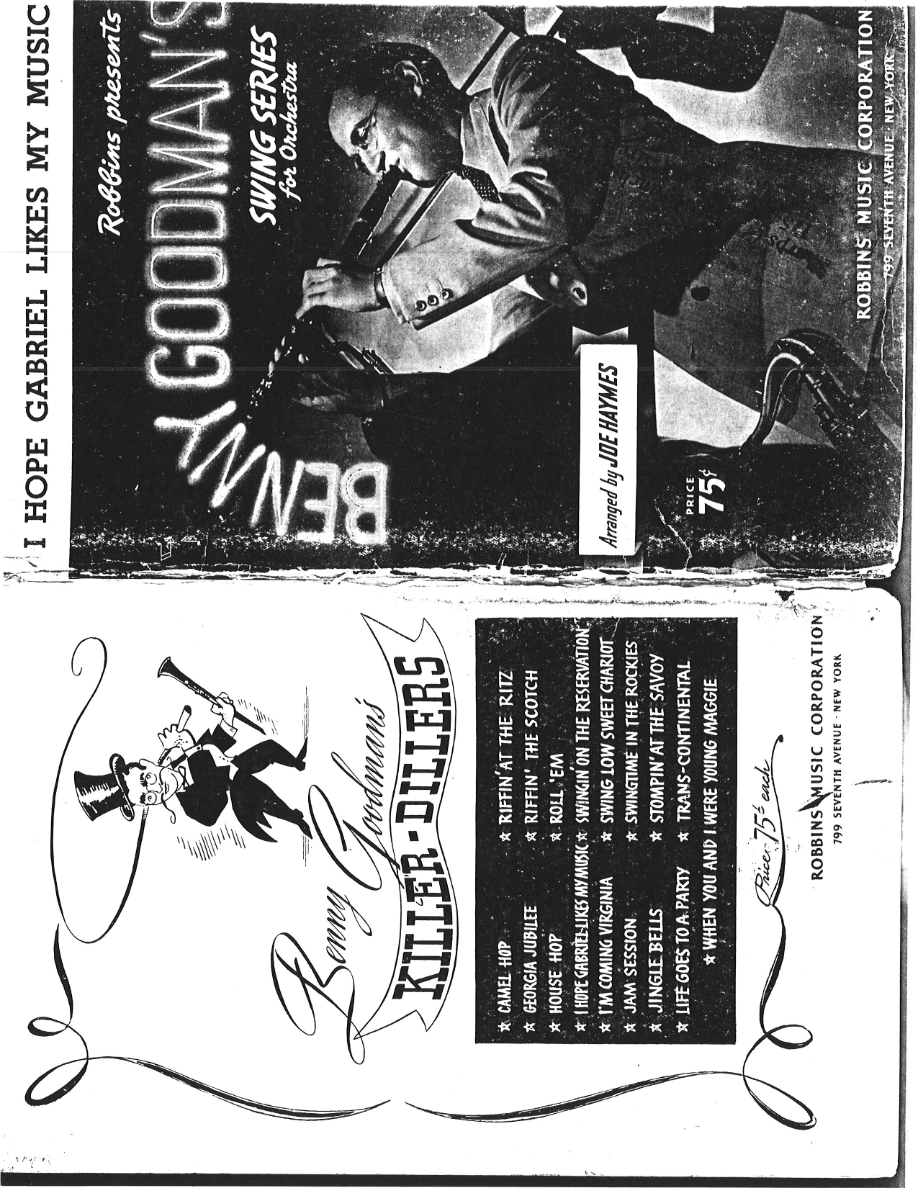
I Hope Gabriel Likes My Music (J.Haymes)
Composed by Dave Franklin
Arranged by Benny Goodman
- Ensemble: Big Band
- Style: Jazz Standard
- Pages: 24
- Instruments (17): Piano, 1st Violins, 1st Saxophone Eb Alto, Bb Clarinet, 2nd Saxophone Bb Tenor, Vocal Trio, Cello, 1st Trumpet in Bb, 2nd Trumpet in Bb, 3rd Trumpet in Bb, 1st Trombone, 2nd Trombone, Drum Set, 3rd Saxophone Eb Alto, 4th Eb Baritone Saxophone, Guitar, Bass
- Difficulty: medium
- Content: Individual Parts
- Format: PDF Download (Instant)
- Price: $24.99
The mid-1930s saw the rise of the Swing Era, a period defined by infectious rhythms, sophisticated arrangements, and the emergence of big bands as the dominant force in popular music. Amidst this vibrant landscape, tunes like Dave Franklin's "I Hope Gabriel Likes My Music" captured the era's playful spirit and melodic charm. While perhaps not as universally recognized as some of its contemporaries, this piece embodies the quintessential jazz standard of its time, a vehicle for improvisation and ensemble interplay that became a staple in the repertoires of many leading orchestras. Its lyrical theme, hinting at a musician's ultimate aspiration, resonated deeply with the era's performers and audiences alike, cementing its place in the annals of swing. This particular arrangement, crafted by the legendary "King of Swing" himself, Benny Goodman, presents "I Hope Gabriel Likes My Music" as a vibrant, medium-up swing chart in the key of C major. Goodman’s signature approach to big band writing is immediately evident: a bright, driving tempo propelled by a classic 4/4 swing feel, designed to evoke a sense of joyous, unbridled energy. The mood is unequivocally upbeat and celebratory, reflecting the optimism and exuberance characteristic of the era. Goodman’s arrangements are renowned for their clarity, precision, and the way they showcase both the ensemble's power and individual soloists' brilliance. Expect crisp articulation, dynamic contrasts, and an overall feeling of sophisticated yet accessible swing. Goodman's treatment of this standard is a masterclass in big band arranging. The melody is initially presented by the full saxophone section in a tight, harmonized soli, showcasing the section's blend and precision. This is quickly followed by brass interjections, building excitement towards the first solo section. Goodman frequently employs call-and-response patterns between the brass and saxophones, creating a lively dialogue that drives the narrative forward. Expect a featured trumpet solo, characteristic of Goodman's band, often followed by a clarinet or tenor saxophone solo, providing opportunities for expressive improvisation over the solid rhythmic foundation. The arrangement culminates in a powerful shout chorus, where the entire ensemble unites in a thrilling, harmonically rich statement, often featuring Goodman's characteristic block voicings and a driving rhythm section pushing to a dynamic finish. Performing this arrangement offers a deeply rewarding experience for a well-rehearsed big band. The technical challenges lie primarily in achieving tight ensemble precision, particularly in the saxophone solis and brass figures, and maintaining a consistent, energetic swing feel throughout. Dynamic control is crucial, especially in the nuanced interplay between sections. The chart is ideally suited for advanced high school, college, community, and professional big bands looking to authentically recreate the sound and spirit of the Swing Era. Its blend of accessible melody, engaging solos, and powerful ensemble sections makes it a fantastic addition to any concert program, offering both historical insight and undeniable musical appeal. Conductors should emphasize a consistent, medium-up swing tempo, around 180-200 BPM, ensuring a light yet driving feel in the rhythm section. Articulation is paramount; brass should play with crisp attacks and releases, while saxophones need a unified, legato-tongued approach in solis. Pay close attention to dynamic contrasts, particularly the subtle swells and diminuendos that give the arrangement its characteristic bounce. The shout chorus requires full ensemble power and precise intonation. Encourage soloists to embrace the melodic and harmonic language of the Swing Era, focusing on clear phrasing and rhythmic vitality. Rehearsal time should be dedicated to balancing the saxophone soli sections and ensuring the brass interjections are punchy without overpowering. No special mutes or extended techniques are explicitly notated beyond standard jazz articulations like falls and scoops, which should be executed with stylistic awareness. Q: What instruments are included in this arrangement? A: This big band arrangement is scored for 17 instruments, including Alto Saxophone 1, Alto Saxophone 2, Tenor Saxophone 1, Tenor Saxophone 2, Baritone Saxophone, Trumpet 1, Trumpet 2, Trumpet 3, Trumpet 4, Trombone 1, Trombone 2, Trombone 3, Trombone 4, Piano, Bass, Drums, and Guitar. Q: What is the difficulty level of this arrangement? A: This arrangement is considered advanced, suitable for college, community, and professional big bands. It demands strong ensemble precision, solid rhythmic execution, and experienced soloists. Q: What is the musical style and historical context of "I Hope Gabriel Likes My Music"? A: This piece is a classic jazz standard from the Swing Era (mid-1930s), embodying the energetic and melodic characteristics of big band jazz. It represents the popular dance music and concert repertoire of the time. Q: What makes Benny Goodman's arrangement of this piece unique? A: Goodman's arrangement features his signature tight saxophone solis, crisp brass voicings, and a driving medium-up swing feel. It provides excellent opportunities for featured soloists and culminates in a powerful, characteristic shout chorus. Q: What is the typical performance duration and tempo for this arrangement? A: The typical performance duration for this arrangement is approximately 3-4 minutes, depending on the length of improvised solos. It is designed to be played at a medium-up swing tempo, generally between 180 and 200 BPM.
Musicians Also Search For
I Hope Gabriel Likes My Music Benny Goodman PDF • I Hope Gabriel Likes My Music Benny Goodman sheet music • I Hope Gabriel Likes My Music arranged by Benny Goodman • Benny Goodman big band charts • Benny Goodman jazz arrangements PDF • I Hope Gabriel Likes My Music Dave Franklin sheet music • I Hope Gabriel Likes My Music Dave Franklin big band arrangement • Dave Franklin big band charts • I Hope Gabriel Likes My Music big band arrangement • I Hope Gabriel Likes My Music big band PDF download • I Hope Gabriel Likes My Music jazz ensemble sheet music • big band sheet music instant download • I Hope Gabriel Likes My Music individual parts download • I Hope Gabriel Likes My Music sheet music with parts • I Hope Gabriel Likes My Music Jazz Standard chart • Jazz Standard big band arrangements • buy I Hope Gabriel Likes My Music sheet music online • download I Hope Gabriel Likes My Music PDF • I Hope Gabriel Likes My Music jazz chart • best Benny Goodman big band arrangements • Dave Franklin songs arranged by Benny Goodman • I Hope Gabriel Likes My Music printable sheet music • big band repertoire PDF