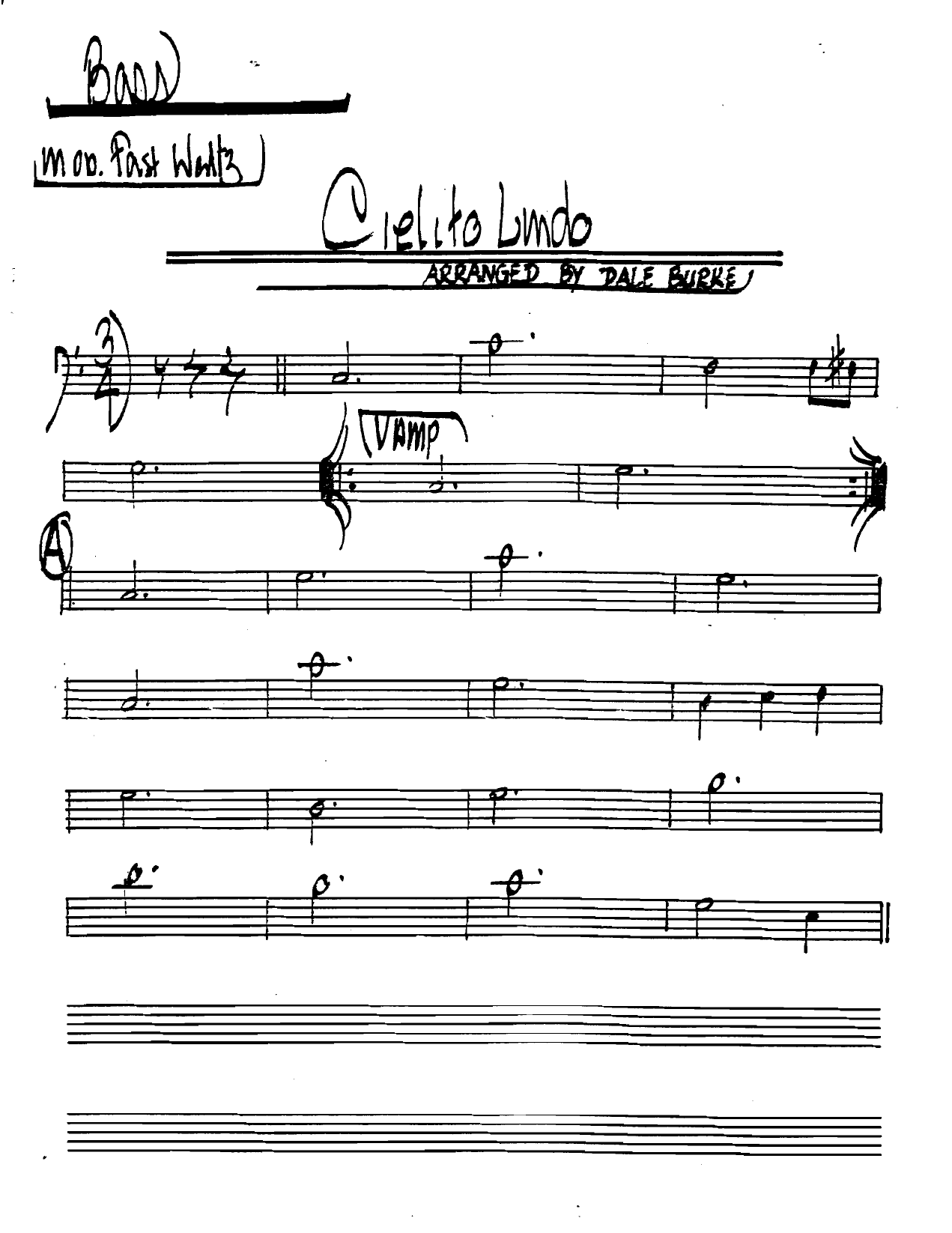
Cielitolindo (D.Burke)
Composed by Quirino Mendoza y Cortés
Arranged by DALE BURKE
- Ensemble: Small Ensemble
- Style: Latin Jazz
- Pages: 4
- Instruments (2): Bass, Drums
- Difficulty: easy
- Content: Individual Parts
- Format: PDF Download (Instant)
- Price: $18.99
Quirino Mendoza y Cortés penned the timeless Mexican folk classic "Cielito Lindo" in 1882, transforming a traditional Andalusian-style phrase into one of the most recognizable cultural anthems in Latin music history. While generations of vocalists and mariachi ensembles have immortalized its soaring refrain, jazz arrangers have long recognized its inherent harmonic flexibility. In the hands of modern Latin jazz innovators, the buoyant triple-meter lilt and infectious melodic contour provide an ideal canvas for syncopated rhythmic displacement, rich modal shifts, and sophisticated harmonic reharmonization that bridges traditional Latin folk idioms with contemporary post-bop sensibilities. Dale Burke’s masterful small-ensemble interpretation reimagines the familiar melody through an invigorating Afro-Cuban and Latin jazz lens, anchored by a driving 4/4 montuno groove and punctuated by crisp syncopations. The arrangement wastes no time establishing its vibrant mood, opening with an ambient, harmonically rich vamp that transitions seamlessly into a high-energy thematic statement. Burke employs sophisticated extended voicings—utilizing sharp upper-structure triads and quartal harmonies—to give the classic melody a sophisticated urban edge. The emotional trajectory shifts masterfully from bright, celebratory exuberance during the primary head statements to an introspective, minor-mode modal interlude that showcases Burke’s knack for unexpected tonal coloring before surging back into a powerful final chorale. Throughout the chart, individual voices within the small ensemble are given ample room to converse, balancing tightly knit horn solis with dynamic, conversational counterpoint. The arrangement demands rhythmic precision, particularly in navigating the shifting accents between the bass tumbao and the syncopated horn figures. Solo sections are strategically integrated, providing designated improvisational space over contemporary modal changes that challenge soloists to stretch beyond traditional diatonic thinking. Burke’s writing ensures that every instrument plays a vital role in constructing the texture, avoiding static background figures in favor of interlocking rhythmic cells that drive the momentum forward from the first measure to the final resolved chord. Advanced high school, collegiate, and professional small jazz ensembles will find this four-page arrangement an exceptionally rewarding addition to their repertoire. It serves as an ideal vehicle for introducing players to advanced Latin jazz phrasing and ensemble interplay without the logistical weight of a full big band chart. Audiences intimately familiar with the original folk tune will be captivated by the clever harmonic twists and driving rhythmic vitality, making it a standout program piece for festival performances, club dates, and formal concert settings alike. Success with this arrangement hinges on maintaining an authentic, unhurried Latin groove that locks tightly between the rhythm section and horns. The recommended tempo is a moderate Latin-swing feel (around 120–132 BPM); pushing the tempo too fast will dilute the rhythmic clarity required for the syncopated ensemble figures. Horn players must articulate eighth-note lines with clean, biting precision, ensuring that off-beat accents are punched without clipping the preceding notes. The rhythm section should focus on a fluid, driving montuno feel, with the pianist avoiding heavy-handed comping in favor of sparse, rhythmic stabs that leave space for the bass and percussion. Pay close attention to the dynamic contrasts marked in the score, particularly during the transition from the harmonically rich ensemble soli into the open solo sections. Rehearsals should begin by isolating the rhythm section to solidify the underlying groove before layering in the front line. Q: What instrumentation and parts are included in this small ensemble arrangement? A: This arrangement is scored for a flexible small jazz ensemble format featuring standard horn front-line parts alongside a complete rhythm section (piano, bass, drums, and optional auxiliary percussion). Q: What is the official difficulty level of this Dale Burke arrangement? A: It is rated as intermediate-advanced (Grade 4), making it well-suited for proficient high school groups, collegiate jazz combos, and professional small ensembles seeking a sophisticated Latin chart. Q: How does this chart connect to the historical roots of "Cielito Lindo"? A: While it honors the iconic 1882 melody by Quirino Mendoza y Cortés, it filters the traditional theme through a contemporary Latin jazz framework, updating the harmony and rhythm for modern jazz settings. Q: What makes this specific arrangement by Dale Burke unique? A: Burke distinguishes the chart through clever modal shifts, unexpected harmonic reharmonizations, and an interlocking small-ensemble texture that avoids generic background writing in favor of constant conversational counterpoint. Q: What is the approximate performance duration and tempo feel of the piece? A: The arrangement runs approximately 3.5 to 4 minutes at a moderate, driving Latin-jazz tempo of around 120–132 BPM.
Questions and answers
- What is included in the Cielitolindo (D.Burke) PDF?
- The verified current file contains individual parts across 4 pages.
- How many instruments or parts are listed for Cielitolindo (D.Burke)?
- The verified instrumentation list contains 2 entries for this Small Ensemble arrangement.
- Who is credited for Cielitolindo (D.Burke)?
- Composer: Quirino Mendoza y Cortés. Arranger: DALE BURKE.
- What difficulty is listed for Cielitolindo (D.Burke)?
- The verified difficulty level is easy.
- What style is listed for Cielitolindo (D.Burke)?
- The catalog lists the style as Latin Jazz.
- Can I preview Cielitolindo (D.Burke) before buying?
- Yes. The product page provides a preview generated from the current PDF file.
- How is Cielitolindo (D.Burke) delivered?
- After successful payment, the digital PDF is made available for download. The displayed price is $18.99.
Musicians Also Search For
Cielitolindo DALE BURKE PDF • Cielitolindo DALE BURKE sheet music • Cielitolindo arranged by DALE BURKE • DALE BURKE small ensemble charts • DALE BURKE jazz arrangements PDF • Cielitolindo Quirino Mendoza y Cortés sheet music • Cielitolindo Quirino Mendoza y Cortés small ensemble arrangements • Quirino Mendoza y Cortés small ensemble charts • Cielitolindo small ensemble arrangements • Cielitolindo small ensemble PDF download • Cielitolindo jazz sheet music • small ensemble sheet music download • Cielitolindo individual parts download • Cielitolindo sheet music PDF • Cielitolindo Latin Jazz charts • Latin Jazz small ensemble arrangements • buy Cielitolindo sheet music • download Cielitolindo PDF • Cielitolindo jazz charts • best DALE BURKE small ensemble arrangements • Quirino Mendoza y Cortés arranged by DALE BURKE • Cielitolindo printable sheet music • small ensemble repertoire PDF