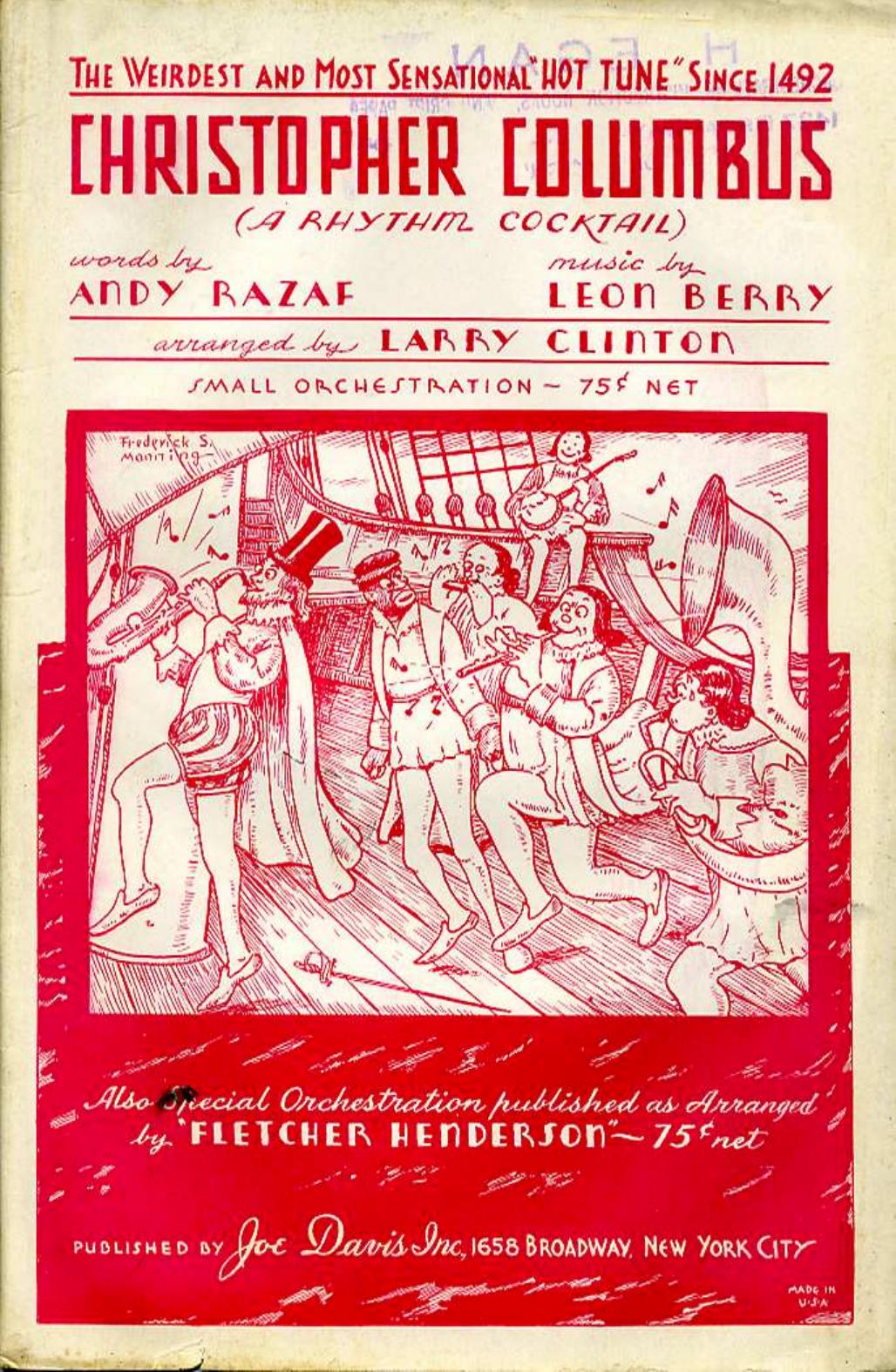
Christopher Columbus (F.Henderson)
Composed by Fletcher Henderson
Arranged by Fletcher Henderson
- Ensemble: Big Band
- Pages: 25
- Instruments (14): 1st Sax. Eb Alto, 2nd Sax. Bb Tenor, 3rd Sax. Eb Alto, 4th Eb Baritone Sax., 1st Trombone, 2nd Trombone, 1st Trumpet in Bb, 2nd Trumpet in Bb, 3rd Trumpet in Bb, Piano, Guitar, Bass, Drums, 1st Violins
- Difficulty: medium
- Content: Individual Parts
- Format: PDF Download (Instant)
- Price: $24.99
"Christopher Columbus," co-written by Fletcher Henderson and Andy Razaf, stands as a monumental swing era anthem that helped codify the blueprint for big band arranging during the 1930s. Originally recorded by Fletcher Henderson and His Orchestra in 1936, the tune quickly transitioned from an infectious riff-based swinger into a defining jazz standard, famously covered by Benny Goodman and countless others. Rooted in the high-energy Henderson style that bridged the gap between early Harlem stride and the polished swing explosion, this composition captures the optimistic, driving momentum of the mid-Depression era dance halls, relying on infectious rhythmic propulsion and tightly woven ensemble interplay. Driven by a vibrant, medium-up swing feel in 4/4 time, the arrangement radiates an exuberant, celebratory mood. The harmonic language is firmly grounded in classic swing-era diatonicism spiced with rich blues inflections, seventh-to-ninth chord extensions, and clever call-and-response figures between the brass and reed sections. The energy level remains consistently high, propelled by a steady, buoyant walking bassline concept and crisp ride cymbal pulse that demands absolute rhythmic precision from the rhythm section. The overarching soundscape evokes a smoke-filled Harlem ballroom, balancing sophisticated sectional discipline with unbridled, foot-tapping joy. Fletcher Henderson’s arranging methodology shines through in the masterclass use of sectional writing, transparent counterpoint, and dynamic contrast. Rather than relying on dense, modern chord clusters, Henderson achieves his signature texture by deploying harmonized sax soli passages that lock seamlessly against syncopated brass stabs. The melody is intelligently shared across the ensemble, migrating fluidly from the muted brass to the reed section before opening up into a powerful shout chorus that builds relentless vertical tension. Solo opportunities are integrated organically, providing designated space for featured horn players to stretch out over traditional blues or AABA changes while the background ensemble provides punchy, rhythmic垫 (pads/riffs) that elevate the intensity. Executing this chart successfully requires a mature, stylistically aware ensemble. While scored for an 8-instrument configuration (Alto Sax, Tenor Sax, Trumpet, Trombone, Piano, plus rhythm section essentials), the reduction retains the punch and architectural integrity of a full fourteen-piece orchestra, making every single part vital to the overall texture. Advanced high school bands with strong section leaders, collegiate ensembles, and professional freelance big bands will find this arrangement immensely rewarding. The primary technical challenges lie not in extreme range or complex polyrhythms, but in achieving authentic swing articulation, uniform breath support during long phrasing arcs, and absolute synchronization of eighth-note swing subdivisions across the entire horn section. Achieving an authentic performance of this Fletcher Henderson arrangement hinges on stylistic articulation and rhythmic unity. The primary tempo should sit comfortably around 168–176 BPM, maintaining a driving, danceable medium-up swing feel that never feels rushed. Conductors must emphasize the traditional jazz articulation of swinging eighth notes: tongue the upbeat lightly while keeping downbeats detached and weighted, avoiding a stiff, square reading. Special attention is required for the brass section, where cup and straight mutes are utilized to replicate the classic 1930s timbral palette; ensure players balance their dynamic levels so the muted lines cut through the piano and rhythm section without forcing tone quality. Rehearsal should begin sectionally, isolating the intricate interplay between the saxes and brass to lock in the syncopated accents and sudden dynamic shifts. The rhythm section pianist should root their comping in sparse, stride-influenced or classic four-to-the-bar rootless shell voicings, avoiding modern block chords that clash with the traditional harmonic framework. Finally, demand that the bass and drums lock in tightly to create the buoyant, feather-light pulse that defines Henderson's revolutionary swing-era architecture. Q: What instruments and parts are included in this 8-instrument configuration? A: The arrangement is scored for an 8-instrument ensemble comprising Alto Saxophone, Tenor Saxophone, Trumpet, Trombone, Piano, and standard rhythm section support (Bass and Drums), thoughtfully condensed from Henderson's full-orchestra score without sacrificing harmonic density. Q: What is the difficulty level of this arrangement? A: This chart is graded as intermediate to advanced (suitable for skilled high school, collegiate, and professional small big bands), primarily due to the demand for tight ensemble intonation, precise swing articulation, and stylistic endurance. Q: What is the historical background and musical style of "Christopher Columbus"? A: Composed by Fletcher Henderson and Andy Razaf in 1936, this piece is a quintessential swing era standard that helped establish the call-and-response sectional techniques foundational to big band jazz history. Q: What makes this specific Fletcher Henderson arrangement unique? A: It features Henderson’s masterclass signature techniques, including harmonized reed solis, punchy brass counter-melodies, and a dynamic shout chorus that brilliantly captures the energy of Harlem's golden age of swing. Q: What is the recommended performance duration and tempo for this piece? A: The arrangement typically runs around 3 to 4 minutes in length when performed at the recommended medium-up swing tempo of approximately 172 BPM.
Questions and answers
- What is included in the Christopher Columbus (F.Henderson) PDF?
- The verified current file contains individual parts across 25 pages.
- How many instruments or parts are listed for Christopher Columbus (F.Henderson)?
- The verified instrumentation list contains 14 entries for this Big Band arrangement.
- Who is credited for Christopher Columbus (F.Henderson)?
- Composer: Fletcher Henderson. Arranger: Fletcher Henderson.
- What difficulty is listed for Christopher Columbus (F.Henderson)?
- The verified difficulty level is medium.
- Can I preview Christopher Columbus (F.Henderson) before buying?
- Yes. The product page provides a preview generated from the current PDF file.
- How is Christopher Columbus (F.Henderson) delivered?
- After successful payment, the digital PDF is made available for download. The displayed price is $24.99.
Musicians Also Search For
Christopher Columbus Fletcher Henderson PDF • Christopher Columbus Fletcher Henderson sheet music • Christopher Columbus arranged by Fletcher Henderson • Fletcher Henderson big band charts • Fletcher Henderson jazz arrangements PDF • Christopher Columbus Fletcher Henderson big band arrangements • Christopher Columbus big band arrangements • Christopher Columbus big band PDF download • Christopher Columbus jazz sheet music • big band sheet music download • Christopher Columbus individual parts download • Christopher Columbus sheet music PDF • buy Christopher Columbus sheet music • download Christopher Columbus PDF • Christopher Columbus jazz charts • best Fletcher Henderson big band arrangements • Christopher Columbus printable sheet music • big band repertoire PDF