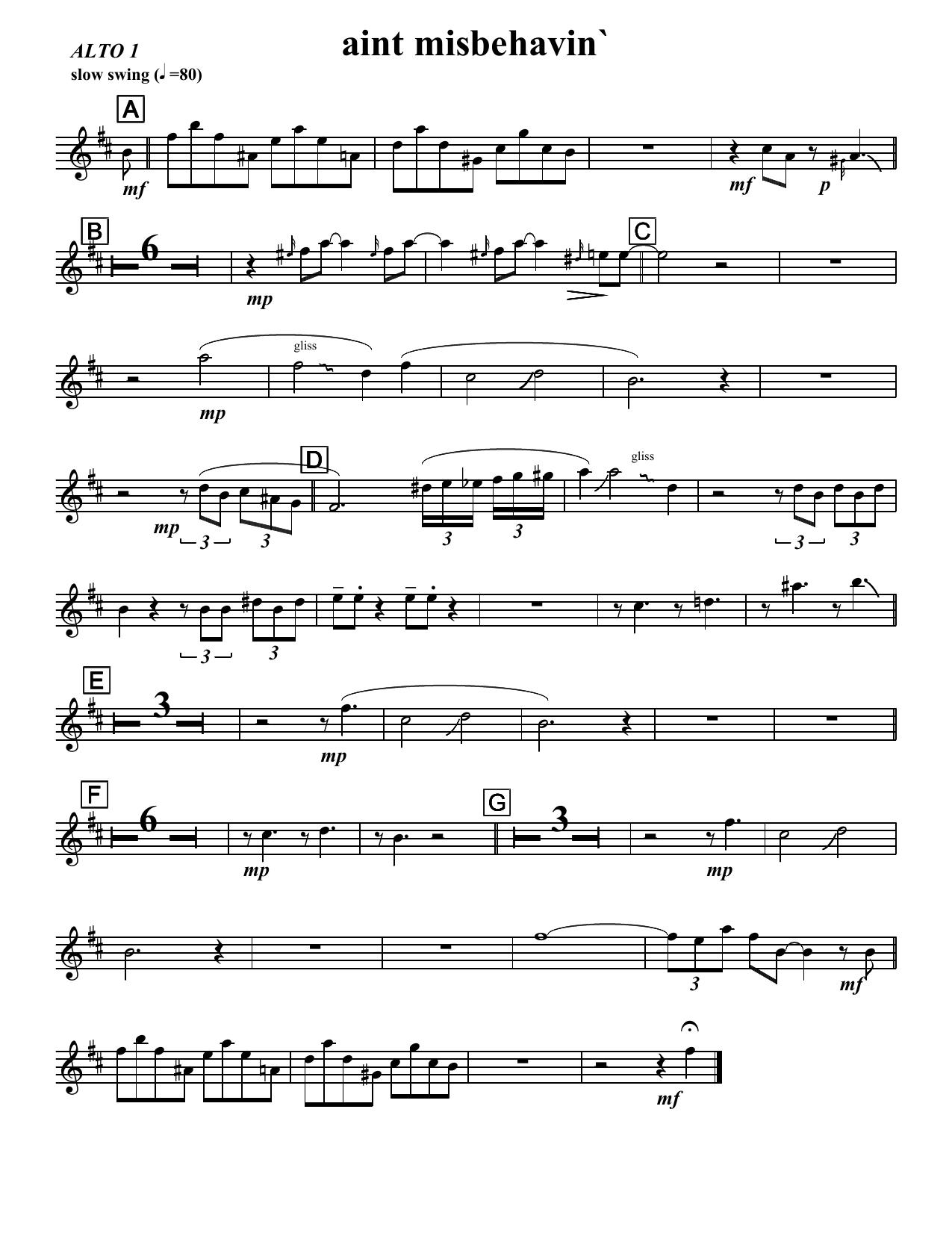
Ain't Misbehavin (Jeff Jarvis) sheet music preview

Ain't Misbehavin (Jeff Jarvis)

Composed by Fats Waller

Arranged by Jeff Jarvis

  • Ensemble: Big Band Vocal
  • Style: Jazz Standard
  • Pages: 21
  • Difficulty: medium
  • Content: Sheet Music
  • Format: PDF Download (Instant)
  • Price: $24.99

Penned by the iconic Fats Waller in 1929 for the Broadway revue *Connie's Hot Chocolates*, "Ain't Misbehavin'" quickly transcended its theatrical origins to become a cornerstone of the jazz repertoire. Emerging from the vibrant Harlem Renaissance, this Tin Pan Alley classic perfectly encapsulates the sophisticated charm and infectious swing of the pre-swing era, a period when jazz was solidifying its identity as America's unique art form. Waller's original stride piano and vocal renditions, characterized by playful wit and masterful improvisation, cemented its status as a beloved standard. Its enduring appeal lies in its deceptively simple, yet utterly memorable melody and its lyrical celebration of domestic contentment, making it a timeless narrative that resonates across generations of musicians and audiences. Jeff Jarvis's arrangement of this beloved standard for big band and vocal soloist breathes fresh life into the familiar tune, presenting it as a medium swing chart that maintains the original's buoyant spirit while infusing it with contemporary big band sensibilities. The piece is set in a comfortable, bright medium swing tempo, typically around 120-130 BPM, providing ample space for the band to groove. Jarvis's signature approach often involves meticulously crafted voicings that are both harmonically rich and accessible, allowing for a full, resonant sound without excessive technical demands. This arrangement is no exception, featuring lush horn pads under the vocal and energetic ensemble figures that drive the narrative forward. The overall mood is one of sophisticated joy and relaxed elegance, perfectly suited for a featured vocalist. This particular arrangement showcases Jarvis's knack for blending tradition with modern big band writing. The vocal melody is initially presented with a supportive, yet understated accompaniment, allowing the soloist's interpretation to shine. Distinctive features include well-articulated ensemble soli sections that echo and expand upon melodic fragments, providing dynamic contrast. While there isn't an extended open solo section, Jarvis cleverly integrates brief, impactful solo opportunities, often in the form of fills or short improvised breaks for trumpet or tenor saxophone, maintaining the focus on the vocal performance while still offering instrumentalists a chance to contribute. The arrangement builds dynamically, culminating in a tasteful shout chorus that provides a satisfying climax before returning to a more intimate feel for the final vocal statement. The technical challenges are primarily centered around ensemble precision, blend, and maintaining a consistent, authentic swing feel. It's a rewarding piece to perform, offering a band the opportunity to explore nuanced dynamics and articulate phrasing, while delighting audiences with its timeless melody and engaging arrangement. This arrangement is ideally suited for high school and college jazz ensembles, as well as community big bands seeking a sophisticated yet achievable vocal feature. Its clear structure, well-voiced harmonies, and moderate technical demands make it an excellent vehicle for developing ensemble cohesion, rhythmic accuracy, and stylistic authenticity. The vocal part is written to be accessible for a range of singers, allowing for individual interpretation within a supportive big band framework. It provides a valuable educational experience in understanding big band accompaniment for a vocalist and navigating the stylistic nuances of a classic jazz standard. Conductors should prioritize establishing a consistent, relaxed medium swing feel from the outset, emphasizing a light, buoyant quarter-note pulse. The arrangement’s success hinges on precise articulation and dynamic contrast, particularly in the ensemble soli sections which require unified phrasing and attack. Encourage brass players to use a warm, open sound, reserving brighter tones for the shout chorus. Woodwind sections should focus on blend and intonation, ensuring their lines support the brass without overpowering. The vocal soloist should be encouraged to interpret the melody with a natural, conversational approach, utilizing dynamics to shape phrases. Rehearsal should focus on balancing the vocal with the band, ensuring the accompaniment is supportive rather than dominant. Pay close attention to the rhythmic accuracy of dotted eighth-sixteenth figures, ensuring they swing authentically. No special mutes or extended techniques are explicitly required beyond standard brass mutes for dynamic shading. Q: What instruments and parts are included in this arrangement? A: This arrangement is scored for a standard big band lineup: 5 saxophones (2 alto, 2 tenor, 1 baritone), 4 trumpets, 4 trombones, guitar, piano, bass, drums, and a featured vocal soloist part. Q: What is the difficulty level of "Ain't Misbehavin' (Jeff Jarvis)"? A: This arrangement is rated at a medium difficulty level (Grade 3-4), making it appropriate for advanced high school, college, and community jazz ensembles. It requires solid rhythmic understanding and good ensemble precision. Q: What musical style and historical context does this arrangement represent? A: This is a medium swing big band arrangement of the classic jazz standard "Ain't Misbehavin'," originally composed by Fats Waller in 1929. It embodies the sophisticated charm and swing feel of the pre-swing and early swing eras. Q: What makes Jeff Jarvis's arrangement of "Ain't Misbehavin'" unique? A: Jarvis's treatment is distinctive for its lush, accessible voicings, engaging ensemble soli sections, and a well-balanced accompaniment that supports the vocal soloist without overshadowing. It blends traditional big band sounds with a fresh, contemporary feel. Q: What is the typical performance duration and tempo for this piece? A: The typical performance duration for this arrangement is approximately 3 minutes and 30 seconds. It is designed to be performed at a bright medium swing tempo, generally around 120-130 beats per minute.

Musicians Also Search For

Ain't Misbehavin Jeff Jarvis PDFAin't Misbehavin Jeff Jarvis sheet musicAin't Misbehavin arranged by Jeff JarvisJeff Jarvis big band vocal chartsJeff Jarvis jazz arrangements PDFAin't Misbehavin Fats Waller sheet musicAin't Misbehavin Fats Waller big band vocal arrangementFats Waller big band vocal chartsAin't Misbehavin big band vocal arrangementAin't Misbehavin big band vocal PDF downloadAin't Misbehavin jazz ensemble sheet musicbig band vocal sheet music instant downloadAin't Misbehavin sheet music with partsAin't Misbehavin Jazz Standard chartJazz Standard big band vocal arrangementsbuy Ain't Misbehavin sheet music onlinedownload Ain't Misbehavin PDFAin't Misbehavin jazz chartbest Jeff Jarvis big band vocal arrangementsFats Waller songs arranged by Jeff JarvisAin't Misbehavin printable sheet musicbig band vocal repertoire PDF

All arrangements by Jeff Jarvis All Fats Waller sheet music