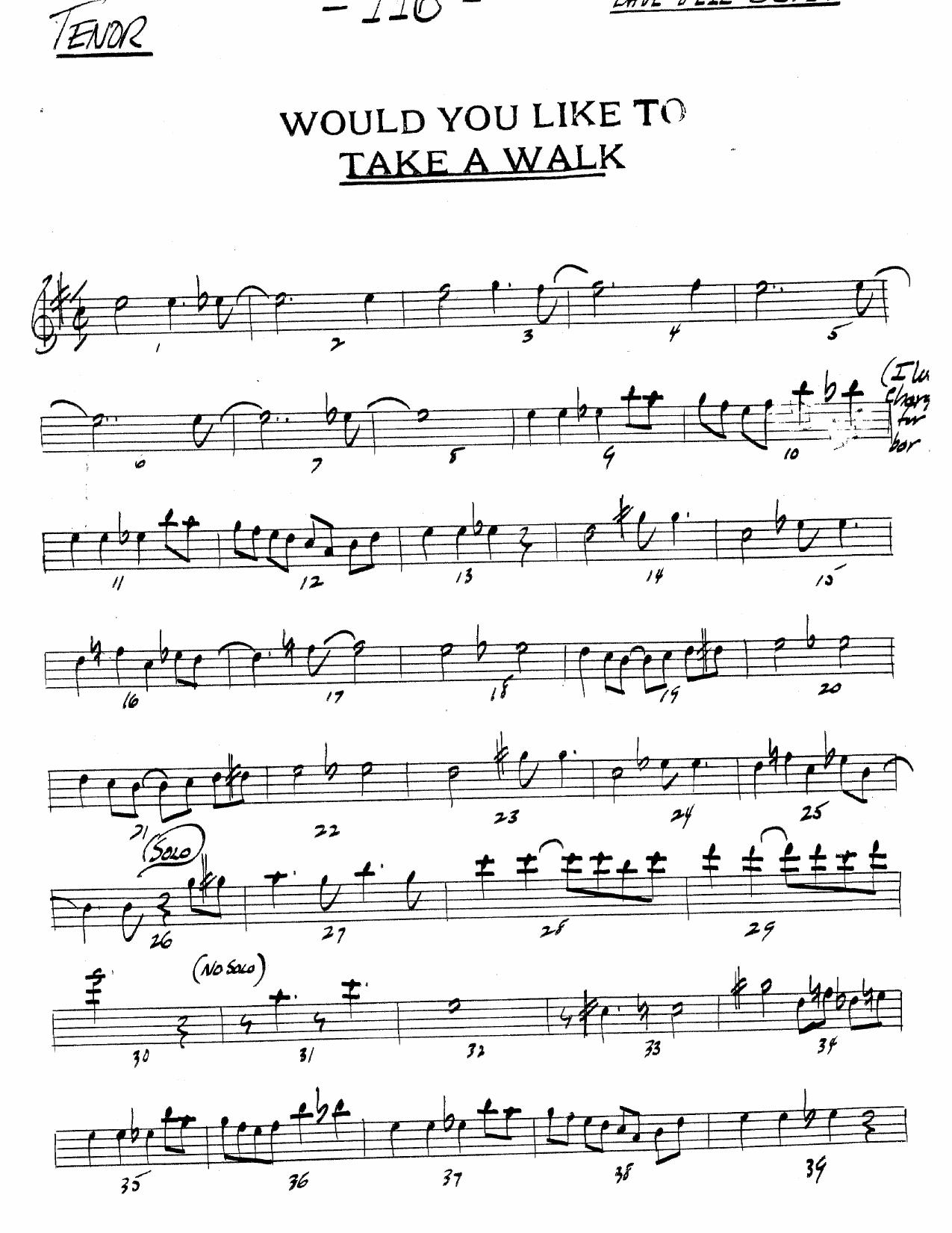
Would You Like To Take A Walk - Dave Pell Octet - Ts,Bs,Trp,Trb+Rhythm
Compuesto por Harry Warren
- Tipo de conjunto: Small Ensemble
- Páginas: 37 páginas
- Instrumentos (8): Tenor Saxophone, Baritone Saxophone, Trumpet, Trombone, Piano, Guitar, Bass, Drums
- Dificultad: easy
- Contenido: Partes individuales
- Formato: Descarga PDF (Instantánea)
- Precio: $12.99
"Would You Like To Take A Walk" emerge del vibrante tapiz del Great American Songbook, una composición atemporal de Harry Warren, originalmente escrita en 1930. Esta melodía se convirtió rápidamente en un estándar popular, emblemático de la temprana era del Swing y de la sofisticada composición melódica que definió el período. Aunque muchos artistas la versionaron, la interpretación del Dave Pell Octet, grabada a mediados del siglo XX, consolidó su lugar en el canon del jazz de pequeños grupos, mostrando un enfoque refinado y "cool" de la Costa Oeste para material clásico. El sonido distintivo del octeto, caracterizado por arreglos meticulosos, articulación limpia y una sensación relajada pero con swing, infundió nueva vida a los estándares, haciéndolos accesibles y atractivos para una audiencia más amplia mientras mantenía la integridad del jazz. Este arreglo en particular captura la esencia del icónico sonido del Dave Pell Octet, presentando "Would You Like To Take A Walk" como un tema de jazz directo de swing medio. Establecida en la tonalidad de Fa Mayor, la pieza mantiene un ambiente brillante y optimista, impulsado por un consistente ritmo de swing en 4/4. La energía es de elegancia discreta más que de potencia explosiva, centrándose en la claridad melódica y la precisión del conjunto. El arreglista, aunque Unknown, emula magistralmente las distintivas armonías del Octeto de Pell, que a menudo presentan acordes muy unidos y una mezcla perfecta entre las secciones de saxofones y metales. Tanto oyentes como intérpretes apreciarán la sofisticada simplicidad del arreglo, permitiendo que la belleza inherente de la melodía de Warren brille a través de su pulido tratamiento jazzístico.
Preguntas y respuestas
- ¿Qué contiene el PDF de «Would You Like To Take A Walk - Dave Pell Octet - Ts,Bs,Trp,Trb+Rhythm»?
- El archivo verificado contiene partes individuales en 37 páginas.
- ¿Cuántos instrumentos o partes se indican para «Would You Like To Take A Walk - Dave Pell Octet - Ts,Bs,Trp,Trb+Rhythm»?
- La lista verificada contiene 8 entradas para este arreglo de Small Ensemble.
- ¿Qué créditos aparecen para «Would You Like To Take A Walk - Dave Pell Octet - Ts,Bs,Trp,Trb+Rhythm»?
- Compositor: Harry Warren.
- ¿Qué dificultad se indica para «Would You Like To Take A Walk - Dave Pell Octet - Ts,Bs,Trp,Trb+Rhythm»?
- La dificultad verificada es easy.
- ¿Puedo ver una vista previa de «Would You Like To Take A Walk - Dave Pell Octet - Ts,Bs,Trp,Trb+Rhythm»?
- Sí. La página del producto muestra una vista previa del PDF actual.
- ¿Cómo se entrega «Would You Like To Take A Walk - Dave Pell Octet - Ts,Bs,Trp,Trb+Rhythm»?
- Tras confirmar el pago, el PDF digital queda disponible para descargar. El precio mostrado es $12.99.
Los músicos también buscan
Would You Like To Take A Walk - Dave Pell Octet - Ts,Bs,Trp,Trb+Rhythm Harry Warren partituras • Would You Like To Take A Walk - Dave Pell Octet - Ts,Bs,Trp,Trb+Rhythm Harry Warren small ensemble arreglos • Harry Warren small ensemble partituras • Would You Like To Take A Walk - Dave Pell Octet - Ts,Bs,Trp,Trb+Rhythm small ensemble arreglos • Would You Like To Take A Walk - Dave Pell Octet - Ts,Bs,Trp,Trb+Rhythm small ensemble PDF descargar • Would You Like To Take A Walk - Dave Pell Octet - Ts,Bs,Trp,Trb+Rhythm jazz partituras • small ensemble partituras descargar • Would You Like To Take A Walk - Dave Pell Octet - Ts,Bs,Trp,Trb+Rhythm partes individuales descargar • Would You Like To Take A Walk - Dave Pell Octet - Ts,Bs,Trp,Trb+Rhythm partituras PDF • comprar Would You Like To Take A Walk - Dave Pell Octet - Ts,Bs,Trp,Trb+Rhythm partituras • descargar Would You Like To Take A Walk - Dave Pell Octet - Ts,Bs,Trp,Trb+Rhythm PDF • Would You Like To Take A Walk - Dave Pell Octet - Ts,Bs,Trp,Trb+Rhythm partituras imprimibles • small ensemble repertorio PDF