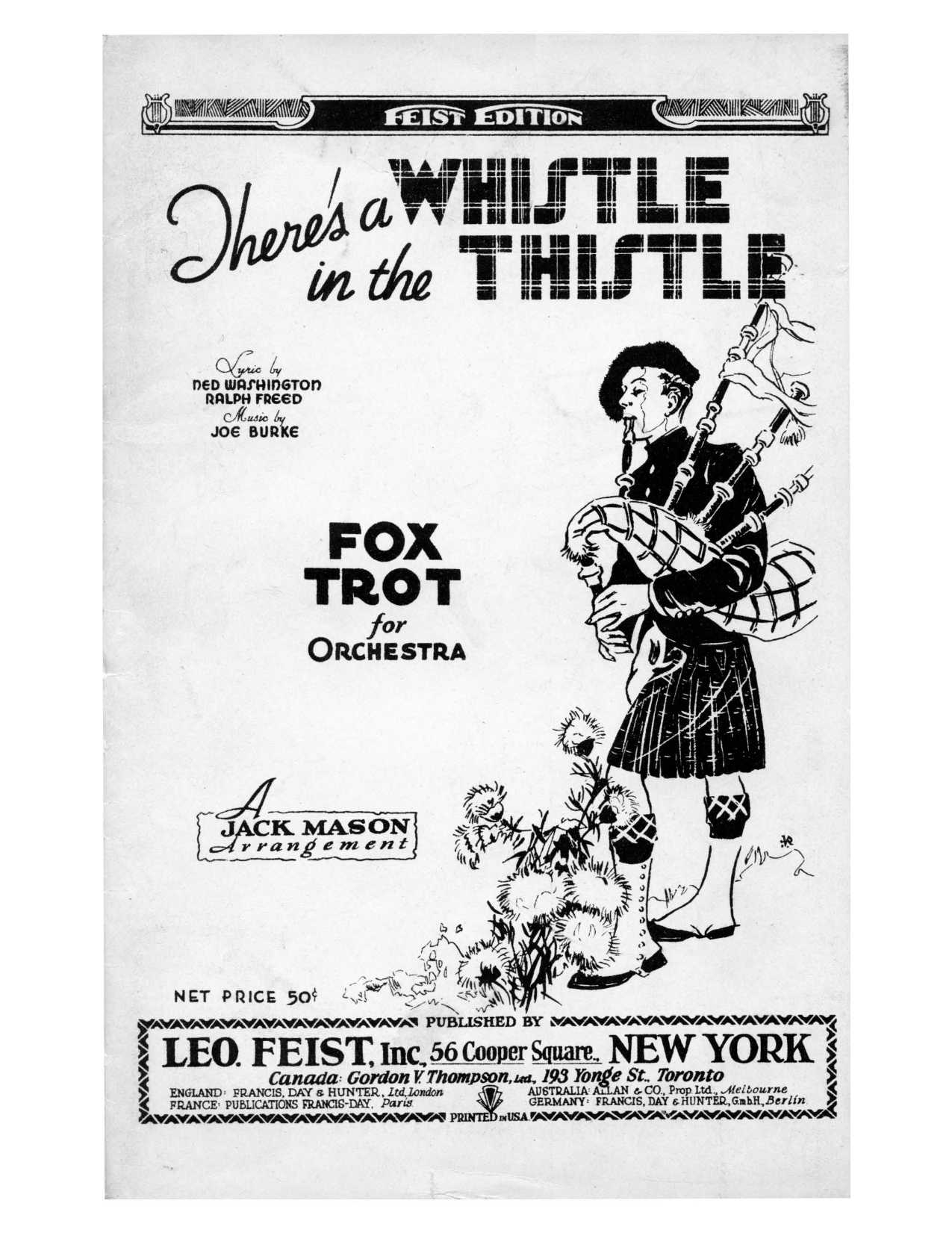
There's A Whistle In The Thistle (J.Mason)
Compuesto por Jack Mason
Arreglado por Jack Mason
- Tipo de conjunto: Big Band Dance
- Estilo: Big Band Dance
- Páginas: 27 páginas
- Instrumentos (11): 1st Saxophone Eb Alto, 2nd Saxophone Bb Tenor, 3rd Saxophone Eb Alto, 1st Trumpet in Bb, 2nd Trumpet in Bb, 1st Trombone, Piano, Bass, Drums, Banjo, 1st Violins
- Dificultad: medium
- Contenido: Partes individuales
- Formato: Descarga PDF (Instantánea)
- Precio: $24.99
"There's A Whistle In The Thistle", obra del prolífico Jack Mason, es un ejemplo quintaesencial de la era Big Band Dance, un periodo que abarca desde finales de los años 30 hasta los 40, cuando las grandes orquestas dominaban la música popular y los salones de baile. Aunque no es un estándar de jazz ampliamente reconocido en el sentido improvisacional, esta pieza encarna los arreglos sofisticados, a menudo caprichosos y meticulosamente elaborados que definieron el repertorio de las orquestas de baile. Refleja una época en la que bandas como Glenn Miller, Tommy Dorsey y Benny Goodman eran nombres muy conocidos, priorizando la ejecución conjunta precisa, melodías memorables y un ritmo diseñado para el foxtrot o el swing. Mason, un maestro de este estilo, creó obras accesibles y musicalmente ricas, caracterizadas por un espíritu alegre y un ingenioso desarrollo melódico. Este arreglo en particular de "There's A Whistle In The Thistle" se presenta en un tempo swing brillante y medio-rápido, típicamente alrededor de 160-180 BPM, en la tonalidad de Do Mayor, irradiando un ambiente innegablemente alegre y desenfadado. La energía es consistentemente edificante, impulsada por una línea de bajo caminante clásica y un patrón de batería nítido a cuatro por compás que impulsa la pieza. El carácter musical se define por su melodiosidad y la interacción entre las distintas secciones de violines, que soportan el peso melódico y armónico. Evoca la sensación de una tarde despreocupada, quizás una escena pastoral, alineándose perfectamente con su evocador título. El arreglo está estructurado para mantener el interés del oyente a través de texturas variadas y cambios dinámicos, asegurando que se mantenga vibrante de principio a fin. El enfoque distintivo de Jack Mason para esta pieza demuestra su maestría en la escritura para cuerdas dentro de un contexto de big band, una instrumentación menos común pero muy efectiva para la época. Las cuatro partes de violín no son meramente ornamentales; son integrales a la presentación melódica y la riqueza armónica, a menudo moviéndose en intrincados contrapuntos o exuberantes acordes en bloque que definen el sonido característico de la pieza. Mason emplea una forma clásica AABA, con la melodía introducida principalmente por el Violín 1, luego armonizada y desarrollada por las otras secciones de violines. No hay secciones de solo improvisado extendidas en el sentido tradicional del jazz; en cambio, el foco está en la precisión y la mezcla del conjunto colectivo. El piano proporciona soporte rítmico y armónico, ocasionalmente destacando con breves y elegantes rellenos que hacen eco de los temas melódicos principales. Las técnicas distintivas de Mason incluyen líneas claras y líricas, figuras rítmicas bien definidas y una paleta armónica transparente que permite que la melodía brille sin ser excesivamente compleja. Interpretar "There's A Whistle In The Thistle" es una experiencia gratificante que enfatiza la cohesión y la articulación del conjunto. El principal desafío técnico reside en la ejecución unificada de las partes de violín, exigiendo una excelente afinación, una sincronización rítmica precisa y un estilo de arco consistente en los cuatro intérpretes. La pieza presenta varios momentos en los que los violines participan en figuras de llamada y respuesta, lo que requiere una escucha atenta y una interpretación receptiva. La parte de piano, aunque de apoyo, requiere un sólido sentido del swing y la capacidad de navegar suavemente por los cambios de acordes. Este arreglo es ideal para conjuntos de nivel universitario, orquestas comunitarias avanzadas con un fuerte componente de jazz, o grupos profesionales de big band de baile que buscan recrear auténticamente los sonidos de la Era del Swing. Su encanto y musicalidad lo convierten en una adición destacada a cualquier programa que busque una pieza que combine la elegancia orquestal con la vitalidad de una big band. --- **"There's A Whistle In The Thistle (J.Mason)"** es una joya de la era Big Band Dance, un vibrante testimonio del ingenio de Jack Mason. Este arreglo, enérgica pieza swing a 160-180 BPM en Do Mayor, irradia una alegría contagiosa. Destaca por la magistral integración de cuatro partes de violín, que tejen melodías y armonías con una elegancia inusual para una big band. No esperes solos improvisados, sino una cohesión orquestal impecable y un espíritu desenfadado que evoca tardes de baile. Ideal para conjuntos avanzados, esta partitura ofrece un desafío gratificante y una inmersión auténtica en el Swing.
Preguntas y respuestas
- ¿Qué contiene el PDF de «There's A Whistle In The Thistle (J.Mason)»?
- El archivo verificado contiene partitura de director y partes individuales en 27 páginas.
- ¿Cuántos instrumentos o partes se indican para «There's A Whistle In The Thistle (J.Mason)»?
- La lista verificada contiene 11 entradas para este arreglo de Big Band Dance.
- ¿Qué créditos aparecen para «There's A Whistle In The Thistle (J.Mason)»?
- Compositor: Jack Mason. Arreglista: Jack Mason.
- ¿Qué dificultad se indica para «There's A Whistle In The Thistle (J.Mason)»?
- La dificultad verificada es medium.
- ¿Qué estilo se indica para «There's A Whistle In The Thistle (J.Mason)»?
- El catálogo indica el estilo Big Band Dance.
- ¿Puedo ver una vista previa de «There's A Whistle In The Thistle (J.Mason)»?
- Sí. La página del producto muestra una vista previa del PDF actual.
- ¿Cómo se entrega «There's A Whistle In The Thistle (J.Mason)»?
- Tras confirmar el pago, el PDF digital queda disponible para descargar. El precio mostrado es $24.99.
Los músicos también buscan
There's A Whistle In The Thistle Jack Mason PDF • There's A Whistle In The Thistle Jack Mason partituras • There's A Whistle In The Thistle arreglado por Jack Mason • Jack Mason big band dance partituras • Jack Mason jazz arreglos PDF • There's A Whistle In The Thistle Jack Mason big band dance arreglos • There's A Whistle In The Thistle big band dance arreglos • There's A Whistle In The Thistle big band dance PDF descargar • There's A Whistle In The Thistle jazz partituras • big band dance partituras descargar • There's A Whistle In The Thistle partitura director PDF • There's A Whistle In The Thistle partes individuales descargar • There's A Whistle In The Thistle partituras PDF • There's A Whistle In The Thistle Big Band Dance partituras • Big Band Dance big band dance arreglos • comprar There's A Whistle In The Thistle partituras • descargar There's A Whistle In The Thistle PDF • mejores Jack Mason big band dance arreglos • There's A Whistle In The Thistle partituras imprimibles • big band dance repertorio PDF