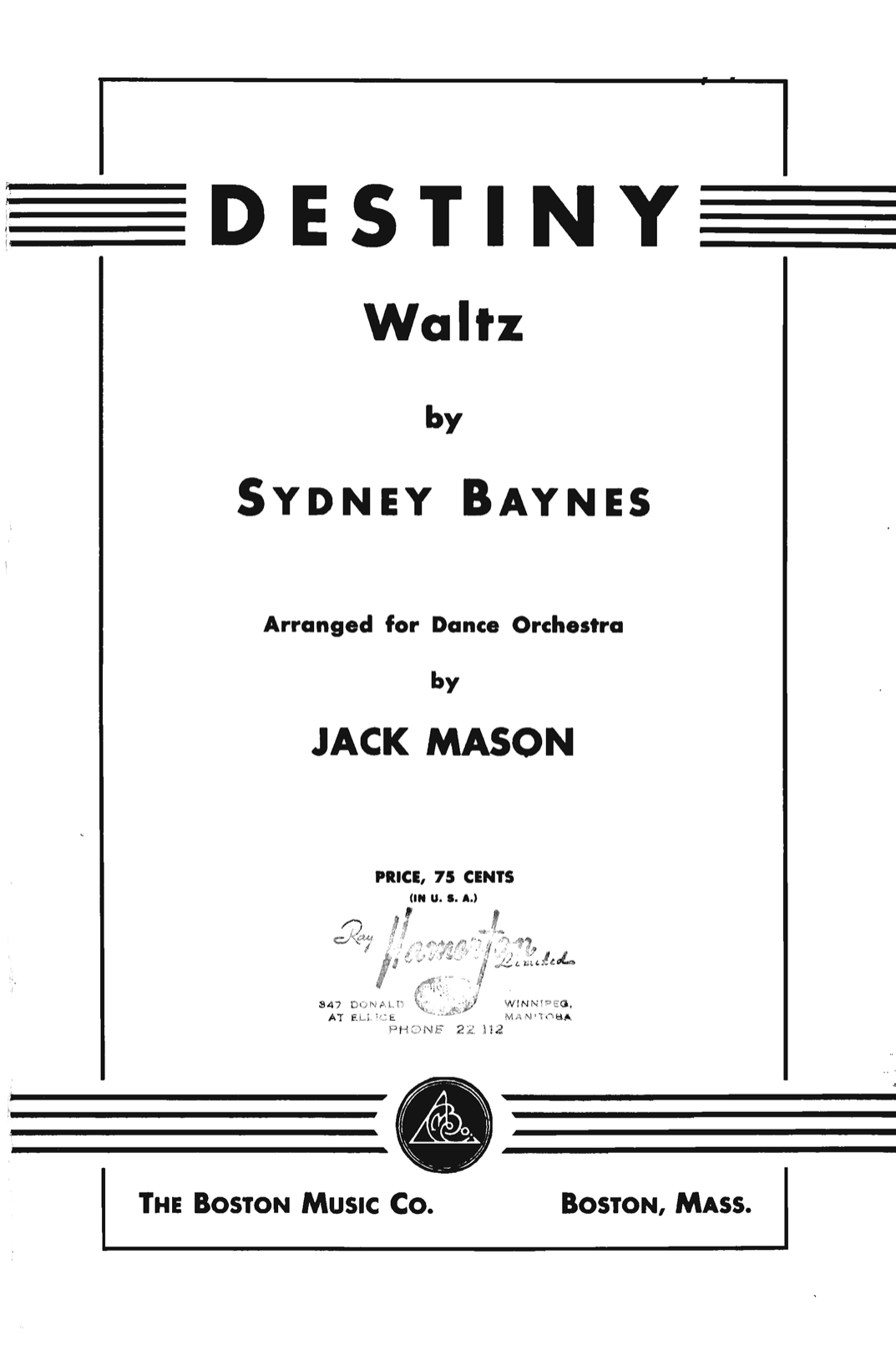
Destiny (J.Mason) sheet music preview

Destiny (J.Mason)

Composed by Jack Mason

Arranged by Jack Mason

  • Ensemble: Big Band Dance
  • Style: Big Band Dance
  • Pages: 31
  • Instruments (15): Alto Saxophone 1, Alto Saxophone 3, Tenor Saxophone 2, Baritone Saxophone 4, Trumpet 1 in B♭, Trumpet 3 in B♭, Trombone 1, Trombone 2, Piano, Bass, Drum Set, Bells, Vocal Trio (T.T.B.), Violins A-B, Violin C
  • Difficulty: medium
  • Content: Individual Parts
  • Format: PDF Download (Instant)
  • Price: $24.99

"Destiny," a captivating original composition by Jack Mason, is presented here in a meticulously crafted big band dance arrangement that embodies the vibrant spirit and sophisticated swing of the mid-20th century. While not a traditional jazz standard, Mason's "Destiny" is conceived and executed in the timeless idiom of the big band era, drawing inspiration from the dance-oriented charts that filled ballrooms and airwaves from the 1940s through the early 1960s. This arrangement channels the energy and melodic clarity reminiscent of iconic bands led by Count Basie, Glenn Miller, or Les Brown, but with a fresh, contemporary harmonic sensibility. It's a piece designed to evoke nostalgia while offering a thoroughly engaging musical experience for both performers and listeners, making it a potential modern classic in the big band dance repertoire. Musically, "Destiny" unfolds as a medium-tempo swing chart, typically performed around 120-130 BPM, providing a comfortable yet energetic groove that encourages both dancing and attentive listening. The arrangement is primarily in the key of F Major, offering a bright and accessible harmonic landscape. Its mood is one of optimistic elegance, characterized by flowing melodic lines and rich, full-bodied voicings. Mason's compositional style here emphasizes strong melodic development, often featuring the saxophones in unison or harmonized soli sections that are both intricate and highly playable. The brass sections contribute with powerful, yet controlled, statements, building dynamic tension and release throughout the piece. The rhythmic foundation is consistently driven by a classic swing feel, with a walking bass line and a ride cymbal pattern providing a steady, infectious pulse. Jack Mason's approach to arranging "Destiny" showcases his deep understanding of big band dynamics and orchestration. He masterfully balances ensemble power with melodic clarity. The arrangement opens with a memorable saxophone melody, which is then passed to the brass, creating a call-and-response texture. Mason's signature can be heard in the carefully constructed soli sections for the saxophones, which feature tight, sophisticated harmonies that are challenging yet rewarding to execute. The piece includes an open solo section over a standard 16-bar form, typically featuring the Tenor Saxophone 1 and/or Trumpet 2, allowing for improvisation within the established harmonic framework. A powerful, driving shout chorus builds to a climactic full ensemble statement, utilizing extended harmonies and dynamic contrasts to create an exhilarating finish. The technical demands are moderate, focusing on precision, blend, and articulation rather than extreme ranges or rapid-fire passages, making it accessible to a wide range of ensembles. This arrangement of "Destiny" is ideally suited for college, community, and advanced high school jazz ensembles looking to perform a piece that is both musically substantial and highly appealing to audiences. Its emphasis on ensemble precision, blend, and dynamic control makes it an excellent teaching tool for developing core big band skills. The clear melodic structure, engaging solos, and exciting shout chorus ensure a rewarding performance experience. It’s a piece that demands attention to detail in articulation and phrasing, but the payoff is a polished, professional sound that captures the timeless allure of big band dance music. "Destiny" thrives on a consistent, medium swing feel, ideally around 120-130 BPM. Conductors should emphasize a relaxed yet driving rhythmic pulse from the rhythm section, with particular attention to the ride cymbal pattern. Articulation is paramount; ensure crisp, uniform short notes and full, sustained long tones, especially in the saxophone soli sections where blend and intonation are critical. The brass sections should focus on controlled power, utilizing dynamic contrasts effectively without overblowing. There are no special techniques like plunger mutes or extreme falls/doits, but standard jazz phrasing with appropriate scoops and fall-offs should be encouraged. Rehearsal time should be dedicated to balancing the saxophone soli harmonies, ensuring the lead alto is prominent but not overpowering, and perfecting the ensemble's dynamic swells leading into and out of the shout chorus. The open solo section provides an opportunity for improvisers to shine over a classic swing progression. Q: What instruments are included in this arrangement of "Destiny"? A: This arrangement is scored for a standard 17-piece big band: Alto Sax 1, Alto Sax 2, Tenor Sax 1, Tenor Sax 2, Baritone Sax, Trumpet 1, Trumpet 2, Trumpet 3, Trumpet 4, Trombone 1, Trombone 2, Trombone 3, Trombone 4, Piano, Bass, Guitar, and Drums. Q: What is the difficulty level of "Destiny (J.Mason)"? A: This arrangement is rated as medium difficulty, making it suitable for advanced high school, college, and community jazz ensembles. It requires solid ensemble playing, good intonation, and a developed sense of swing. Q: What musical style and historical context does "Destiny" represent? A: "Destiny" is an original composition by Jack Mason arranged in the "Big Band Dance" style, evoking the sophisticated swing and melodic clarity of mid-20th-century big bands, reminiscent of the 1940s-1960s dance era. Q: What makes Jack Mason's arrangement of "Destiny" unique? A: Mason's arrangement is characterized by its strong melodic development, sophisticated saxophone soli voicings, and a powerful, driving shout chorus. It blends classic big band aesthetics with a fresh harmonic approach, offering both challenge and reward for performers. Q: What is the typical performance duration and tempo for "Destiny"? A: "Destiny" typically performs for approximately 3:30 to 4:00 minutes, depending on the length of the improvised solos. It is designed to be played at a medium swing tempo, ideally between 120-130 BPM.

Musicians Also Search For

Destiny Jack Mason PDFDestiny Jack Mason sheet musicDestiny arranged by Jack MasonJack Mason big band dance chartsJack Mason jazz arrangements PDFDestiny Jack Mason big band dance arrangementDestiny big band dance arrangementDestiny big band dance PDF downloadDestiny jazz ensemble sheet musicbig band dance sheet music instant downloadDestiny individual parts downloadDestiny sheet music with partsDestiny Big Band Dance chartBig Band Dance big band dance arrangementsbuy Destiny sheet music onlinedownload Destiny PDFDestiny jazz chartbest Jack Mason big band dance arrangementsDestiny printable sheet musicbig band dance repertoire PDF

All arrangements by Jack Mason All Jack Mason sheet music