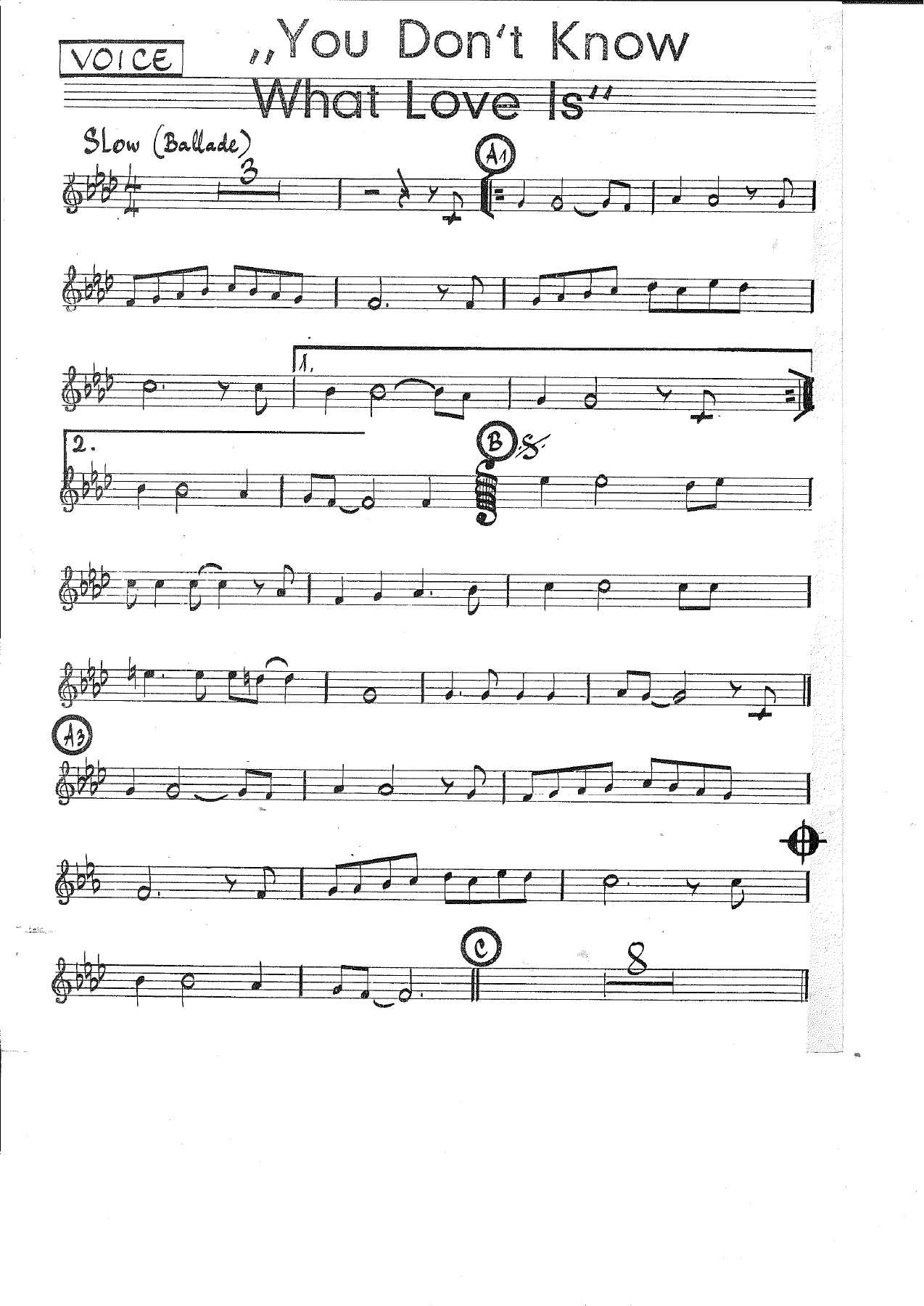
You don't know what love is Ten 1 (comp. Gene de Paul) sheet music preview

You don't know what love is Ten 1 (comp. Gene de Paul)

Composed by Gene de Paul

Arranged by Unknown Arranger

  • Ensemble: Big Band Vocal
  • Style: Ballad
  • Pages: 34
  • Difficulty: medium
  • Content: Sheet Music
  • Format: PDF Download (Instant)
  • Price: $24.99

"You Don't Know What Love Is," composed by Gene de Paul with lyrics by Don Raye, is a quintessential jazz ballad that emerged from the golden age of American songwriting. Originally introduced in the 1941 Abbott and Costello film *Keep 'Em Flying*, its true destiny as a jazz standard was cemented through countless interpretations by vocal luminaries like Billie Holiday, Dinah Washington, Chet Baker, and John Coltrane. The song's poignant melody and introspective lyrics explore themes of heartache and profound understanding gained through suffering, making it a timeless vehicle for emotional expression. Its enduring appeal lies in its harmonic richness, often featuring a distinct AABA or ABAC form with a melancholic minor key sensibility that invites deep improvisation and heartfelt vocal delivery, securing its place in the jazz canon. This particular arrangement, "You don't know what love is Ten 1," presents a slow, reflective ballad treatment for big band with a featured vocalist. The musical character is one of profound introspection and tender melancholy, best performed with a deliberate, unhurried tempo in common time. The arrangement likely opens with a lush, harmonically rich introduction, setting an immediate mood of contemplative beauty. Expect sustained chords and carefully voiced harmonies across the brass and saxophone sections, designed to support and frame the vocal line without overpowering it. The emotional arc builds subtly, allowing the vocalist ample space for expressive phrasing and dynamic nuance, culminating in moments of understated power rather than overt bombast. The Unknown Arranger's approach to this classic ballad prioritizes textural depth and vocal prominence. While specific voicings are unknown, one can anticipate sophisticated block chords in the saxophone soli sections, possibly featuring extended harmonies that add color and tension appropriate for the ballad style. There may be subtle counter-melodies in the brass or woodwinds during the vocal choruses, enhancing the harmonic landscape. A distinctive feature could be the use of dynamic contrasts, moving from hushed pianissimo textures to full, yet controlled, forte passages. Unlike arrangements that might feature an aggressive shout chorus, this treatment likely emphasizes sustained, warm voicings and a smooth, flowing accompaniment, allowing the emotional weight of the lyrics and melody to resonate fully. Featured instrumental solos, if present, would typically be for tenor saxophone or trumpet, offering a moment of instrumental introspection before returning to the vocal. Performing this arrangement is a rewarding experience for a big band that values musicality, blend, and dynamic control over technical flash. The primary challenges will lie in achieving a unified, expressive sound at a slow tempo, maintaining impeccable intonation, and supporting the vocalist with sensitivity. The melody is predominantly carried by the vocalist, with the ensemble providing a rich, undulating tapestry beneath. This arrangement is well-suited for college-level ensembles and advanced community bands seeking to develop their ballad playing, as well as professional bands looking for a nuanced and emotionally resonant vocal feature. The payoff is in delivering a truly moving performance that captures the timeless essence of this beloved standard. This arrangement of "You Don't Know What Love Is" should be approached as a classic slow ballad, emphasizing warmth, blend, and dynamic control. The suggested tempo is approximately quarter note = 50-60 BPM, allowing for maximum expressive phrasing from the vocalist and sustained harmonic richness from the ensemble. Key technical challenges include maintaining precise intonation in sustained chords, particularly within the saxophone and brass sections, and executing seamless dynamic swells and diminuendos. Conductors should focus on achieving a unified ensemble sound, ensuring that brass attacks are soft and sustained rather than percussive. Rehearsal time should be dedicated to balancing the ensemble with the vocalist, ensuring the accompaniment supports without overshadowing. Pay close attention to inner voice leading and the release of chords, aiming for a smooth, legato feel throughout. No special techniques like plunger mutes or falls are typically required for this style, prioritizing a pure, unadorned tone. Q: What instruments and parts are included in this arrangement? A: This big band vocal arrangement typically includes parts for 5 saxophones (2 altos, 2 tenors, 1 baritone), 4 trumpets, 4 trombones, piano, bass, drums, guitar, and a dedicated vocal lead sheet. Q: What is the difficulty level of "You don't know what love is Ten 1"? A: This arrangement is rated as intermediate to advanced. While not technically demanding in terms of speed, it requires strong musicianship, excellent intonation, dynamic control, and sensitive ensemble playing, making it suitable for college, advanced community, and professional bands. Q: What is the musical style and historical context of this piece? A: This is a classic jazz ballad, representing the rich tradition of mid-20th century American songwriting. The original song was composed by Gene de Paul in 1941 and became a prominent jazz standard through interpretations by legendary vocalists and instrumentalists. Q: What makes this specific arrangement unique compared to other versions of "You Don't Know What Love Is"? A: This arrangement, "You don't know what love is Ten 1," is characterized by its focus on a lush, harmonically rich big band accompaniment for a featured vocalist, emphasizing textural depth, sensitive dynamics, and a deliberate, expressive ballad tempo. Q: What is the typical performance duration and tempo for this arrangement? A: Given its slow ballad tempo (approximately quarter note = 50-60 BPM), a full performance of this arrangement, including vocal choruses and potential instrumental solos, would typically last between 4 to 6 minutes.

Musicians Also Search For

You don't know what love is Ten 1 Unknown Arranger PDFYou don't know what love is Ten 1 Unknown Arranger sheet musicYou don't know what love is Ten 1 arranged by Unknown ArrangerUnknown Arranger big band vocal chartsUnknown Arranger jazz arrangements PDFYou don't know what love is Ten 1 Gene de Paul sheet musicYou don't know what love is Ten 1 Gene de Paul big band vocal arrangementGene de Paul big band vocal chartsYou don't know what love is Ten 1 big band vocal arrangementYou don't know what love is Ten 1 big band vocal PDF downloadYou don't know what love is Ten 1 jazz ensemble sheet musicbig band vocal sheet music instant downloadYou don't know what love is Ten 1 sheet music with partsYou don't know what love is Ten 1 Ballad chartBallad big band vocal arrangementsbuy You don't know what love is Ten 1 sheet music onlinedownload You don't know what love is Ten 1 PDFYou don't know what love is Ten 1 jazz chartbest Unknown Arranger big band vocal arrangementsGene de Paul songs arranged by Unknown ArrangerYou don't know what love is Ten 1 printable sheet musicbig band vocal repertoire PDF

All arrangements by Unknown Arranger All Gene de Paul sheet music