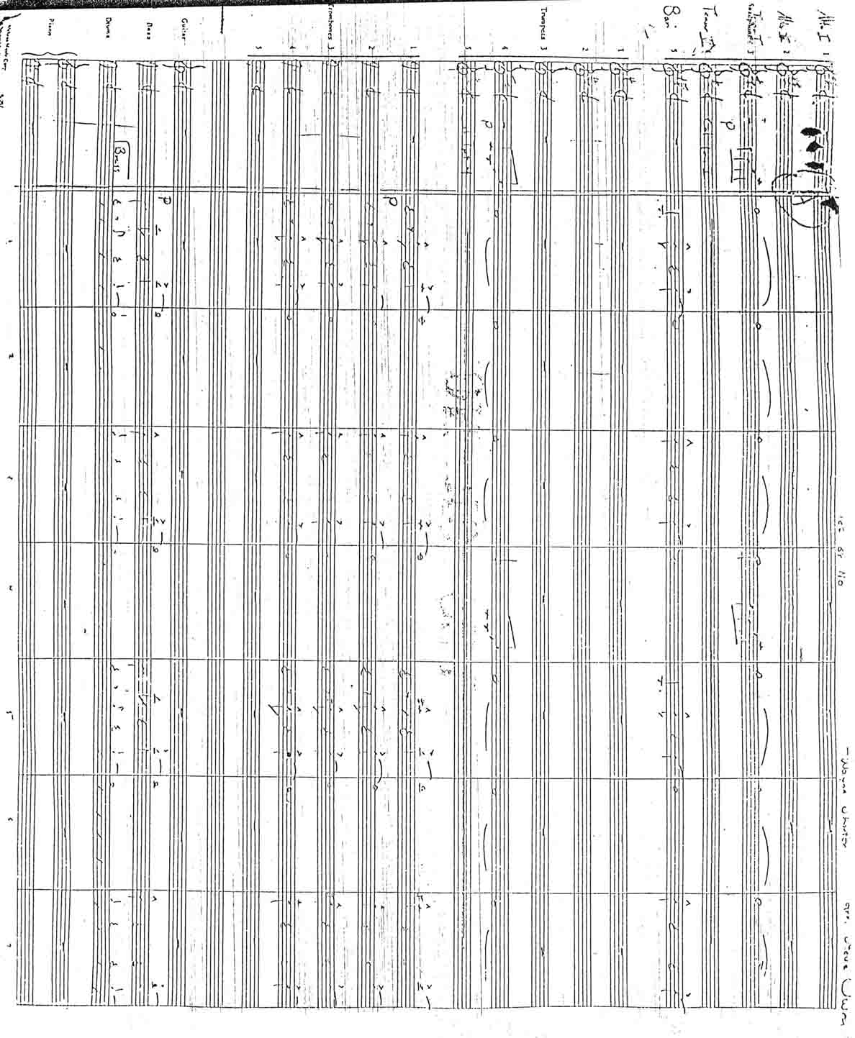
Yes Or No (S.Owen) sheet music preview

Yes Or No (S.Owen)

Composed by S. Owen

Arranged by S.Owen

  • Ensemble: Big Band
  • Style: Jazz Standard
  • Pages: 102
  • Instruments (18): Alto Sax I, Alto Sax II, Tenor Sax I, Tenor Sax II, Bari Sax, Trumpet I, Trumpet II, Trumpet III, Trumpet IV, Trumpet V, Bone I, Bone II, Bone III, Bone IV, Bone V, Piano / Guitar, Bass, Drums
  • Difficulty: advanced
  • Content: Individual Parts
  • Format: PDF Download (Instant)
  • Price: $24.99

Wayne Shorter’s iconic composition "Yes or No," originally introduced on his celebrated 1964 Blue Note album *Speak No Evil*, stands as a quintessential pillar of mid-1960s post-bop innovation. Built upon a sophisticated harmonic framework that bridges modal exploration and driving hard bop tension, the tune challenges improvisers with its deceptive structural turns and brisk, conversational themes. Shorter’s writing from this era defined the modern jazz canon, offering ensembles a masterclass in shifting tonal centers and rhythmic displacement. Capturing this adventurous spirit, this contemporary big band adaptation by S.Owen translates the intricate linear writing of a small-group masterpiece into a powerhouse orchestral statement, preserving the sophisticated harmonic language while expanding its textural palette for a full 17-piece jazz orchestra. Propelled by an energetic, driving medium-up swing feel in 4/4 time, this arrangement radiates a sophisticated, high-stakes energy reminiscent of the classic Vanguard Jazz Orchestra or late-era Thad Jones charts. The mood is urgent, intellectual, and relentlessly swinging, evoking the urbane atmosphere of mid-century New York jazz clubs. S.Owen’s approach respects Shorter’s original architecture while injecting modern big band vitality through lush, extended chord voicings and aggressive contrapuntal horn lines. The arrangement balances transparent, delicate section work with roaring, brass-heavy ensemble passages, creating a dynamic contour that keeps both performers and audiences completely engaged from the first downbeat. The melody is introduced with razor-sharp precision, initially carried by the alto and tenor saxophones before the full ensemble steps in to color Shorter’s angular phrasing with rich, modernistic harmonies. S.Owen carves out generous solo space for key chairs, allowing rhythm section players and horn soloists to stretch out over the tune's sophisticated changes. Technical challenges center around tight syncopations, rapid-fire chromatic passing tones, and the stamina required to maintain a buoyant swing feel at a brisk tempo. The climax builds toward a ferocious shout chorus that reinterpreting the primary motifs with blistering brass counterlines and driving saxophone solis, delivering an unforgettable payoff that showcases the entire ensemble's collective articulation and dynamic control. Advanced collegiate ensembles, professional repertory big bands, and elite high school jazz orchestras with strong section players and confident improvisers will find this chart an ideal centerpiece for festival competition or advanced concert programming. Because of its demanding harmonic landscape and rhythmic interplay, the arrangement rewards meticulous sectional rehearsing, particularly in achieving a unified articulation style across the brass and reed families. It offers a rare vehicle that combines historical post-bop pedigree with modern arranging ingenuity, making it an essential addition to any ambitious big band's permanent library. Conductors should approach "Yes or No" with a primary focus on rhythmic crispness and forward momentum. The underlying tempo must remain relentlessly steady; rushing the bridge or dragging the turnaround will compromise the intricate harmonic tension built into S.Owen's voicings. Saxophone sections need to practice their interlocking lines with a metronome at half-tempo, ensuring that all sixteenth-note subdivisions are articulated with a lightweight, modern jazz bounce rather than a heavy, dated swing. Brass players should pay careful attention to dynamic markings, particularly during the transition from muted backgrounds to open-bell accents. Encourage the rhythm section—especially the drummer—to interact dynamically with the soloists while maintaining a crisp, ride-cymbal-driven pulse that honors the Tony Williams-inspired lineage of the original composition. Balance is critical during the dense ensemble solis; horns must back off slightly when the inner voices carry the primary counter-melody to ensure clarity of line. Q: What instruments and parts are included in this big band arrangement? A: The complete 102-page set is scored for a standard 17-instrument big band lineup, comprising 5 saxophones (2 altos, 2 tenors, 1 baritone), 4 trumpets, 4 trombones, and a full rhythm section featuring piano, guitar, bass, and drums. Q: What is the difficulty level of this chart? A: This arrangement is graded as advanced, making it best suited for collegiate ensembles, professional big bands, and elite high school jazz bands with experienced section leaders and confident improvisers. Q: What is the historical background of the piece? A: The arrangement is based on Wayne Shorter's celebrated post-bop composition originally recorded on his classic 1964 Blue Note album, *Speak No Evil*, representing the pinnacle of 1960s jazz modernism. Q: What makes S.Owen's arrangement unique? A: S.Owen successfully scales down the intricate, conversational small-group interplay of the original recording into a massive orchestral canvas, utilizing extended chord voicings, a powerful shout chorus, and sophisticated counterpoint. Q: What is the performance duration and recommended tempo? A: The piece is designed as a medium-up swing chart intended to be performed at a brisk, driving tempo that highlights the sophisticated harmonic movement and energetic groove inherent in post-bop writing.

Questions and answers

What is included in the Yes Or No (S.Owen) PDF?
The verified current file contains individual parts across 102 pages.
How many instruments or parts are listed for Yes Or No (S.Owen)?
The verified instrumentation list contains 18 entries for this Big Band arrangement.
Who is credited for Yes Or No (S.Owen)?
Composer: S. Owen. Arranger: S.Owen.
What difficulty is listed for Yes Or No (S.Owen)?
The verified difficulty level is advanced.
What style is listed for Yes Or No (S.Owen)?
The catalog lists the style as Jazz Standard.
Can I preview Yes Or No (S.Owen) before buying?
Yes. The product page provides a preview generated from the current PDF file.
How is Yes Or No (S.Owen) delivered?
After successful payment, the digital PDF is made available for download. The displayed price is $24.99.

Musicians Also Search For

Yes Or No S.Owen PDFYes Or No S.Owen sheet musicYes Or No arranged by S.OwenS.Owen big band chartsS.Owen jazz arrangements PDFYes Or No S. Owen sheet musicYes Or No S. Owen big band arrangementsS. Owen big band chartsYes Or No big band arrangementsYes Or No big band PDF downloadYes Or No jazz sheet musicbig band sheet music downloadYes Or No individual parts downloadYes Or No sheet music PDFYes Or No Jazz Standard chartsJazz Standard big band arrangementsbuy Yes Or No sheet musicdownload Yes Or No PDFYes Or No jazz chartsbest S.Owen big band arrangementsS. Owen arranged by S.OwenYes Or No printable sheet musicbig band repertoire PDF

All arrangements by S.Owen All S. Owen sheet music