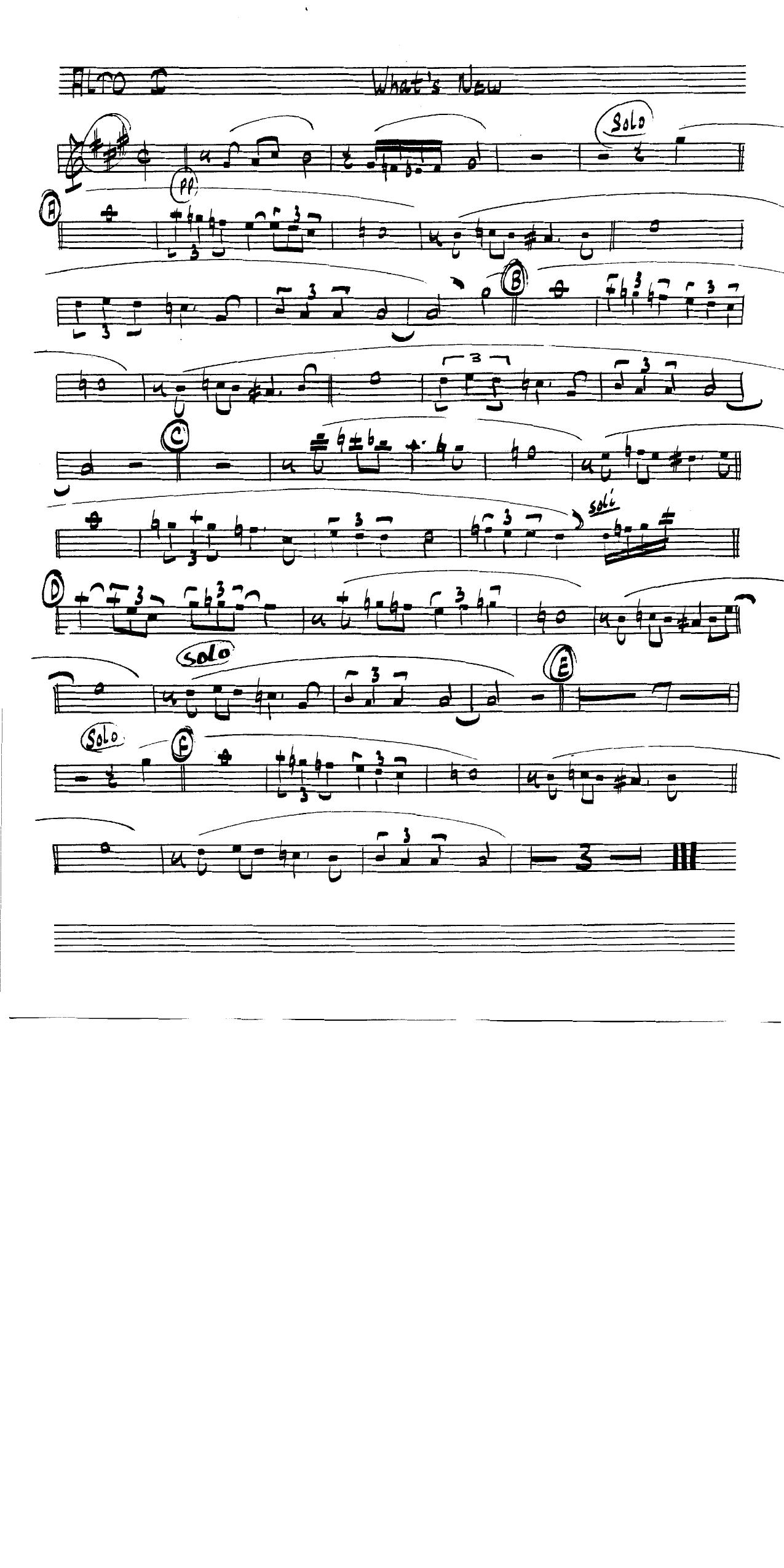
What's New (E.Taylor) sheet music preview

What's New (E.Taylor)

Composed by Bob Haggart

Arranged by E.Taylor

  • Ensemble: Big Band
  • Style: Jazz Standard
  • Pages: 15
  • Instruments (15): Alto Saxophone I, Alto Saxophone II, Tenor Saxophone I, Tenor Saxophone II, Baritone Saxophone, Trumpet I, Trumpet II, Trumpet III, Trumpet IV, Trombone I, Trombone II, Trombone III, Piano, Bass, Drums
  • Difficulty: easy
  • Content: Individual Parts
  • Format: PDF Download (Instant)
  • Price: $24.99

Composed in 1938 by bassist Bob Haggart with lyrics later added by Johnny Burke, "What's New" stands as one of the most enduring and harmonically rich ballads in the Great American Songbook. Originally introduced by the Bob Crosby Orchestra—where Haggart played bass—the tune gained its definitive jazz imprimatur through landmark recordings by artists like Billie Holiday, Frank Sinatra, and the Bing Crosby-adjacent jazz circles, before becoming a quintessential vehicle for improvisers from John Coltrane to Art Pepper. This timeless standard represents the bridge between late-1930s sweet swing and the sophisticated harmonic explorations of the modern jazz era, characterized by its melancholic chromaticism, sweeping melodic intervals, and an underlying sense of bittersweet nostalgia. Masterfully reimagined by arranger E.Taylor, this big band interpretation approaches the material as a lush, expressive ballad centered around a deeply emotive slow-swing feel in 4/4 time. The arrangement establishes a contemplative mood from its opening measure, utilizing rich, extended chord voicings in the brass and subtle harmonic shifts in the saxophones to evoke a cinematic, late-night atmosphere. The emotional trajectory moves from introspective vulnerability to a soaring, dynamically rich middle section that showcases the full tonal palette of a standard 14-piece big band without ever sacrificing the intimacy inherent to Haggart's original melody. E.Taylor’s treatment distinguishes itself through exquisite chord-cluster voicings and a masterclass in dynamic contrast. Rather than relying on a heavy-handed shout chorus, the arranger builds tension through intricate counterpoint between the reeds and muted brass, allowing inner voices to move with linear independence. The melody is introduced by the lead alto saxophone, supported by warm, harmonized pads from the tenor and baritone saxophones, before expanding into a full ensemble statement. A featured improvised solo—ideally suited for a lyrical tenor saxophone or trumpet player—unfolds over a sophisticated backdrop of subtle chord substitutions and sustained horn swells, maintaining high tension and release throughout the solo chorus. Designed with advanced high school, collegiate, and professional jazz ensembles in mind, this 15-page chart demands exceptional breath control, pristine intonation, and mature ballad playing from all sections. While the technical demands regarding fast fingerwork are low, the psychological and musical challenges of maintaining a steady, relaxed pulse at a slow tempo, executing seamless blend across sections, and shaping long, lyrical phrases will push an ensemble's musicality to new heights. Performing E.Taylor’s chart offers an enriching masterclass in big band dynamics, making it a standout programming choice for festival ballad slots or formal concert settings where expressive depth is paramount. Conductors should approach this arrangement with an emphasis on horizontal linear momentum rather than vertical beat-stamping; maintaining a relaxed, pulsing half-note feel is crucial to preventing the slow tempo from dragging. The primary technical challenge lies in achieving absolute blend and balance during exposed chordal passages, particularly when the ensemble sustains quiet, extended harmonies. Trumpets should utilize cup or harmon mutes where indicated to achieve the desired warm, veiled timbre, ensuring that muted lines never pinch the pitch. Pay meticulous attention to dynamic markings; the transition from whisper-quiet subtones in the lower saxophones to full, resonant ensemble passages must be handled with graduated crescendos. Rehearsal strategy should begin with sectional tone-matching, isolating the inner voices of the horn sections before integrating the rhythm section, whose role is to provide a feather-light, pulse-driven foundation with economic comping and a deep, anchoring bassline. Q: What instruments and parts are included in this big band arrangement? A: This 15-page arrangement is scored for a 14-instrument big band ensemble, specifically featuring an instrumentation breakdown of Alto Saxophone, Tenor Saxophone 1, Tenor Saxophone 2, Baritone Saxophone, and Trumpet 1 through a full complementary rhythm and horn section. Q: What is the difficulty level of this arrangement? A: This chart is best suited for advanced high school, collegiate, and professional jazz ensembles due to its high demands on blend, intonation, breath control, and mature ballad interpretation rather than fast technical execution. Q: What is the musical style and historical context of the piece? A: Based on Bob Haggart's 1938 jazz standard, this arrangement honors the classic ballad tradition of the swing era while incorporating sophisticated, modern harmonic voicings typical of advanced contemporary big band writing. Q: What makes E.Taylor's arrangement unique compared to other versions of "What's New"? A: This arrangement stands out through its masterclass use of chromatic inner-voice movement, delicate harmonic counterpoint, and an avoidance of loud shout choruses in favor of a lush, dynamic, and emotionally intimate architectural arc. Q: What is the suggested tempo and performance duration for this piece? A: The arrangement is set to a relaxed, expressive slow-swing ballad feel in 4/4 time, yielding an estimated performance duration of approximately 4 to 5 minutes depending on the length of the improvised solo section.

Questions and answers

What is included in the What's New (E.Taylor) PDF?
The verified current file contains individual parts across 15 pages.
How many instruments or parts are listed for What's New (E.Taylor)?
The verified instrumentation list contains 15 entries for this Big Band arrangement.
Who is credited for What's New (E.Taylor)?
Composer: Bob Haggart. Arranger: E.Taylor.
What difficulty is listed for What's New (E.Taylor)?
The verified difficulty level is easy.
What style is listed for What's New (E.Taylor)?
The catalog lists the style as Jazz Standard.
Can I preview What's New (E.Taylor) before buying?
Yes. The product page provides a preview generated from the current PDF file.
How is What's New (E.Taylor) delivered?
After successful payment, the digital PDF is made available for download. The displayed price is $24.99.

Musicians Also Search For

What's New E.Taylor PDFWhat's New E.Taylor sheet musicWhat's New arranged by E.TaylorE.Taylor big band chartsE.Taylor jazz arrangements PDFWhat's New Bob Haggart sheet musicWhat's New Bob Haggart big band arrangementsBob Haggart big band chartsWhat's New big band arrangementsWhat's New big band PDF downloadWhat's New jazz sheet musicbig band sheet music downloadWhat's New individual parts downloadWhat's New sheet music PDFWhat's New Jazz Standard chartsJazz Standard big band arrangementsbuy What's New sheet musicdownload What's New PDFWhat's New jazz chartsbest E.Taylor big band arrangementsBob Haggart arranged by E.TaylorWhat's New printable sheet musicbig band repertoire PDF

All arrangements by E.Taylor All Bob Haggart sheet music