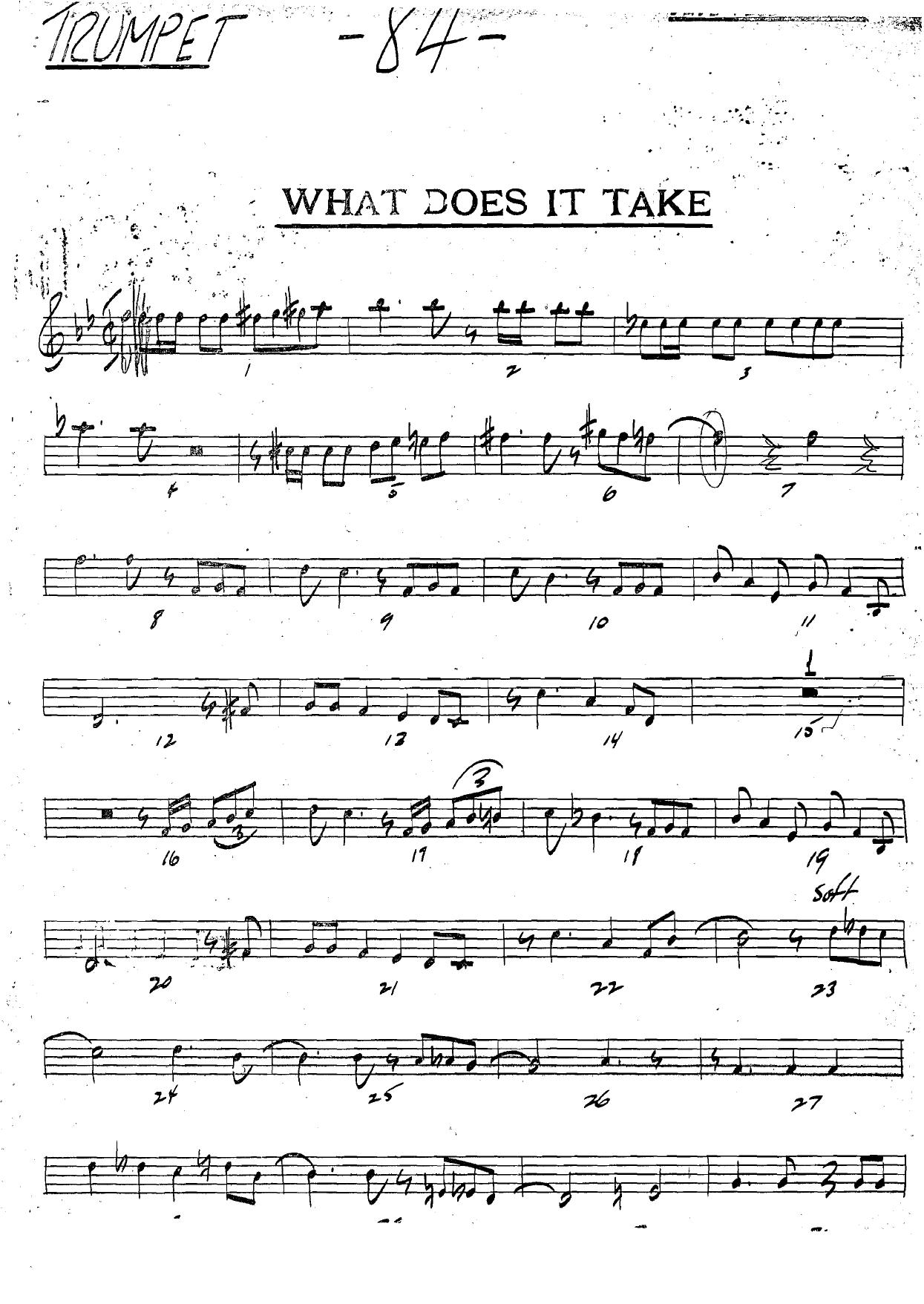
What Does It Take - R. Rogers - Dave Pell Octet - Ts,Bs,Trp,Trb+Rhythm (Dave Pell Octet)
Composed by Richard Rodgers
- Ensemble: Small Ensemble
- Pages: 34
- Instruments (8): Trumpet, Tenor Saxophone, Trombone, Baritone Saxophone, Guitar, Piano, Bass, Drums
- Difficulty: easy
- Content: Individual Parts
- Format: PDF Download (Instant)
- Price: $12.99
Richard Rodgers' timeless melody, "What Does It Take," originally penned for a stage production, found its way into the jazz lexicon through numerous interpretations, often celebrated for its lyrical beauty and harmonic depth. While not as frequently recorded as some of Rodgers' other standards, its inclusion in the repertoire of sophisticated small ensembles like the Dave Pell Octet elevates its status, demonstrating its adaptability and enduring appeal. The Dave Pell Octet, prominent in the 1950s West Coast Cool Jazz scene, was renowned for its meticulously crafted arrangements, often featuring intricate counterpoint, smooth voicings, and a relaxed, yet swinging, aesthetic. This particular arrangement embodies that signature sound, offering a glimpse into an era where precision and melodic clarity were paramount. This arrangement of "What Does It Take" is a quintessential example of the Dave Pell Octet's approach: a medium-swing tempo in 4/4 time, likely in a comfortable key like F or Bb Major, designed to showcase the ensemble's blend and individual soloists. The mood is sophisticated and understated, evoking a cool, laid-back energy rather than high-octane bebop. Expect lush, close-voiced harmonies that prioritize clarity and balance, often featuring the saxophones and brass intertwining in a seamless texture. The arrangement likely begins with a harmonized statement of the melody, perhaps shared between the tenor sax and trumpet, before transitioning into a series of well-structured solo sections over the tune's elegant chord changes. The distinctive character of this arrangement lies in its masterful use of the small ensemble's capabilities. While the arranger is unknown, the style strongly suggests a direct lineage to the Dave Pell Octet's house arrangers, who were adept at creating rich textures with minimal instrumentation. Expect carefully constructed soli passages where the saxophones (Tenor and Baritone) and brass (Trumpet and Trombone) engage in melodic interplay, often with subtle counter-melodies from the rhythm section. Technical challenges will include maintaining precise articulation and blend within the close voicings, navigating the moderate swing feel with rhythmic accuracy, and executing any featured improvisation with melodic and harmonic sophistication. The rewarding aspect lies in achieving the ensemble's signature smooth blend and presenting a polished, swinging performance that captures the essence of West Coast Cool. This arrangement is ideally suited for college-level jazz ensembles, advanced community bands, or professional small groups seeking to explore the nuanced artistry of the Dave Pell Octet's iconic sound. To capture the authentic Dave Pell Octet sound, focus on a relaxed, medium-swing feel, emphasizing a light, floating quarter-note pulse rather than a heavy driving beat. Articulation should be precise but not aggressive; think legato phrasing with clear attacks and releases. Balance is paramount, especially within the close-voiced soli sections; encourage musicians to listen across sections to achieve a seamless blend between the saxophones and brass. The rhythm section should provide a steady, understated foundation, with the piano offering tasteful comping that supports the melodic lines without overpowering them. While no specific mutes are indicated, a straight mute for the trumpet or trombone could be used selectively for textural variation in certain passages if desired, but the core sound relies on open horns. Rehearsal time should be dedicated to perfecting the ensemble's blend, ensuring rhythmic accuracy in unison and soli passages, and developing a cohesive improvisational approach that complements the arrangement's cool aesthetic. Q: What instruments are included in this arrangement? A: This arrangement is scored for a 7-instrument small ensemble, specifically featuring Tenor Saxophone, Baritone Saxophone, Trumpet, Trombone, Piano, Bass, and Drums. Q: What is the difficulty level of this arrangement? A: This arrangement is considered advanced intermediate to advanced, suitable for college-level jazz ensembles, advanced community bands, or professional small groups due to its intricate voicings and demand for precise ensemble blend. Q: What musical style and historical context does this arrangement represent? A: This arrangement embodies the West Coast Cool Jazz style of the 1950s, characteristic of the Dave Pell Octet's sound, featuring sophisticated harmonies, a relaxed medium-swing feel, and meticulous ensemble precision. Q: What makes this arrangement unique compared to other versions of "What Does It Take"? A: This arrangement stands out due to its faithful recreation of the Dave Pell Octet's signature sound, emphasizing close voicings, elegant counterpoint between specific horn sections, and a refined, understated approach to the classic Richard Rodgers melody. Q: What is the typical performance duration or tempo for this piece? A: While exact duration can vary with solos, the piece is designed for a medium-swing tempo, typically around 120-140 BPM, resulting in a performance duration of approximately 3-5 minutes depending on the number and length of improvised solos.
Questions and answers
- What is included in the What Does It Take - R. Rogers - Dave Pell Octet - Ts,Bs,Trp,Trb+Rhythm (Dave Pell Octet) PDF?
- The verified current file contains individual parts across 34 pages.
- How many instruments or parts are listed for What Does It Take - R. Rogers - Dave Pell Octet - Ts,Bs,Trp,Trb+Rhythm (Dave Pell Octet)?
- The verified instrumentation list contains 8 entries for this Small Ensemble arrangement.
- Who is credited for What Does It Take - R. Rogers - Dave Pell Octet - Ts,Bs,Trp,Trb+Rhythm (Dave Pell Octet)?
- Composer: Richard Rodgers.
- What difficulty is listed for What Does It Take - R. Rogers - Dave Pell Octet - Ts,Bs,Trp,Trb+Rhythm (Dave Pell Octet)?
- The verified difficulty level is easy.
- Can I preview What Does It Take - R. Rogers - Dave Pell Octet - Ts,Bs,Trp,Trb+Rhythm (Dave Pell Octet) before buying?
- Yes. The product page provides a preview generated from the current PDF file.
- How is What Does It Take - R. Rogers - Dave Pell Octet - Ts,Bs,Trp,Trb+Rhythm (Dave Pell Octet) delivered?
- After successful payment, the digital PDF is made available for download. The displayed price is $12.99.
Musicians Also Search For
What Does It Take - R. Rogers - Dave Pell Octet - Ts,Bs,Trp,Trb+Rhythm Richard Rodgers sheet music • What Does It Take - R. Rogers - Dave Pell Octet - Ts,Bs,Trp,Trb+Rhythm Richard Rodgers small ensemble arrangements • Richard Rodgers small ensemble charts • What Does It Take - R. Rogers - Dave Pell Octet - Ts,Bs,Trp,Trb+Rhythm small ensemble arrangements • What Does It Take - R. Rogers - Dave Pell Octet - Ts,Bs,Trp,Trb+Rhythm small ensemble PDF download • What Does It Take - R. Rogers - Dave Pell Octet - Ts,Bs,Trp,Trb+Rhythm jazz sheet music • small ensemble sheet music download • What Does It Take - R. Rogers - Dave Pell Octet - Ts,Bs,Trp,Trb+Rhythm individual parts download • What Does It Take - R. Rogers - Dave Pell Octet - Ts,Bs,Trp,Trb+Rhythm sheet music PDF • buy What Does It Take - R. Rogers - Dave Pell Octet - Ts,Bs,Trp,Trb+Rhythm sheet music • download What Does It Take - R. Rogers - Dave Pell Octet - Ts,Bs,Trp,Trb+Rhythm PDF • What Does It Take - R. Rogers - Dave Pell Octet - Ts,Bs,Trp,Trb+Rhythm jazz charts • What Does It Take - R. Rogers - Dave Pell Octet - Ts,Bs,Trp,Trb+Rhythm printable sheet music • small ensemble repertoire PDF