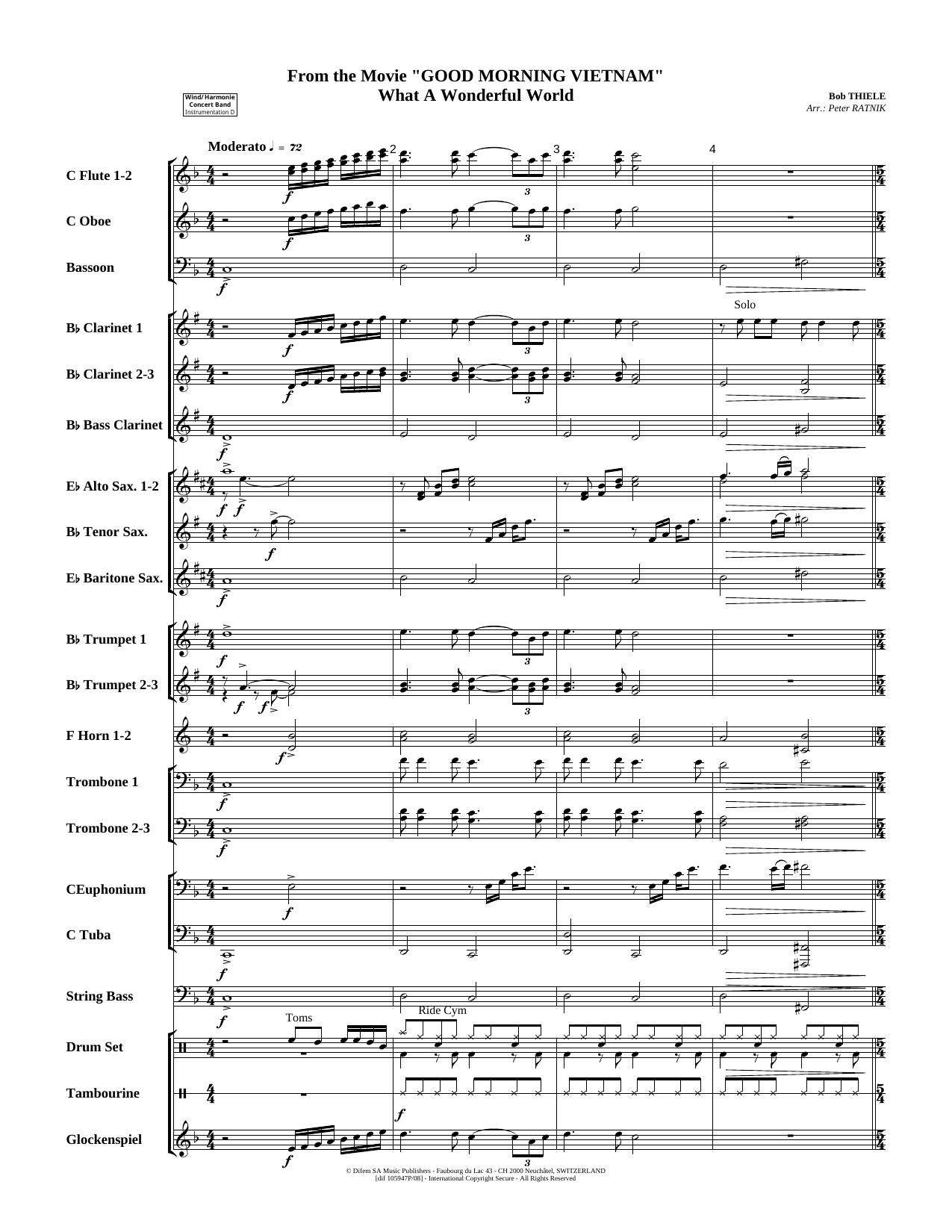
What a wonderful world - Trompeta (T.1)
Composed by Bob Thiele, George David Weiss
Arranged by Trompeta 1
- Ensemble: Concert Band
- Style: Jazz Standard
- Pages: 37
- Difficulty: easy
- Content: Sheet Music
- Format: PDF Download (Instant)
- Price: $22.99
"What a Wonderful World," originally composed by Bob Thiele and George David Weiss, stands as an enduring emblem of hope and beauty within the jazz standard repertoire. First recorded and immortalized by Louis Armstrong in 1967, during a tumultuous period of social unrest, the song offered a poignant counterpoint, quickly becoming a global anthem of peace and appreciation for life's simple joys. Its enduring appeal lies in its deceptively simple melodic structure and profound lyrical message, making it a staple in both jazz and popular music canons. The original recording is characterized by Armstrong's gravelly, heartfelt vocal delivery, understated orchestration, and a slow, reflective ballad tempo that allows the emotional weight of the lyrics to resonate deeply. This concert band arrangement by Trompeta 1 masterfully reinterprets the iconic ballad, preserving its tender, contemplative mood while expanding its harmonic and textural palette for a larger ensemble. The piece maintains a slow, expressive ballad tempo, typically around 60-70 beats per minute, in a gentle 4/4 meter. The primary key is often C major or a closely related key, chosen for its warmth and accessibility. The arrangement evokes a sense of serene beauty and nostalgic reflection, building from a delicate opening to a rich, full-bodied climax before returning to a tranquil close. The emotional arc is one of quiet optimism and profound gratitude. Trompeta 1's distinctive approach to "What a Wonderful World" is evident in its thoughtful orchestration and dynamic shaping. The arranger frequently employs lush, sustained voicings across the brass and woodwind sections, creating a rich harmonic tapestry that supports the familiar melody. The opening statement of the melody is often presented by a solo woodwind (e.g., clarinet or oboe) or a small, warm brass choir, emphasizing intimacy. Subsequent sections introduce layered textures, with counter-melodies and obbligato lines weaving through the main theme. While there isn't a traditional improvised solo section in the jazz sense, the arrangement features prominent melodic statements passed between different sections, allowing various instrumental voices to shine. A notable feature is the carefully constructed dynamic build-up, culminating in a powerful, yet never overpowering, full ensemble statement of the theme, often utilizing extended harmonies to add depth and color. The arrangement is designed to be rewarding for a wide range of concert bands, from advanced high school ensembles to college and community groups. Its primary challenge lies in achieving a unified, expressive sound, maintaining impeccable intonation in sustained chords, and executing precise dynamic control. The absence of complex rhythmic figures or extreme technical demands places the focus squarely on musicality, phrasing, and ensemble blend. Specific moments, such as the carefully orchestrated modulations and the climactic full ensemble chorale, require sensitive balance and emotional commitment, making it a compelling and moving piece for both performers and audiences. Approaching "What a Wonderful World" requires a focus on sustained musicality and expressive phrasing rather than technical virtuosity. The tempo should be a deliberate, slow ballad (quarter note = 60-70 BPM), emphasizing the song's reflective nature; avoid rushing or dragging. Key technical challenges include maintaining precise intonation within the lush, sustained chords, particularly in the brass and woodwind sections. Encourage musicians to listen across sections to ensure a seamless blend and balanced harmonic texture. Dynamic contrasts are crucial: the arrangement moves from delicate pianissimo passages to powerful forte climaxes, demanding careful control from all players. Rehearsal time should be dedicated to shaping long melodic lines, ensuring that phrases breathe naturally and build to their emotional peaks. Emphasize the importance of a warm, resonant tone quality throughout the ensemble to convey the piece's inherent beauty and optimism. Q: What instruments are included in this "What a Wonderful World - Trompeta (T.1)" arrangement? A: This arrangement is scored for a full concert band, typically including standard woodwind, brass, and percussion sections. Specific instrumentation details would be found on the score's title page, but it generally encompasses flutes, oboes, clarinets, bassoons, saxophones, trumpets, horns, trombones, euphonium, tuba, and a selection of percussion. Q: What is the difficulty level of this arrangement? A: This arrangement is suitable for advanced high school, college, and community concert bands. While it avoids extreme technical demands, it requires strong musicality, excellent intonation, and sophisticated dynamic control to achieve its full expressive potential. Q: What is the musical style and historical context of the original piece? A: "What a Wonderful World" is a jazz standard, originally composed by Bob Thiele and George David Weiss in 1967. It was famously recorded by Louis Armstrong and is known for its slow, contemplative ballad style, offering a message of hope and appreciation amidst its era's social turbulence. Q: What makes Trompeta 1's arrangement of "What a Wonderful World" unique? A: Trompeta 1's arrangement is distinguished by its lush, expanded harmonic voicings for concert band, thoughtful orchestration that passes melodic interest across sections, and a focus on dynamic shaping to enhance the original's emotional depth. It maintains the tender ballad feel while providing a rich, full-bodied interpretation. Q: What is the typical performance duration and tempo for this arrangement? A: The performance duration for this arrangement typically ranges from 3 to 4 minutes, depending on the conductor's interpretation of the tempo. It is intended to be performed at a slow, expressive ballad tempo, generally around 60-70 beats per minute in 4/4 time.
Musicians Also Search For
What a wonderful world - Trompeta Trompeta 1 PDF • What a wonderful world - Trompeta Trompeta 1 sheet music • What a wonderful world - Trompeta arranged by Trompeta 1 • Trompeta 1 concert band charts • Trompeta 1 jazz arrangements PDF • What a wonderful world - Trompeta Bob Thiele, George David Weiss sheet music • What a wonderful world - Trompeta Bob Thiele, George David Weiss concert band arrangement • Bob Thiele, George David Weiss concert band charts • What a wonderful world - Trompeta concert band arrangement • What a wonderful world - Trompeta concert band PDF download • What a wonderful world - Trompeta jazz ensemble sheet music • concert band sheet music instant download • What a wonderful world - Trompeta sheet music with parts • What a wonderful world - Trompeta Jazz Standard chart • Jazz Standard concert band arrangements • buy What a wonderful world - Trompeta sheet music online • download What a wonderful world - Trompeta PDF • What a wonderful world - Trompeta jazz chart • best Trompeta 1 concert band arrangements • Bob Thiele, George David Weiss songs arranged by Trompeta 1 • What a wonderful world - Trompeta printable sheet music • concert band repertoire PDF