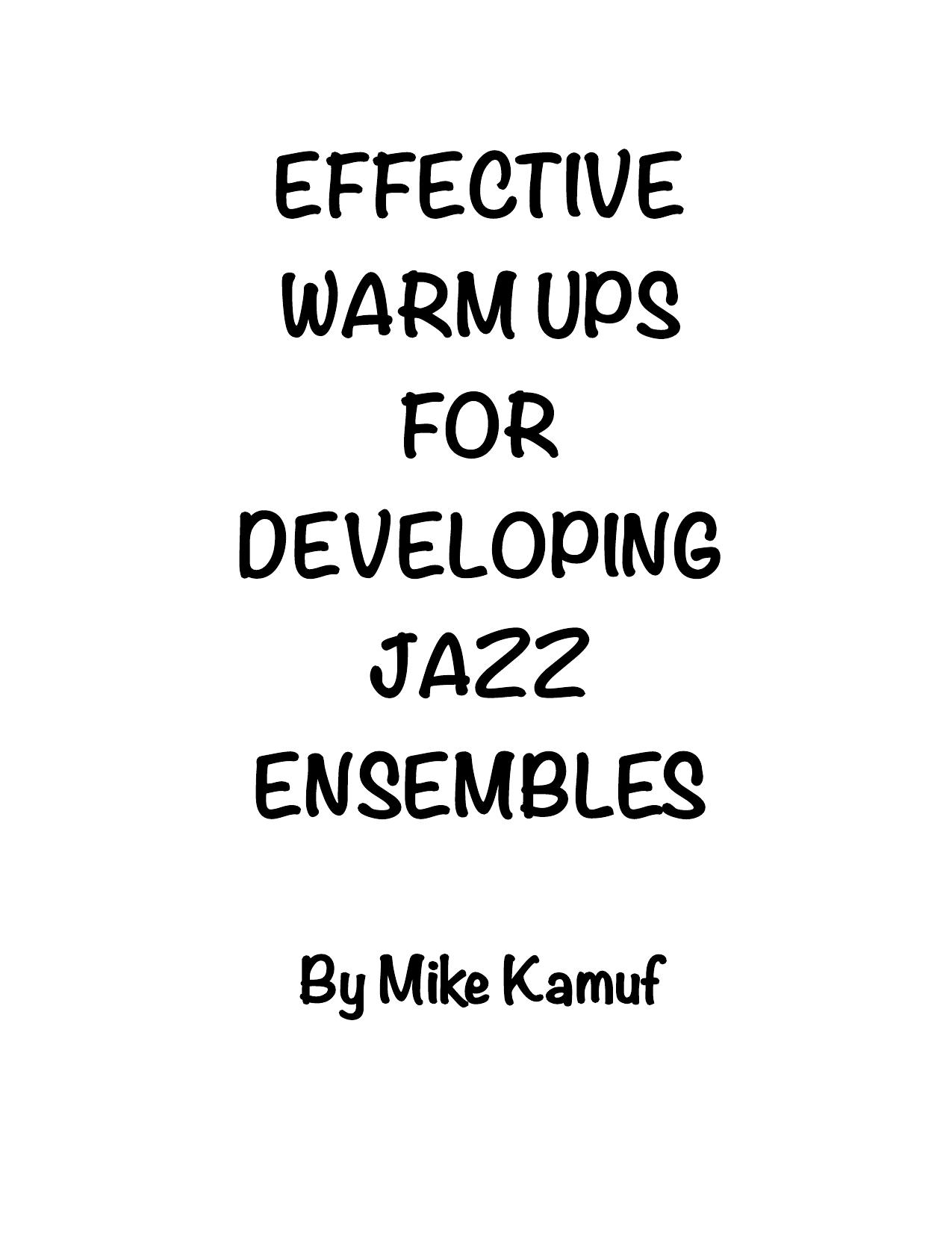
Warm-Up Jazz (M.Camuf) sheet music preview

Warm-Up Jazz (M.Camuf)

Composed by M. Camuf

Arranged by M.Camuf

  • Ensemble: Big Band
  • Style: Jazz Standard
  • Pages: 77
  • Instruments (17): 1st Alto Sax, 2nd Alto Sax, 1st Tenor Sax, 2nd Tenor Sax, Baritone Sax, 1st Trumpet, 2nd Trumpet, 3rd Trumpet, 1st Trombone, 2nd Trombone, 3rd Trombone, Tuba, Guitar, Piano, Bass, Drums, Vibes
  • Difficulty: advanced
  • Content: Individual Parts
  • Format: PDF Download (Instant)
  • Price: $24.99

Drawing deeply from the rich harmonic vocabulary of the mid-century modern jazz tradition, "Warm-Up Jazz," composed and arranged by M. Camuf, captures the kinetic pulse and sophisticated cool of a post-bop rehearsal room. While rooted in the classic jazz standard form, Camuf’s original work functions as both an invigorating concert opener and a masterclass in ensemble phrasing. The piece channels the vibrant energy of 1960s Blue Note recordings, evoking the sophisticated urgency of Horace Silver and the sharp, punchy horn lines of the era's premier studio big bands. It stands out as a contemporary nod to traditional swing and modal interplay, offering a seamless blend of tightly wound counterpoint and wide-open, swinging section work. Propelled by a driving, medium-up swing groove in 4/4 time, the arrangement establishes an immediate sense of momentum from the opening hi-hat click. The harmonic landscape is rich with extended chord structures—utilizing sharp elevenths, altered dominants, and subtle chromatic mediant shifts that give the changes a sophisticated edge without losing their inherent accessibility. The mood shifts effortlessly from sultry, muted brass interludes to high-octane, full-ensemble shout choruses that demand absolute precision. The tenor saxophone and lead trumpet share primary melodic duties early on, trading motifs before expanding into a harmonically lush sax soli that showcases Camuf’s penchant for dense, beautiful block-chord voicings reminiscent of the classic Sammy Nestico tradition. Camuf’s distinctive arrangement style shines through in the clever orchestration and dynamic contrast embedded within the 77-page full score and 17-instrument parts. Rather than relying on simple tutti scoring, the chart breaks the big band down into conversational units—pitting the saxophones against the brass with interlocking rhythmic figures that require crisp articulation and acute internal time. Featured open solo sections over accessible blues-infused changes provide an ideal platform for developing improvisers to stretch out, backed by punchy background figures from the ensemble. The climax features a towering, multi-tiered shout chorus that climbs through a deceptive modulation before resolving triumphantly back to the home key, testing the band’s stamina, dynamic control, and intonation. Advanced high school ensembles with strong section leaders, as well as collegiate and professional community big bands, will find this chart to be an exceptionally rewarding addition to their repertoire. While the individual wind parts are idiomatically written and entirely approachable for competent players, the true challenge lies in achieving a unified, professional jazz articulation across the entire 17-piece instrumentation. The arrangement rewards meticulous attention to stylistic nuances—such as ghost notes, deliberate back-phrasing, and careful balance during the quiet, simmering interludes—making it a standout centerpiece for any serious jazz concert program. Achieving the authentic, driving feel of "Warm-Up Jazz" requires strict adherence to a steady, medium-up tempo (approx. Quarter note = 184 BPM). The rhythm section serves as the engine: the drummer must maintain a crisp, buoyant ride cymbal pattern with a distinct feathering of the bass drum on all four beats, while the bassist locks in with a heavy, driving walking bass line that emphasizes the root and fifth with subtle chromatic approaches. Horn players must master the articulation of the swing eighth-note triplet feel, ensuring that upbeats are consistently placed with a relaxed, forward-leaning intensity. Brass players should utilize cup and harmon mutes where indicated, taking care not to over-blow during the underlying background figures behind the soloists. Rehearsals should initially isolate the intricate sax soli at a slower tempo to lock in intonation and balance before integrating the rhythm section. Pay close attention to dynamic markings; the contrast between the subterranean, whispered ensemble passages and the explosive, brass-heavy shout chorus is what ultimately brings M.Camuf’s dynamic chart to life. Q: What instruments and parts are included in this publication? A: This 77-page publication includes a comprehensive full conductor score alongside individual parts for a standard 17-instrument big band lineup, featuring Alto Saxophone 1 & 2, Tenor Saxophone 1 & 2, Baritone Saxophone, 4 Trumpets, 4 Trombones, Piano, Guitar, Bass, and Drum Set. Q: What is the difficulty level of this arrangement? A: This chart is graded as advanced-intermediate to advanced, making it ideal for skilled high school jazz ensembles, collegiate bands, and professional community big bands that have strong section leaders and confident improvisers. Q: What musical style and historical era does "Warm-Up Jazz" represent? A: Written in the style of a classic jazz standard, the piece reflects the post-bop and hard-bop eras of the 1960s, combining traditional swinging groove concepts with modern harmonic extensions reminiscent of classic Blue Note recordings. Q: What makes M.Camuf's arrangement unique? A: The arrangement stands out for its clever conversational writing between sections, dense and beautiful sax soli voicings, and a deceptive modulation leading into a towering, multi-tiered shout chorus that tests the ensemble's dynamic control. Q: What is the performance duration and recommended tempo for this piece? A: The arrangement plays out over approximately 4 to 5 minutes and is anchored by a driving, medium-up swing tempo set at around 184 beats per minute.

Questions and answers

What is included in the Warm-Up Jazz (M.Camuf) PDF?
The verified current file contains a conductor score and individual parts across 77 pages.
How many instruments or parts are listed for Warm-Up Jazz (M.Camuf)?
The verified instrumentation list contains 17 entries for this Big Band arrangement.
Who is credited for Warm-Up Jazz (M.Camuf)?
Composer: M. Camuf. Arranger: M.Camuf.
What difficulty is listed for Warm-Up Jazz (M.Camuf)?
The verified difficulty level is advanced.
What style is listed for Warm-Up Jazz (M.Camuf)?
The catalog lists the style as Jazz Standard.
Can I preview Warm-Up Jazz (M.Camuf) before buying?
Yes. The product page provides a preview generated from the current PDF file.
How is Warm-Up Jazz (M.Camuf) delivered?
After successful payment, the digital PDF is made available for download. The displayed price is $24.99.

Musicians Also Search For

Warm-Up Jazz M.Camuf PDFWarm-Up Jazz M.Camuf sheet musicWarm-Up Jazz arranged by M.CamufM.Camuf big band chartsM.Camuf jazz arrangements PDFWarm-Up Jazz M. Camuf sheet musicWarm-Up Jazz M. Camuf big band arrangementsM. Camuf big band chartsWarm-Up Jazz big band arrangementsWarm-Up Jazz big band PDF downloadWarm-Up Jazz jazz sheet musicbig band sheet music downloadWarm-Up Jazz conductor score PDFWarm-Up Jazz individual parts downloadWarm-Up Jazz sheet music PDFWarm-Up Jazz Jazz Standard chartsJazz Standard big band arrangementsbuy Warm-Up Jazz sheet musicdownload Warm-Up Jazz PDFWarm-Up Jazz jazz chartsbest M.Camuf big band arrangementsM. Camuf arranged by M.CamufWarm-Up Jazz printable sheet musicbig band repertoire PDF

All arrangements by M.Camuf All M. Camuf sheet music