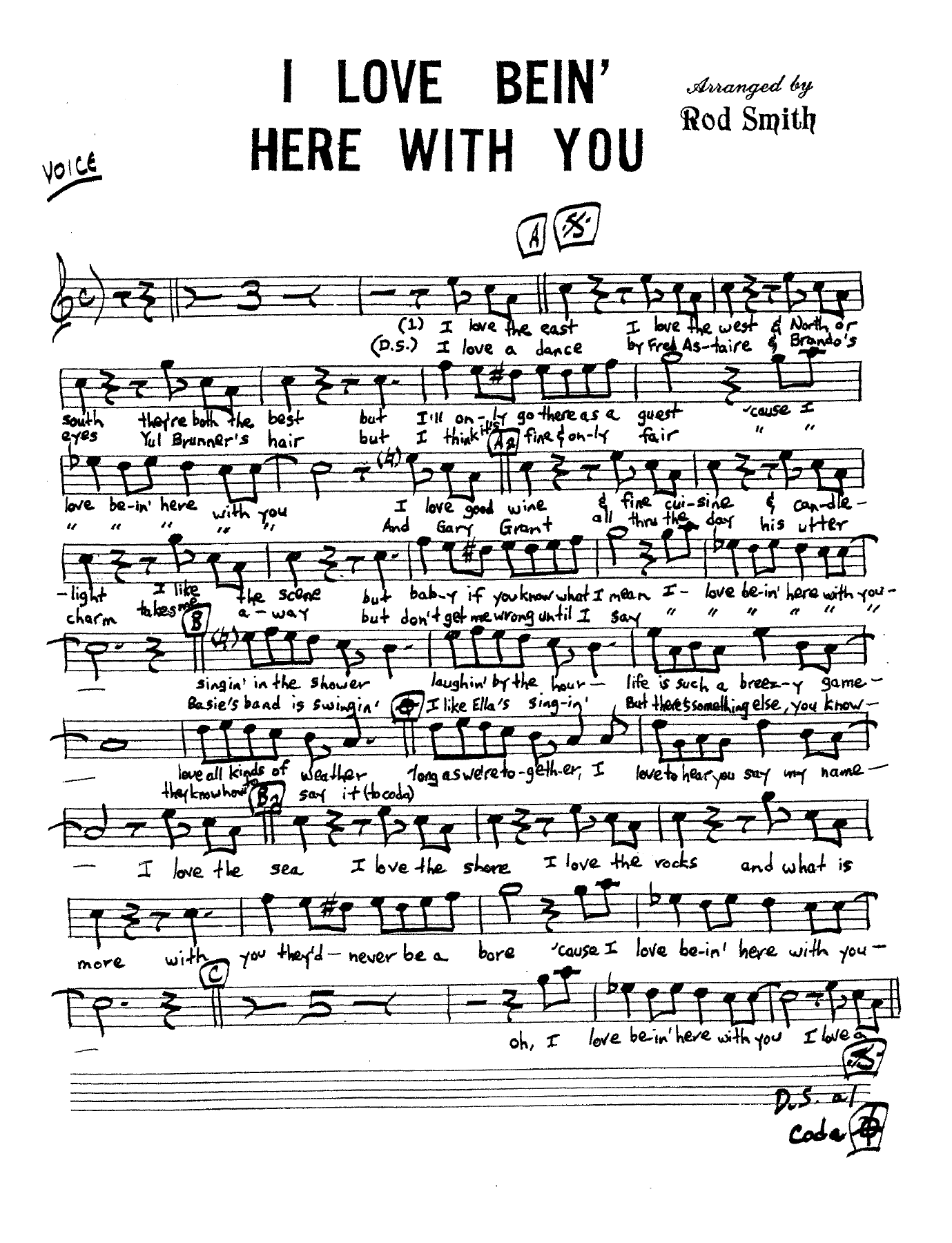
Vocal combo (R.Smith) sheet music preview

Vocal combo (R.Smith)

Composed by John Stafford Smith

Arranged by Rod Smith

  • Ensemble: Small Ensemble
  • Style: Jazz Standard
  • Pages: 34
  • Instruments (17): Voice, Alto Saxophone I, Alto Saxophone II, Tenor Saxophone I, Tenor Saxophone II, Baritone Saxophone, Trumpet I, Trumpet II, Trumpet III, Trumpet IV, Trombone I, Trombone II, Trombone III, Trombone IV, Piano, Bass, Drums
  • Difficulty: easy
  • Content: Individual Parts
  • Format: PDF Download (Instant)
  • Price: $12.99

The original melody, composed by John Stafford Smith in the late 18th century as "The Anacreontic Song," predates the formal emergence of jazz by over a century, yet its enduring structure and harmonic implications have made it a surprisingly fertile ground for jazz interpretation. While primarily known today as the national anthem of the United States, its melodic contour and chord changes have been reimagined by countless jazz artists, transforming a patriotic anthem into a vehicle for improvisation and sophisticated harmonic exploration. This transformation into a jazz standard highlights the genre's capacity to reinterpret and revitalize existing musical forms, often stripping them of their original context to reveal new expressive possibilities. The piece's inherent familiarity, coupled with its adaptable harmonic progression, makes it a compelling choice for jazz arrangers seeking to blend tradition with innovation. Rod Smith's arrangement, "Vocal combo (R.Smith)," breathes fresh life into this venerable melody, presenting it as a sophisticated medium swing chart designed for a small jazz ensemble. The arrangement establishes a relaxed, yet propulsive medium swing groove in 4/4 time, typically hovering around a tempo of 120-130 BPM. The overall mood is one of elegant sophistication, showcasing the ensemble's ability to navigate nuanced voicings and dynamic contrasts. Smith's distinctive approach is evident in his rich, close-voiced harmonies, which provide a lush backdrop for the melody. He masterfully employs extended harmonies and subtle reharmonizations, giving the familiar tune a contemporary jazz sensibility without losing its melodic integrity. The arrangement features a thoughtful interplay between ensemble sections and solo opportunities, creating a dynamic narrative throughout the piece. This arrangement is crafted for a small jazz ensemble, emphasizing clarity and individual musicianship. The melody is initially presented by the lead instrument, often a trumpet or alto saxophone, with harmonized support from the other horns, creating a warm and inviting texture. Following the initial statement, Smith introduces a beautifully constructed soli section, where the ensemble moves as a cohesive unit through intricate melodic and harmonic passages, demanding precise articulation and blend. Featured solo sections are strategically placed, offering ample space for improvisation over the established chord changes. These solo opportunities are designed to challenge intermediate to advanced improvisers, encouraging creative melodic development within the harmonic framework. Technical challenges include navigating the precise rhythms of the soli sections, maintaining consistent swing feel across the ensemble, and executing dynamic swells and releases. The arrangement culminates in a powerful yet controlled shout chorus, bringing the piece to a satisfying and energetic close. This chart is particularly rewarding for college and advanced community jazz ensembles, as it offers a blend of accessibility and musical depth that fosters both individual and collective growth. Conductors should emphasize a relaxed, yet driving medium swing feel throughout "Vocal combo (R.Smith)," aiming for a tempo between 120-130 BPM. The piece's success hinges on precise ensemble balance and blend, particularly during the intricate soli sections. Encourage musicians to listen across the section and to the rhythm section to ensure a cohesive sound. Articulation is paramount; crisp, unified attacks and releases will define the character of the soli passages. Pay close attention to dynamic markings, utilizing them to shape phrases and build intensity, especially leading into and out of solo sections. The rhythm section should lay down a solid, consistent groove, with the bass providing a walking line that propels the swing and the drums offering tasteful comping. Soloists should be encouraged to explore the extended harmonies while maintaining melodic clarity. Rehearsal time should be dedicated to isolating the soli sections to ensure rhythmic accuracy and harmonic clarity, as well as working on seamless transitions between ensemble and solo passages. Q: What instruments are included in the "Vocal combo (R.Smith)" arrangement? A: This small ensemble arrangement typically includes parts for lead trumpet, alto saxophone, tenor saxophone, trombone, piano, bass, and drums, providing a classic jazz combo instrumentation. Q: What is the difficulty level of this arrangement? A: "Vocal combo (R.Smith)" is considered an intermediate to advanced-level arrangement, suitable for college, advanced high school, or experienced community jazz ensembles due to its harmonic sophistication and demands on ensemble precision. Q: What is the musical style and historical context of this piece? A: This arrangement is a jazz standard in a medium swing style. It reinterprets "The Anacreontic Song" by John Stafford Smith, an 18th-century melody that later became "The Star-Spangled Banner," transforming it into a vehicle for jazz improvisation and modern harmony. Q: What makes Rod Smith's arrangement unique? A: Rod Smith's unique approach is characterized by his use of rich, close-voiced extended harmonies, sophisticated reharmonizations, and a balanced structure featuring intricate soli sections alongside ample opportunities for improvisation. Q: What is the typical performance duration or tempo for this arrangement? A: The typical performance duration for "Vocal combo (R.Smith)" is approximately 4-5 minutes, performed at a medium swing tempo generally ranging from 120 to 130 beats per minute.

Questions and answers

What is included in the Vocal combo (R.Smith) PDF?
The verified current file contains individual parts across 34 pages.
How many instruments or parts are listed for Vocal combo (R.Smith)?
The verified instrumentation list contains 17 entries for this Small Ensemble arrangement.
Who is credited for Vocal combo (R.Smith)?
Composer: John Stafford Smith. Arranger: Rod Smith.
What difficulty is listed for Vocal combo (R.Smith)?
The verified difficulty level is easy.
What style is listed for Vocal combo (R.Smith)?
The catalog lists the style as Jazz Standard.
Can I preview Vocal combo (R.Smith) before buying?
Yes. The product page provides a preview generated from the current PDF file.
How is Vocal combo (R.Smith) delivered?
After successful payment, the digital PDF is made available for download. The displayed price is $12.99.

Musicians Also Search For

Vocal combo Rod Smith PDFVocal combo Rod Smith sheet musicVocal combo arranged by Rod SmithRod Smith small ensemble chartsRod Smith jazz arrangements PDFVocal combo John Stafford Smith sheet musicVocal combo John Stafford Smith small ensemble arrangementsJohn Stafford Smith small ensemble chartsVocal combo small ensemble arrangementsVocal combo small ensemble PDF downloadVocal combo jazz sheet musicsmall ensemble sheet music downloadVocal combo individual parts downloadVocal combo sheet music PDFVocal combo Jazz Standard chartsJazz Standard small ensemble arrangementsbuy Vocal combo sheet musicdownload Vocal combo PDFVocal combo jazz chartsbest Rod Smith small ensemble arrangementsJohn Stafford Smith arranged by Rod SmithVocal combo printable sheet musicsmall ensemble repertoire PDF

All arrangements by Rod Smith All John Stafford Smith sheet music