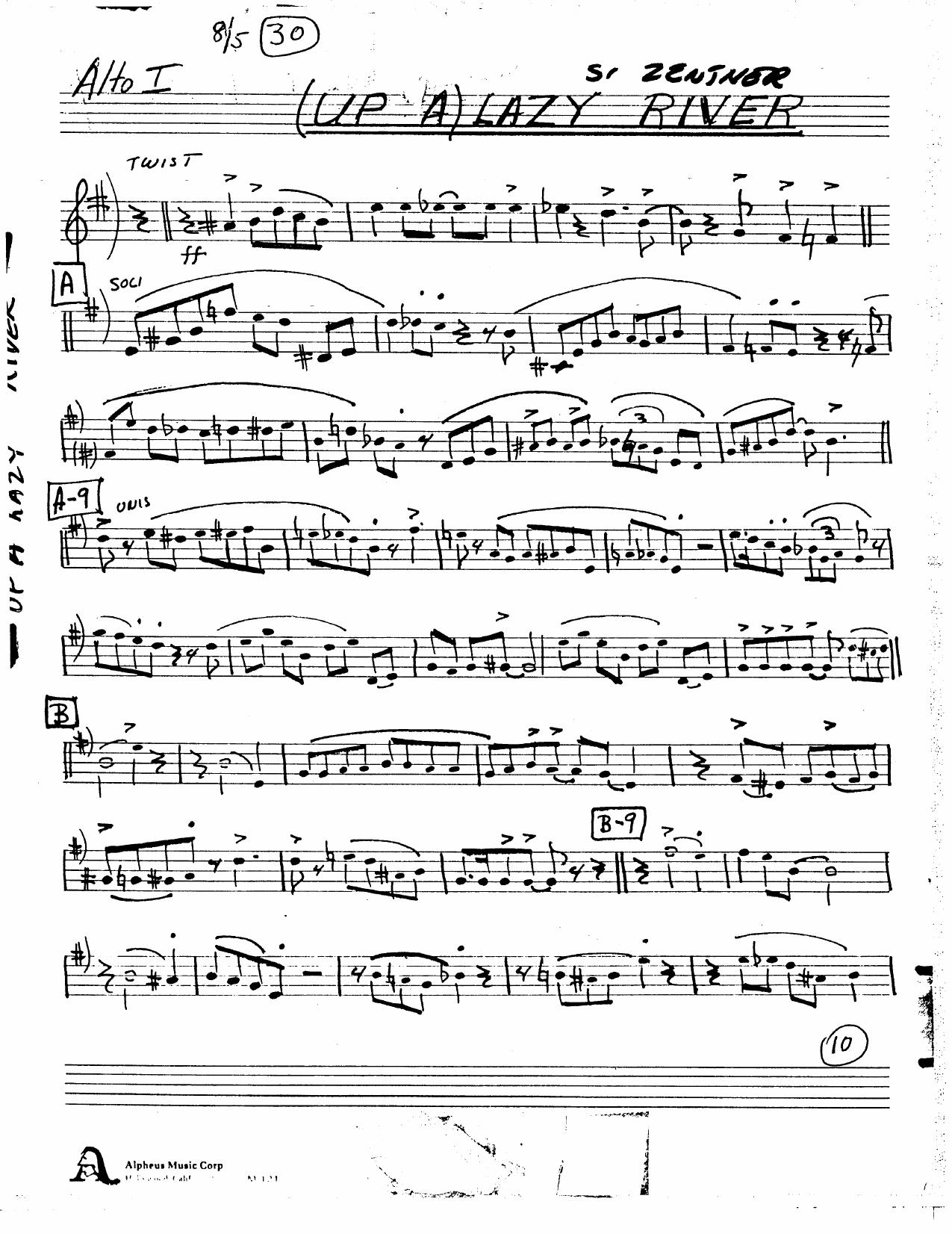
Up A Lazy River (Sy Zentner) sheet music preview

Up A Lazy River (Sy Zentner)

Composed by Hoagy Carmichael

Arranged by Sy Zentner

  • Ensemble: Big Band
  • Style: Jazz Standard
  • Pages: 30
  • Instruments (17): Alto Saxophone I, Alto Saxophone II, Tenor Saxophone I, Tenor Saxophone II, Baritone Saxophone, Trumpet I, Trumpet II, Trumpet III, Trumpet IV, Trombone I, Trombone II, Trombone III, Trombone IV, Piano, Bass, Guitar, Drums
  • Difficulty: medium
  • Content: Individual Parts
  • Format: PDF Download (Instant)
  • Price: $24.99

Hoagy Carmichael and Sidney A. Arodin’s timeless 1930 composition "Up A Lazy River" occupies a cherished place in the American songbook, evolving from a popular vocal vehicle into a staple of traditional and big band jazz. While numerous artists recorded the tune over the decades, the definitive big band interpretation for the modern jazz orchestra was crystallized by trombonist and bandleader Sy Zentner. Coming to prominence during the tail end of the big band era and into the early 1960s, Zentner’s orchestra was celebrated for its lush, trombone-driven voicings, pristine West Coast precision, and dynamic pacing. This specific arrangement captures that signature mid-century sophistication, blending swinging momentum with cinematic, brass-heavy textures that elevate a nostalgic melody into an electrifying showcase for a full jazz ensemble. Driven by a bright, buoyant medium-swing tempo in 4/4 time, the chart immediately establishes an inviting, toes-tapping mood characterized by sparkling reed writing and punchy brass countermelodies. Zentner’s arrangement builds its emotional arc through contrasting densities, shifting seamlessly from breezy, conversational ensemble interplay to thunderous, high-energy brass declarations. The harmonic language remains rooted in traditional functional jazz harmony, yet it is seasoned with sophisticated major-seventh color tones, sharp secondary dominants, and clever chromatic passing chords that give the progression a fresh, sophisticated sheen. The overall energy is optimistic, swinging, and urbane, evoking the polished elegance of a classic 1960s Vegas showroom lounge or a pristine studio recording session. Zentner’s unmistakable arranging hand shines brightest in how he utilizes the lower brass and woodwinds to anchor the texture, frequently featuring rich trombone choruses that reflect his own primary instrument. The melody is initially presented with clean, transparent reed-and-brass interplay before opening up into expansive, harmonized soli sections where the saxophones and brass weave interlocking lines. A hallmark of this chart is its judiciously paced dynamic architecture, culminating in a triumphant shout chorus that exploits the full dynamic spectrum of the 17-piece ensemble. Technical demands are well-balanced across all sections: the trumpet range reaches comfortably into moderate registers with occasional upper-extension highlights, while the trombone section requires a smooth, legato slide technique to execute Zentner’s signature lyrical glisses and warm, harmonized block chords. Advanced high school ensembles, collegiate jazz bands, and professional community orchestras will find this chart an ideal centerpiece for a concert program. It offers younger players an accessible yet rigorous lesson in authentic swing phrasing, articulation control, and dynamic shading, while professional groups can mine the arrangement for its subtle stylistic nuances and phrasing micro-details. Featured solo opportunities allow standout improvisers to stretch out over standard changes, making it a guaranteed crowd-pleaser that balances historical reverence with high-octane big band entertainment value. To capture the authentic Sy Zentner aesthetic, the ensemble must prioritize a relaxed, forward-moving medium-swing feel rather than rushing the tempo. Pay close attention to the stylistic articulation of eighth notes: ensure that downbeats are grounded and backbeats (beats 2 and 4) carry a natural, unforced weight, avoiding overly clipped staccatos in favor of a warm, sustained tenuto-swing approach. The brass section should utilize subtle cup or harmon mutes where indicated, ensuring that background figures remain supportive rather than overpowering the lead voices. Rehearsal should begin by isolating the saxophone soli to lock in intonation and unified breath support before integrating the rhythm section. Drummers should anchor the groove with a crisp ride-cymbal "ding-da-ding" pattern and light hi-hat chokes on two and four, keeping the snare chatter transparent to let the ensemble's harmonic movement breathe. Conductors should emphasize dynamic contrasts; the transition from the breezy verse statements to the powerhouse shout chorus requires deliberate under-playing in the middle sections to maximize the impact of the final climax. Q: What instruments and parts are included in this arrangement? A: This chart is scored for a standard 17-instrument big band, consisting of 2 alto saxophones, 2 tenor saxophones, 1 baritone saxophone, 4 trumpets, 4 trombones, guitar, piano, bass, and drums. Q: What is the difficulty level of this chart? A: This arrangement is graded as medium-advanced, making it well-suited for proficient high school groups, collegiate jazz orchestras, and professional community bands looking for stylistic polish. Q: What is the historical style and context of this arrangement? A: It reflects the polished West Coast big band style popularized by trombonist Sy Zentner in the early 1960s, transforming Hoagy Carmichael's 1930 standard into a swinging, brass-forward orchestral showcase. Q: What makes this specific Sy Zentner arrangement unique? A: It features Zentner’s signature lush trombone voicings, clever dynamic architecture, and sophisticated harmonic colorations that elevate a traditional vocal tune into a dynamic instrumental showpiece. Q: What is the performance duration and tempo of the piece? A: The arrangement is performed at a bright, buoyant medium-swing tempo (approximately 120-126 BPM) and runs for roughly 3 to 4 minutes, depending on the length of improvised solo choruses.

Questions and answers

What is included in the Up A Lazy River (Sy Zentner) PDF?
The verified current file contains individual parts across 30 pages.
How many instruments or parts are listed for Up A Lazy River (Sy Zentner)?
The verified instrumentation list contains 17 entries for this Big Band arrangement.
Who is credited for Up A Lazy River (Sy Zentner)?
Composer: Hoagy Carmichael. Arranger: Sy Zentner.
What difficulty is listed for Up A Lazy River (Sy Zentner)?
The verified difficulty level is medium.
What style is listed for Up A Lazy River (Sy Zentner)?
The catalog lists the style as Jazz Standard.
Can I preview Up A Lazy River (Sy Zentner) before buying?
Yes. The product page provides a preview generated from the current PDF file.
How is Up A Lazy River (Sy Zentner) delivered?
After successful payment, the digital PDF is made available for download. The displayed price is $24.99.

Musicians Also Search For

Up A Lazy River Sy Zentner PDFUp A Lazy River Sy Zentner sheet musicUp A Lazy River arranged by Sy ZentnerSy Zentner big band chartsSy Zentner jazz arrangements PDFUp A Lazy River Hoagy Carmichael sheet musicUp A Lazy River Hoagy Carmichael big band arrangementsHoagy Carmichael big band chartsUp A Lazy River big band arrangementsUp A Lazy River big band PDF downloadUp A Lazy River jazz sheet musicbig band sheet music downloadUp A Lazy River individual parts downloadUp A Lazy River sheet music PDFUp A Lazy River Jazz Standard chartsJazz Standard big band arrangementsbuy Up A Lazy River sheet musicdownload Up A Lazy River PDFUp A Lazy River jazz chartsbest Sy Zentner big band arrangementsHoagy Carmichael arranged by Sy ZentnerUp A Lazy River printable sheet musicbig band repertoire PDF

All arrangements by Sy Zentner All Hoagy Carmichael sheet music