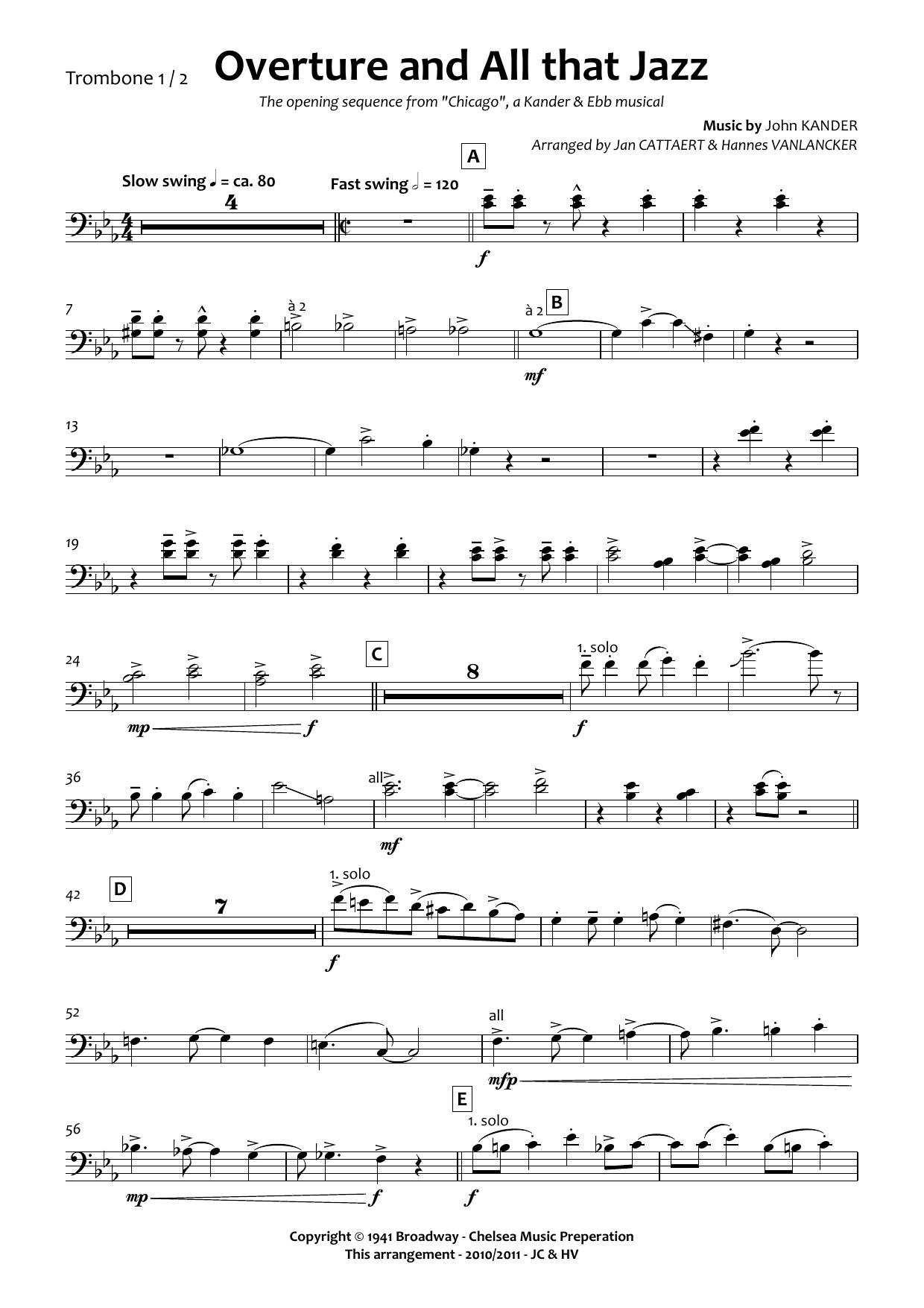
Trombone 1&2 (J.Vanlancker) sheet music preview

Trombone 1&2 (J.Vanlancker)

Composed by John KANDER

Arranged by Jan CATTAERT & Hannes VANLANCKER

  • Ensemble: Concert Band
  • Style: Traditional
  • Pages: 4
  • Difficulty: medium
  • Content: Sheet Music
  • Format: PDF Download (Instant)
  • Price: $22.99

John Kander, a titan of American musical theatre, is best known for his prolific collaboration with lyricist Fred Ebb, creating iconic scores for Broadway hits like *Cabaret* and *Chicago*. While the provided details specify "Trombone 1&2 (J.Vanlancker)" and "Traditional" style, the original composer, John Kander, strongly suggests that this arrangement likely draws from his vast repertoire, perhaps a classic show tune reimagined. Kander's compositions often feature strong melodies, memorable hooks, and a theatrical flair, frequently incorporating elements of vaudeville, jazz, and traditional American popular song. The "Traditional" style designation for this arrangement implies a faithful, yet perhaps slightly modernized, interpretation of these classic forms, emphasizing clear melodic lines and established harmonic progressions rather than avant-garde experimentation. This arrangement, skillfully crafted by Jan Cattaert and Hannes Vanlancker, presents a vibrant and engaging musical character, likely in a bright, medium-up swing tempo, characteristic of many Kander & Ebb numbers. The piece is designed to evoke a sense of theatrical energy and sophisticated fun, with a mood that is both celebratory and rhythmically infectious. The key is likely chosen to be accessible for the concert band's brass section, ensuring clarity and projection. The arrangement's core strength lies in its ability to translate the original's inherent melodic appeal into a dynamic setting for a concert band, highlighting the rich timbres and expressive capabilities of the ensemble. Cattaert and Vanlancker's approach to this Kander classic is distinctive in its focus on the trombone section, as indicated by the title "Trombone 1&2." This suggests a prominent role for these instruments, potentially featuring them in a dual melodic lead, harmonized soli passages, or even as a featured section within the broader ensemble texture. Their arrangements typically balance faithful adherence to the original's spirit with inventive scoring that brings out the best in each section. Expect well-voiced harmonies, clear articulation markings, and a thoughtful distribution of musical interest across the band. There might be clever counter-melodies, dynamic contrasts, and perhaps a brief, impactful shout chorus that builds to a thrilling conclusion, all while maintaining the integrity and charm of Kander's original composition. Performance of this piece offers rewarding challenges and opportunities for expression. The melody will likely be carried by various sections, but with the trombones taking a significant share, showcasing their blend and articulation. While specific solo sections aren't explicitly mentioned, the arrangement might feature improvised or written-out solos for a lead trombone or other prominent voices, adding a layer of jazz sensibility. Technical challenges will include maintaining a consistent swing feel, precise ensemble articulation, and dynamic control, particularly in passages where the trombones are featured. The interplay between sections, the rhythmic drive, and the sheer joy of performing a well-crafted Kander tune are the standout moments that make this arrangement particularly enjoyable for both performers and audience. This arrangement is ideally suited for high school and college concert bands, as well as community ensembles, looking for a piece that is both musically substantial and highly entertaining, offering a chance to delve into the rich legacy of American musical theatre through a jazz-influenced lens. Conductors should emphasize a consistent, driving medium-up swing feel from the outset, ensuring the rhythm section lays down a solid foundation. Key technical challenges include precise ensemble articulation, particularly in any unison or octave passages for the trombones, and maintaining clarity in potentially dense harmonic voicings. Encourage brass players to use a bright, focused tone without overblowing. Dynamic contrasts are crucial; practice bringing out melodic lines against accompaniment figures. Rehearsal tips include isolating tricky rhythmic figures and practicing them slowly, gradually increasing tempo. Pay close attention to cut-offs and releases to ensure a clean, professional sound. While no special techniques like plungers are specified, encourage expressive phrasing and a sense of theatricality to capture the essence of Kander's original work. Q: What instruments or parts are included in this arrangement? A: This arrangement is specifically titled "Trombone 1&2 (J.Vanlancker)," indicating a prominent role for the first and second trombones. As a concert band arrangement, it will include standard instrumentation for a full concert band, with these trombones likely featured. Q: What is the difficulty level of this arrangement? A: Given its suitability for high school, college, and community bands, this arrangement can be considered intermediate to advanced intermediate. It presents engaging challenges in rhythm, articulation, and ensemble blend, making it rewarding for developing musicians. Q: What is the musical style and historical context of this piece? A: The original composer, John Kander, is renowned for his Broadway musical compositions. This arrangement is presented in a "Traditional" style, likely a medium-up swing, drawing from the theatrical and jazz-inflected popular music of the mid-20th century. Q: What makes this arrangement by Jan Cattaert & Hannes Vanlancker unique? A: The arrangement's uniqueness lies in its specific focus on the trombone section, as indicated by "Trombone 1&2 (J.Vanlancker)." This suggests prominent features, soli sections, or lead melodic roles for the trombones within the concert band setting. Q: What is the typical performance duration or tempo for this arrangement? A: While not explicitly stated, a medium-up swing tempo is characteristic of the style. Performance duration would typically range from 3 to 5 minutes, depending on any included solos or repeats.

Musicians Also Search For

Trombone 1&2 Jan CATTAERT & Hannes VANLANCKER PDFTrombone 1&2 Jan CATTAERT & Hannes VANLANCKER sheet musicTrombone 1&2 arranged by Jan CATTAERT & Hannes VANLANCKERJan CATTAERT & Hannes VANLANCKER concert band chartsJan CATTAERT & Hannes VANLANCKER jazz arrangements PDFTrombone 1&2 John KANDER sheet musicTrombone 1&2 John KANDER concert band arrangementJohn KANDER concert band chartsTrombone 1&2 concert band arrangementTrombone 1&2 concert band PDF downloadTrombone 1&2 jazz ensemble sheet musicconcert band sheet music instant downloadTrombone 1&2 sheet music with partsTrombone 1&2 Traditional chartTraditional concert band arrangementsbuy Trombone 1&2 sheet music onlinedownload Trombone 1&2 PDFTrombone 1&2 jazz chartbest Jan CATTAERT & Hannes VANLANCKER concert band arrangementsJohn KANDER songs arranged by Jan CATTAERT & Hannes VANLANCKERTrombone 1&2 printable sheet musicconcert band repertoire PDF

All arrangements by Jan CATTAERT & Hannes VANLANCKER All John KANDER sheet music