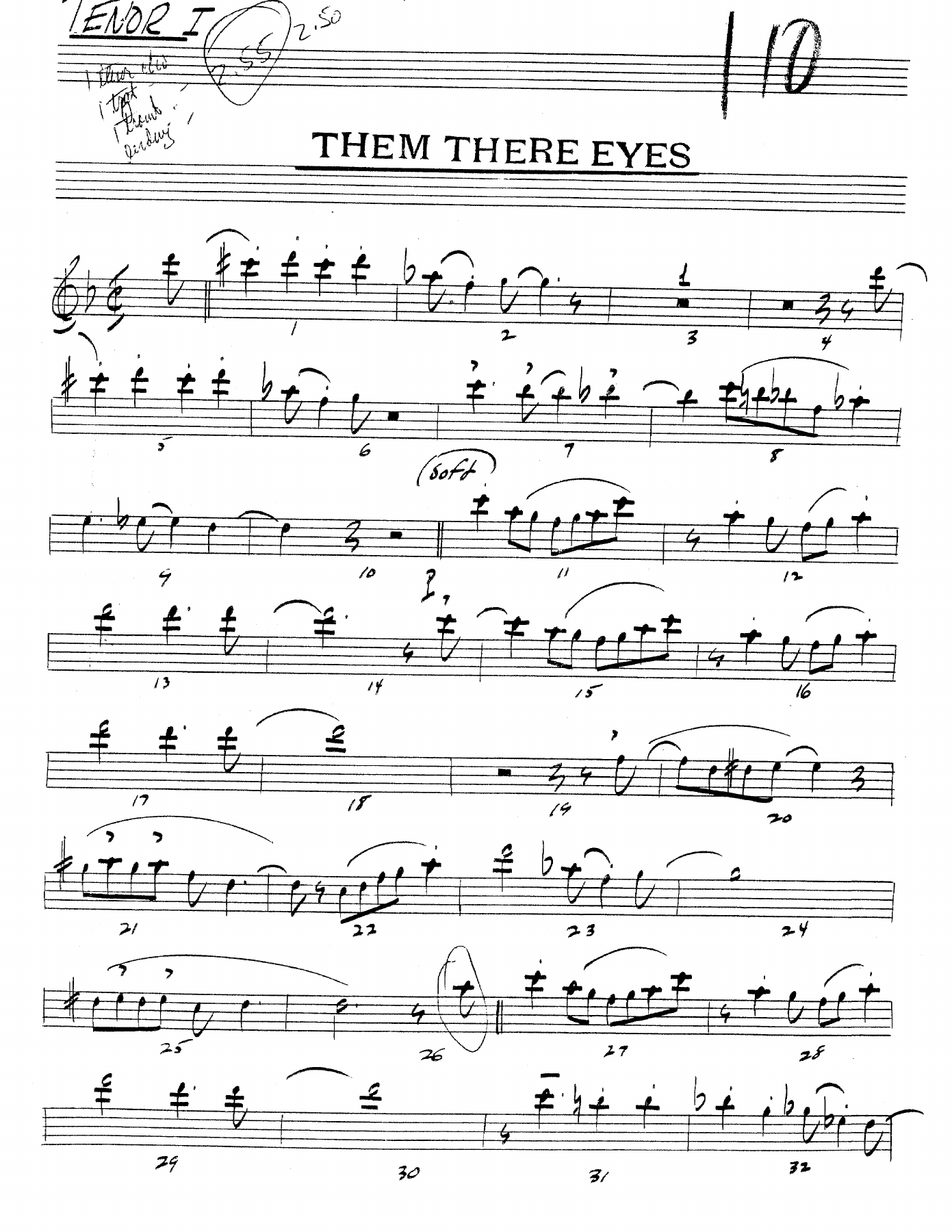
Them There Eyes (D.Ts,Bs,Trp,Trb+Rhythm) sheet music preview

Them There Eyes (D.Ts,Bs,Trp,Trb+Rhythm)

Composed by Maceo Pinkard, Doris Tauber, William Tracey

Arranged by Dave Pell Octet - Ts,Bs,Trp,Trb+Rhythm

  • Ensemble: Small Ensemble
  • Style: Jazz Standard
  • Pages: 35
  • Difficulty: easy
  • Content: Sheet Music
  • Format: PDF Download (Instant)
  • Price: $12.99

"Them There Eyes," a quintessential jazz standard, transports listeners to the vibrant early 1930s, an era bridging the exuberant Jazz Age and the more structured Tin Pan Alley pop. Composed by Maceo Pinkard, Doris Tauber, and William Tracey in 1930, this enduring tune quickly became a favorite, celebrated for its playful lyrics and deceptively sophisticated melody. Its initial introduction by the Gus Arnheim Orchestra in the 1931 film *Let's Do Things* set the stage for its widespread appeal. Early definitive recordings by jazz giants like Louis Armstrong in 1931 and Billie Holiday in 1939 cemented its status, with Holiday's interpretation particularly influential in shaping its melodic delivery for generations of vocalists. Alec Wilder, in *American Popular Song*, lauded its ability to evade cliché through an octave drop and strategic harmonic shifts, making it a "jazz musician's favorite." This arrangement of "Them There Eyes" is conceived as a medium-up swing, typically performed in a bright tempo range of 160-180 beats per minute, often in the key of C or B-flat major to optimize instrumental playability. The musical character is one of infectious joy and flirtatious energy, perfectly capturing the song's narrative of instant romantic attraction. The arrangement maintains a buoyant, driving feel throughout, propelled by a walking bass line and a swinging drum pattern that encourages rhythmic precision and expressive phrasing from all ensemble members. The mood is consistently upbeat and engaging, designed to evoke a sense of nostalgic charm while providing ample space for modern jazz sensibilities. The Dave Pell Octet's approach to "Them There Eyes" is characterized by its signature West Coast cool jazz aesthetic. Known for miniaturizing the big band sound into a tight, contrapuntal octet format, Pell's arrangements prioritize clarity, sophisticated voicings, and meticulously crafted soli sections. This particular arrangement showcases the octet's ability to create a rich, full sound with a reduced instrumentation of tenor saxophone, baritone saxophone, trumpet, trombone, and rhythm section. Expect intricate horn lines, often featuring close-voiced harmonies that create a warm, blended texture. There are likely moments where the melody is passed between different horns, offering varied timbral colors, and carefully constructed shout choruses that build excitement without overwhelming the ensemble. Solos are typically concise and integrated into the arrangement's flow, providing improvisational opportunities while maintaining the overall structural integrity. Performance of this arrangement is both challenging and deeply rewarding. The melody is predominantly carried by the horn section, often in unison or harmonized soli passages, demanding excellent intonation and blend. Featured solo sections, typically for tenor sax and trumpet, require improvisational fluency over the standard AABA form. Technical challenges include navigating brisk swing rhythms, executing precise ensemble hits, and maintaining a consistent, energetic groove. The arrangement's reward lies in its elegant balance of written material and improvisational freedom, allowing musicians to contribute individually while contributing to a cohesive, polished ensemble sound. This piece is ideally suited for advanced high school, college, community, and professional jazz ensembles seeking to explore the nuanced, sophisticated sound of West Coast cool jazz. Its accessible yet refined style makes it a valuable addition to any repertoire, offering both educational depth and audience appeal. This arrangement of "Them There Eyes" thrives on a consistent, medium-up swing feel, ideally between 160-180 BPM, ensuring a lively yet controlled energy. Conductors should emphasize a light, articulate approach to the horn lines, avoiding excessive weight, particularly in the soli sections where blend and balance are paramount. Key technical challenges include maintaining precise rhythmic unison in the horn section, especially during the often-syncopated melodic statements and shout choruses. Encourage horn players to listen across the section for tight vertical alignment and consistent articulation. The rhythm section must establish a steady, driving swing pattern from the outset, with the bass providing a strong walking line and drums offering tasteful, propulsive accompaniment without overplaying. Special techniques like subtle falls and scoops can be employed by the horns to enhance the jazz idiom, but should be executed with restraint and precision to maintain the arrangement's clean aesthetic. Rehearsal time should focus on refining ensemble attacks and releases, ensuring dynamic contrast, and developing a cohesive improvisational language within the solo sections. **Q: What instruments and parts are included in this arrangement?** A: This arrangement is scored for a small ensemble, specifically a jazz octet, featuring Tenor Saxophone, Baritone Saxophone, Trumpet, Trombone, Piano, Bass, and Drums. **Q: What is the difficulty level of this arrangement?** A: This arrangement is suitable for advanced high school, college, community, and professional jazz ensembles, requiring solid technical proficiency and a good understanding of jazz idiom and ensemble playing. **Q: What is the musical style and historical context of "Them There Eyes"?** A: "Them There Eyes" is a classic jazz standard from 1930, embodying the vibrant, flirtatious energy of the early swing era and the sophisticated melodic craftsmanship of Tin Pan Alley. **Q: What makes this Dave Pell Octet arrangement unique?** A: This arrangement showcases the Dave Pell Octet's distinctive West Coast cool jazz style, featuring tight, contrapuntal voicings, sophisticated soli sections, and a balanced approach that blends intricate ensemble work with concise improvisational opportunities, all within a small ensemble format. **Q: What is the typical performance duration and tempo for this piece?** A: The typical performance duration will vary depending on the number and length of improvised solos, but it is generally performed at a medium-up swing tempo, ranging from 160-180 beats per minute.

Musicians Also Search For

Them There Eyes Dave Pell Octet - Ts,Bs,Trp,Trb+Rhythm PDFThem There Eyes Dave Pell Octet - Ts,Bs,Trp,Trb+Rhythm sheet musicThem There Eyes arranged by Dave Pell Octet - Ts,Bs,Trp,Trb+RhythmDave Pell Octet - Ts,Bs,Trp,Trb+Rhythm small ensemble chartsDave Pell Octet - Ts,Bs,Trp,Trb+Rhythm jazz arrangements PDFThem There Eyes Maceo Pinkard, Doris Tauber, William Tracey sheet musicThem There Eyes Maceo Pinkard, Doris Tauber, William Tracey small ensemble arrangementMaceo Pinkard, Doris Tauber, William Tracey small ensemble chartsThem There Eyes small ensemble arrangementThem There Eyes small ensemble PDF downloadThem There Eyes jazz ensemble sheet musicsmall ensemble sheet music instant downloadThem There Eyes sheet music with partsThem There Eyes Jazz Standard chartJazz Standard small ensemble arrangementsbuy Them There Eyes sheet music onlinedownload Them There Eyes PDFThem There Eyes jazz chartbest Dave Pell Octet - Ts,Bs,Trp,Trb+Rhythm small ensemble arrangementsMaceo Pinkard, Doris Tauber, William Tracey songs arranged by Dave Pell Octet - Ts,Bs,Trp,Trb+RhythmThem There Eyes printable sheet musicsmall ensemble repertoire PDF

All arrangements by Dave Pell Octet - Ts,Bs,Trp,Trb+Rhythm All Maceo Pinkard, Doris Tauber, William Tracey sheet music