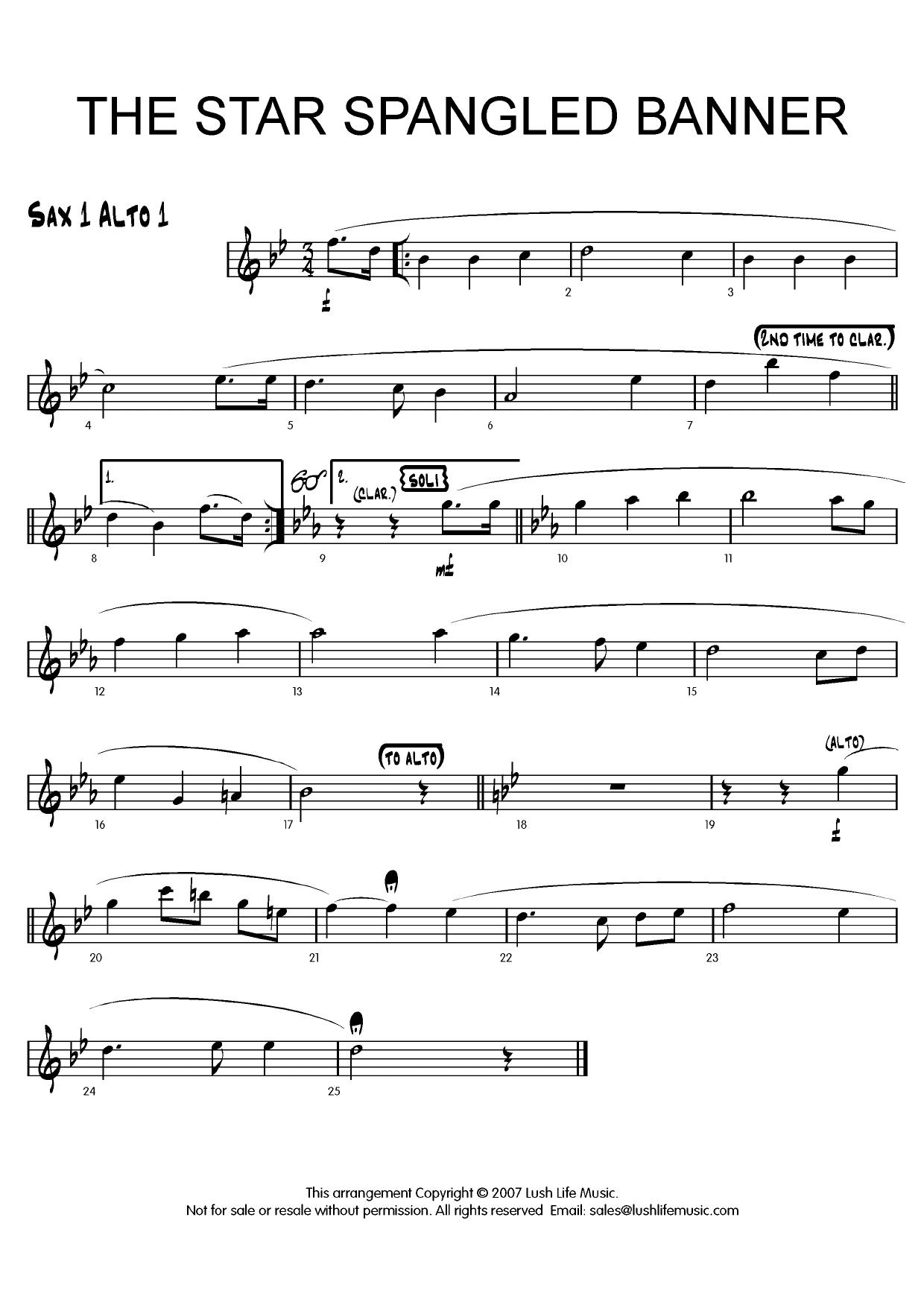
The Star Spangled Banner (A.Glasscock)
Composed by John Stafford Smith
Arranged by parts+score
- Ensemble: Big Band
- Style: Jazz Standard
- Pages: 22
- Instruments (17): Sax 1 Alto 1, Sax 2 Alto 2, Sax 3 Tenor 1, Sax 4 Tenor 2, Sax 5 Baritone, Trumpet 1, Trumpet 2, Trumpet 3, Trumpet 4, Trombone 1, Trombone 2, Trombone 3, Trombone 4, Piano, Bass, Guitar, Drums
- Difficulty: medium
- Content: Individual Parts
- Format: PDF Download (Instant)
- Price: $24.99
"The Star Spangled Banner," originally a poem by Francis Scott Key set to the tune of an 18th-century British drinking song by John Stafford Smith, has transcended its origins to become the revered national anthem of the United States. While its primary association is with solemn ceremonies and patriotic events, its melodic structure and harmonic potential have long invited creative interpretation across various genres. This particular arrangement, "The Star Spangled Banner (A.Glasscock)," reimagines the iconic anthem through the vibrant lens of a modern jazz big band, transforming its stately character into a sophisticated and dynamic musical statement. It doesn't merely present the melody; it recontextualizes it within the rich harmonic and rhythmic language of contemporary jazz, making it suitable for both formal occasions and as a distinctive concert opener or closer. This arrangement establishes a medium swing groove, typically around 120-130 BPM, providing a relaxed yet propulsive foundation for the familiar melody. The initial presentation is often handled with a sense of reverence, perhaps with a brass choir or a lush saxophone soli, before gradually unfolding into more intricate jazz harmonies and rhythmic interplay. The key is carefully chosen to allow for both powerful brass statements and lyrical woodwind passages, often modulating subtly to maintain interest and build intensity. The mood shifts from dignified respect to an uplifting, celebratory energy, culminating in a powerful, full-ensemble statement. Expect rich, extended harmonies that add depth and color, moving beyond the traditional hymn-like voicings to embrace the sophisticated sound palette of a modern jazz ensemble. parts+score's approach to this classic is characterized by their signature blend of accessibility and musical depth. This arrangement features carefully crafted voicings that ensure clarity and balance across the 17 instruments, even with complex harmonies. The melody is intelligently distributed, initially appearing in the lead trumpet or alto saxophone, then passed to different sections, allowing for varied textures and dynamic contrasts. Expect a powerful shout chorus that builds to a thrilling climax, showcasing the full power and precision of the big band. While maintaining the integrity of the original melody, the arranger introduces subtle rhythmic displacements and harmonic substitutions that give the piece its distinct jazz character. Technical challenges include precise ensemble articulation, dynamic control, and navigating extended chord changes, making it rewarding for bands seeking to elevate their performance of this national treasure. This arrangement is ideally suited for college, community, and advanced high school jazz ensembles, as well as professional big bands. Its musical sophistication and demand for ensemble precision make it an excellent vehicle for developing advanced musicianship, while its inherent familiarity ensures audience engagement. The opportunity for featured soloists, particularly in the trumpet or saxophone sections, adds an improvisational element that is central to jazz performance. The piece offers numerous opportunities for dynamic shaping and expressive interpretation, from the tender opening to the majestic, swinging finale. Performing this arrangement is rewarding not only for its musical challenges but also for the unique artistic statement it allows an ensemble to make with such a historically significant piece. Conductors should aim for a medium swing tempo, approximately quarter note = 120-130 BPM, ensuring a relaxed yet driving feel from the outset. Emphasize a consistent eighth-note swing interpretation throughout, avoiding a straight feel even in more lyrical passages. Key technical challenges include maintaining precise ensemble articulation, particularly in the brass sections, and navigating the extended jazz harmonies which require careful intonation. Encourage brass players to use a warm, full tone, especially in the opening statements, and to execute falls and scoops with stylistic accuracy where indicated. Dynamic contrast is crucial; rehearse the subtle crescendos and decrescendos to build tension and release effectively. Pay close attention to balance, ensuring the melody is always prominent while supporting harmonies provide rich texture. The shout chorus demands aggressive, unified attacks and sustained energy. Q: What instruments and parts are included in "The Star Spangled Banner (A.Glasscock)"? A: This big band arrangement includes parts for 17 instruments: Alto Saxophone 1, Alto Saxophone 2, Tenor Saxophone 1, Tenor Saxophone 2, Baritone Saxophone, Trumpet 1, Trumpet 2, Trumpet 3, Trumpet 4, Trombone 1, Trombone 2, Trombone 3, Trombone 4, Piano, Bass, Drums, and Guitar. A full conductor score is also included. Q: What is the difficulty level of this arrangement? A: This arrangement is rated as medium-advanced, making it suitable for college, community, and advanced high school jazz ensembles, as well as professional big bands. It requires strong ensemble precision, good intonation, and familiarity with jazz articulation and harmony. Q: What is the musical style and historical context of this arrangement? A: This is a jazz big band arrangement of "The Star Spangled Banner," the national anthem of the United States. While the original tune by John Stafford Smith dates back to the 18th century, this arrangement reinterprets it with modern jazz harmonies, a medium swing feel, and contemporary big band voicings. Q: What makes this arrangement unique compared to other versions of "The Star Spangled Banner"? A: This arrangement stands out for its sophisticated jazz big band treatment, transforming the traditional anthem into a dynamic, swinging piece. It features rich, extended harmonies, intelligent melodic distribution across sections, and a powerful shout chorus, all while maintaining the dignity of the original melody. Q: What is the typical performance duration and tempo for this piece? A: The typical performance duration for "The Star Spangled Banner (A.Glasscock)" is approximately 3-4 minutes. It is designed to be played at a medium swing tempo, generally around 120-130 beats per minute.
Questions and answers
- What is included in the The Star Spangled Banner (A.Glasscock) PDF?
- The verified current file contains a conductor score and individual parts across 22 pages.
- How many instruments or parts are listed for The Star Spangled Banner (A.Glasscock)?
- The verified instrumentation list contains 17 entries for this Big Band arrangement.
- Who is credited for The Star Spangled Banner (A.Glasscock)?
- Composer: John Stafford Smith. Arranger: parts+score.
- What difficulty is listed for The Star Spangled Banner (A.Glasscock)?
- The verified difficulty level is medium.
- What style is listed for The Star Spangled Banner (A.Glasscock)?
- The catalog lists the style as Jazz Standard.
- Can I preview The Star Spangled Banner (A.Glasscock) before buying?
- Yes. The product page provides a preview generated from the current PDF file.
- How is The Star Spangled Banner (A.Glasscock) delivered?
- After successful payment, the digital PDF is made available for download. The displayed price is $24.99.
Musicians Also Search For
The Star Spangled Banner parts+score PDF • The Star Spangled Banner parts+score sheet music • The Star Spangled Banner arranged by parts+score • parts+score big band charts • parts+score jazz arrangements PDF • The Star Spangled Banner John Stafford Smith sheet music • The Star Spangled Banner John Stafford Smith big band arrangements • John Stafford Smith big band charts • The Star Spangled Banner big band arrangements • The Star Spangled Banner big band PDF download • The Star Spangled Banner jazz sheet music • big band sheet music download • The Star Spangled Banner conductor score PDF • The Star Spangled Banner individual parts download • The Star Spangled Banner sheet music PDF • The Star Spangled Banner Jazz Standard charts • Jazz Standard big band arrangements • buy The Star Spangled Banner sheet music • download The Star Spangled Banner PDF • The Star Spangled Banner jazz charts • best parts+score big band arrangements • John Stafford Smith arranged by parts+score • The Star Spangled Banner printable sheet music • big band repertoire PDF