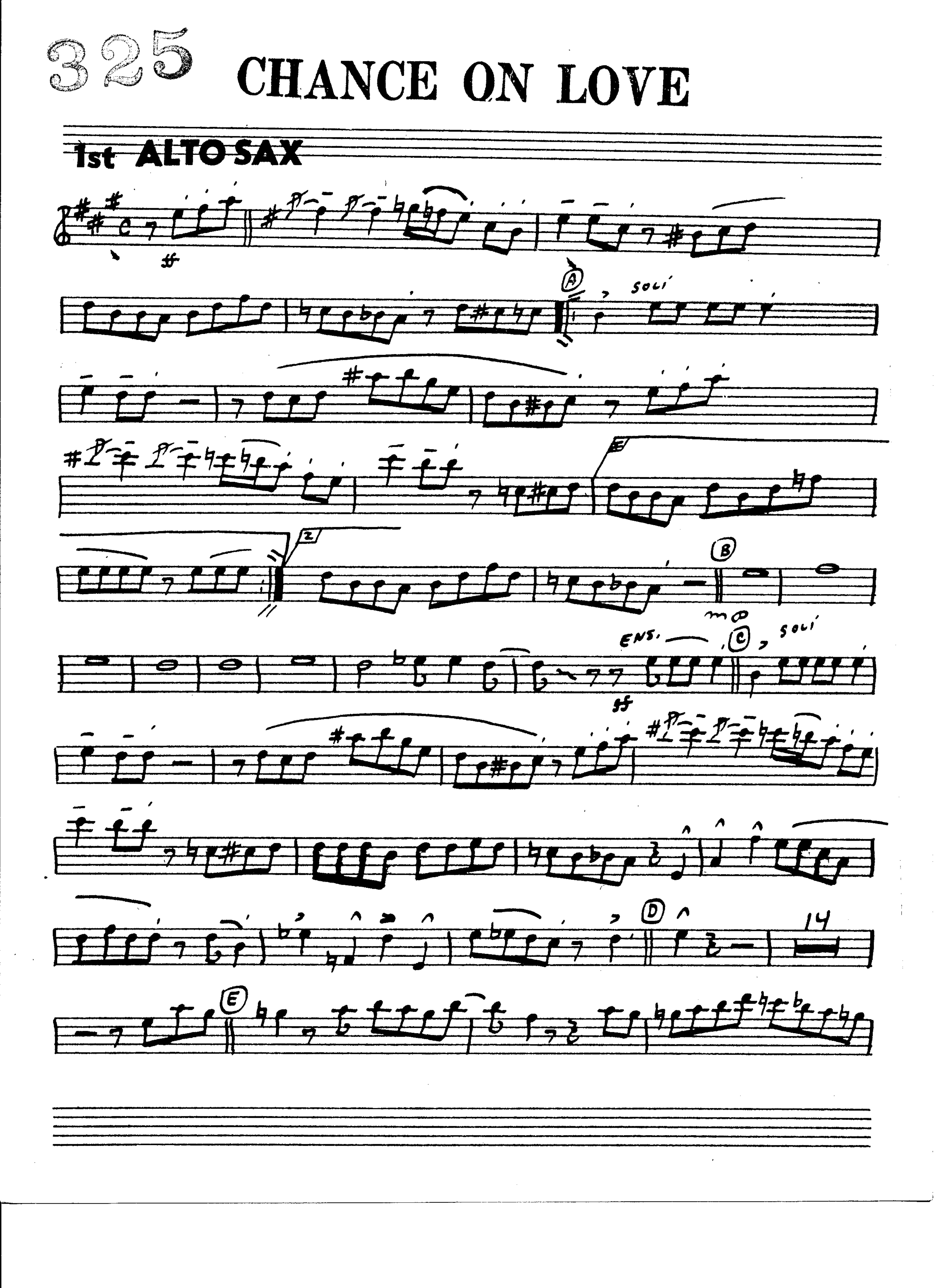
Takin' A Chance On Love (Zentner-Martin)
Composed by Vernon Duke
Arranged by Zentner-Martin
- Ensemble: Big Band
- Style: Jazz Standard
- Pages: 23
- Instruments (17): 1st Alto Sax, 3rd Alto Sax, 1st Tenor Sax, 2nd Tenor Sax, Baritone Sax, 1st Trumpet, 2nd Trumpet, 3rd Trumpet, 4th Trumpet, 1st Trombone, 2nd Trombone, 3rd Trombone, 4th Trombone, Piano, Bass, Drums, Guitar
- Difficulty: medium
- Content: Individual Parts
- Format: PDF Download (Instant)
- Price: $24.99
Vernon Duke’s timeless 1940 standard "Takin' A Chance On Love," with lyrics by John Latouche and Ted Fetter, achieved immortalization in the musical *Cabin in the Sky* and through iconic recordings by legends like Benny Goodman and Ella Fitzgerald. As a quintessential staple of the Great American Songbook, the composition thrives on its buoyant, optimistic melody and clever harmonic architecture. The Zentner-Martin big band adaptation captures the glittering sophistication of the mid-century dance orchestra tradition, filtering the classic tune through a lens of brass-heavy punch, sleek woodwind textures, and an infectious, driving medium-swing groove that immediately engages both performers and listeners. Radiating an upbeat, sophisticated energy, this arrangement unfolds in a comfortable medium-swing tempo that prioritizes pocket, drive, and articulation over breakneck speed. The harmonic language remains faithful to Duke's original changes while incorporating crisp, West Coast-leaning counterlines and polished section writing reminiscent of Sixties big band styling. The mood is persistently jubilant and swinging, evoking the slick glamour of classic supper clubs and elite ballroom stages. Richly voiced chords across the saxes provide a warm cushion, while the brass interjections add bright, dynamic punctuation that keeps the momentum pushing steadily forward from the first measure to the final chord. Sy Zentner’s signature influence—known for his lush, dynamic trombone features and sweeping, cinematic big band phrasing—informs the deft treatment of melody and countermelody throughout this chart. The arrangement opens with an inviting introductory vamp before handing the primary melody to the saxophone section, enriched by subtle trumpet flourishes and harmonized backgrounds. A standout soli section showcases the woodwinds in tight, harmonized interplay, building organically into a swinging shout chorus that cleverly redistributes thematic fragments between the brass and rhythm sections. Dynamic contrast is heavily emphasized, allowing ensembles to build immense tension through precise crescendos and sudden, crisp drop-offs in volume. Advanced high school, collegiate, and professional big bands will find this 23-page chart to be an exceptionally rewarding addition to their repertoire. While the overall technical demands are approachable for ensembles with solid reading skills, the chart requires meticulous attention to articulation, particularly regarding short swing eighth notes, subtle dynamic shading, and stylistic unity within sections. Solo opportunities are provided for key chair players to stretch out over standard changes, making it a fantastic vehicle for showcasing a confident soloist. Ultimately, the arrangement succeeds by balancing nostalgic reverence for the swing era with the clean, punchy execution demanded by modern jazz orchestra programming. Achieving an authentic performance of this Zentner-Martin chart requires absolute precision with medium-swing articulation. The rhythm section must lock into a driving, laid-back quarter-note pulse; the bass should walk a steady, acoustic-sounding line with clear two-feel variations where indicated, while the drummer maintains a crisp ride-cymbal sizzle with light hi-hat chokes on beats two and four. Brass players should approach their sustained notes with a warm, controlled vibrato typical of the era, reserving sharp accents for dynamic peaks. Watch closely for sudden sub-ito piano markings beneath soaring melodic lines; balance is critical so the accompanying sections never overpower the lead voices. Trombone players should utilize subtle slide slurs to capture the characteristic vocal quality of the writing. Rehearsal time is best spent isolating the saxophone soli, ensuring uniform blend and intonation before integrating the punchy brass backgrounds that punctuate the phrases. Q: What instruments and parts are included in this big band arrangement? A: The 23-page complete set is scored for a standard 17-instrument big band instrumentation, featuring Alto Saxophone 1, Alto Saxophone 3, Tenor Saxophone 1, Tenor Saxophone 2, Baritone Saxophone, four trumpets, four trombones, and a full four-piece rhythm section (piano, bass, drums, guitar). Q: What is the difficulty level of this arrangement? A: This piece is best suited for advanced high school, collegiate, and professional jazz ensembles. While the individual note reading is accessible, achieving the required stylistic swing feel, dynamic precision, and tight section blend demands intermediate-to-advanced musicianship. Q: What is the historical context and musical style of this piece? A: Based on Vernon Duke's 1940 Broadway standard, this chart is styled as a classic medium-swing big band arrangement. It channels the polished, brass-driven elegance of the mid-century jazz orchestra tradition associated with bandleaders like Sy Zentner. Q: What makes the Zentner-Martin treatment of this standard unique? A: This arrangement stands out through its sophisticated West Coast-influenced voicings, lush saxophone solis, and clever interplay between the brass and rhythm sections. It balances nostalgic swing-era charm with clean, cinematic dynamic contrasts and punchy shout choruses. Q: What is the recommended performance tempo and duration for this arrangement? A: The piece is designed to be performed at a comfortable, driving medium-swing tempo (approximately 120-132 BPM), resulting in an estimated performance duration of around 3 to 4 minutes depending on solo choruses.
Questions and answers
- What is included in the Takin' A Chance On Love (Zentner-Martin) PDF?
- The verified current file contains individual parts across 23 pages.
- How many instruments or parts are listed for Takin' A Chance On Love (Zentner-Martin)?
- The verified instrumentation list contains 17 entries for this Big Band arrangement.
- Who is credited for Takin' A Chance On Love (Zentner-Martin)?
- Composer: Vernon Duke. Arranger: Zentner-Martin.
- What difficulty is listed for Takin' A Chance On Love (Zentner-Martin)?
- The verified difficulty level is medium.
- What style is listed for Takin' A Chance On Love (Zentner-Martin)?
- The catalog lists the style as Jazz Standard.
- Can I preview Takin' A Chance On Love (Zentner-Martin) before buying?
- Yes. The product page provides a preview generated from the current PDF file.
- How is Takin' A Chance On Love (Zentner-Martin) delivered?
- After successful payment, the digital PDF is made available for download. The displayed price is $24.99.
Musicians Also Search For
Takin' A Chance On Love Zentner-Martin PDF • Takin' A Chance On Love Zentner-Martin sheet music • Takin' A Chance On Love arranged by Zentner-Martin • Zentner-Martin big band charts • Zentner-Martin jazz arrangements PDF • Takin' A Chance On Love Vernon Duke sheet music • Takin' A Chance On Love Vernon Duke big band arrangements • Vernon Duke big band charts • Takin' A Chance On Love big band arrangements • Takin' A Chance On Love big band PDF download • Takin' A Chance On Love jazz sheet music • big band sheet music download • Takin' A Chance On Love individual parts download • Takin' A Chance On Love sheet music PDF • Takin' A Chance On Love Jazz Standard charts • Jazz Standard big band arrangements • buy Takin' A Chance On Love sheet music • download Takin' A Chance On Love PDF • Takin' A Chance On Love jazz charts • best Zentner-Martin big band arrangements • Vernon Duke arranged by Zentner-Martin • Takin' A Chance On Love printable sheet music • big band repertoire PDF