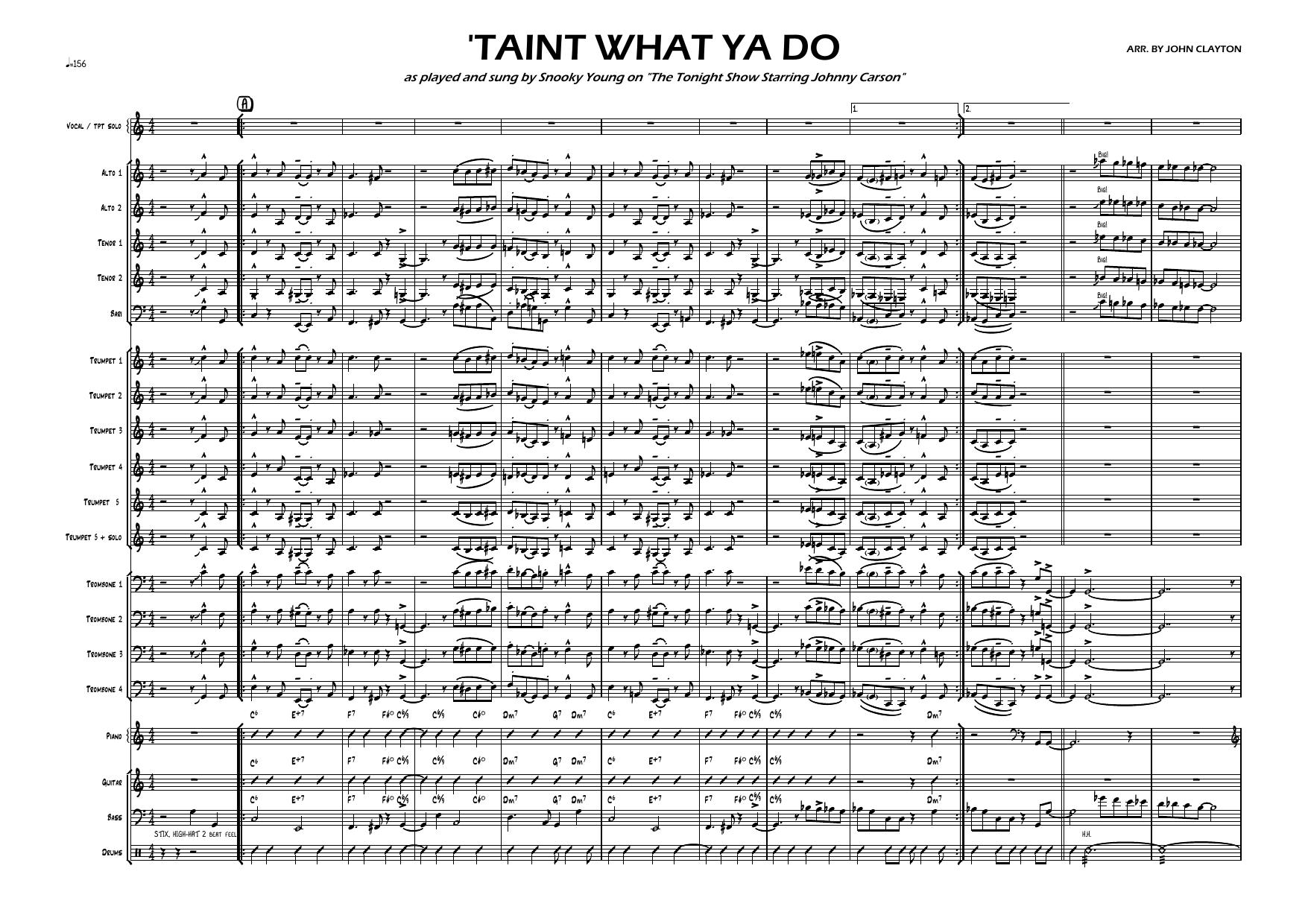
Tain't What Ya Do (J.Clayton) sheet music preview

Tain't What Ya Do (J.Clayton)

Composed by Sy Oliver

Arranged by John Clayton

  • Ensemble: Big Band
  • Pages: 59
  • Instruments (19): Vocal / tpt solo, Alto 1, Alto 2, Tenor 1, Tenor 2, Bari, Trumpet 1, Trumpet 2, Trumpet 3, Trumpet 4, Trumpet 5 + solo, Trombone 1, Trombone 2, Trombone 3, Trombone 4, Piano, Guitar, Bass, Drums
  • Difficulty: advanced
  • Content: Individual Parts
  • Format: PDF Download (Instant)
  • Price: $24.99

Sy Oliver and James "Trummy" Young originally penned "Tain't What Ya Do (It's the Way That Cha Do It)" in 1939, securing its place in the pantheon of swing era classics largely through its definitive recording by Jimmie Lunceford and His Orchestra. Characterized by its infectious rhythm, playful lyricism, and driving momentum, the tune became a cornerstone of the Lunceford style—known for its two-beat bounce, precision execution, and infectious good humor. This timeless contribution to the American songbook bridges the gap between early Kansas City swing and the sophisticated big band arranging styles that would dominate the 1940s, relying heavily on tight ensemble interplay and rhythmically punchy thematic statements. Master bassist, composer, and arranger John Clayton brings his virtuosic understanding of the jazz idiom to this chart, crafting a treatment that honors the swinging spirit of the original while injecting modern harmonic sophistication and dynamic contrast. Set in a buoyant medium-swing groove, the arrangement pulses with vibrant energy, propelled by clever counterpoint and crisp articulation. Clayton avoids static block writing, instead utilizing a transparent, interactive texture where the rhythm section acts as a dynamic springboard. The mood shifts effortlessly from cheeky, muted brass statements to roaring, high-octane ensemble passages that evoke the quintessential excitement of a late-night dance hall. Clayton’s signature arranging fingerprint is stamped firmly across the charts through his meticulous voicing and clever utilization of the 10-instrument instrumentation. The melody is shared fluidly across the front line, featuring engaging sax solis that demand pristine intonation, articulation control, and a unified sense of swing eighth notes. Brass sections trade barbed, accented punches with the reeds, leading into a meticulously structured shout chorus that builds tension through cunning chromatic voice-leading and rhythmic displacement. Solo space is thoughtfully integrated, allowing featured horn players to stretch out over accessible blues-inflected changes while the background figures supply a rich harmonic cushion. Advanced high school ensembles, collegiate jazz orchestras, and professional repertory bands will find this arrangement an ideal vehicle for developing ensemble cohesion and stylistic authenticity. While the technical demands of individual parts are moderate, the true challenge—and reward—lies in achieving the effortless, feather-light bounce and stylistic unity that Clayton’s writing requires. Performers will relish the clever interplay between sections, particularly the dynamic nuances and architectural brilliance of the shout chorus, making it an absolute crowd-pleaser for festival performances, concert halls, and sophisticated jazz club settings alike. Unlocking the authentic spirit of this John Clayton chart begins with establishing an unwavering, relaxed medium-swing feel in 4/4 time. The rhythm section must anchor the groove without overplaying; the drummer should emphasize a crisp, driving ride cymbal pattern with light hi-hat chokes on beats two and four, while the bass walks a buoyant, connected line. Horn players must pay strict attention to articulation markings—short notes must be clipped without being clipped of their warmth, and accented notes should carry natural vocal weight rather than harsh blasts. Plunger mutes and gentle falls are utilized effectively in the brass to add vintage color; ensure players maintain precise intonation when altering their timbre. During rehearsal, isolate the sax soli to work on internal blend and articulation uniformity before integrating the rhythm section. Directors should push the ensemble to exaggerate dynamic contrasts, transforming moderate crescendos into breathtaking peaks that highlight Clayton’s brilliant harmonic twists. Q: What instruments and parts are included in this 10-instrument arrangement? A: The chart is scored for a 10-piece big band instrumentation, featuring Alto Saxophone, Tenor Saxophone, Baritone Saxophone, Trumpet, and Trombone parts, alongside a full rhythm section. Q: What is the difficulty level of this John Clayton arrangement? A: This arrangement is well-suited for advanced high school, collegiate, and professional jazz ensembles, requiring strong stylistic awareness, section blend, and medium-swing execution rather than extreme technical wizardry. Q: What is the historical background of "Tain't What Ya Do"? A: Originally composed in 1939 by Sy Oliver and Trummy Young, the tune was popularized by Jimmie Lunceford and remains a beloved swing era standard celebrating the philosophy of style and delivery over sheer technical complexity. Q: What makes this specific arrangement by John Clayton unique? A: Clayton balances the vintage charm of the Lunceford original with contemporary harmonic voicings, clever counterpoint, and a meticulously crafted shout chorus that showcases modern big band colors. Q: What is the performance duration and tempo feel of this piece? A: The arrangement is set at an energetic medium-swing tempo and typically clocks in around 3 to 4 minutes, making it an ideal dynamic opener, closer, or festival showcase piece.

Questions and answers

What is included in the Tain't What Ya Do (J.Clayton) PDF?
The verified current file contains a conductor score and individual parts across 59 pages.
How many instruments or parts are listed for Tain't What Ya Do (J.Clayton)?
The verified instrumentation list contains 19 entries for this Big Band arrangement.
Who is credited for Tain't What Ya Do (J.Clayton)?
Composer: Sy Oliver. Arranger: John Clayton.
What difficulty is listed for Tain't What Ya Do (J.Clayton)?
The verified difficulty level is advanced.
Can I preview Tain't What Ya Do (J.Clayton) before buying?
Yes. The product page provides a preview generated from the current PDF file.
How is Tain't What Ya Do (J.Clayton) delivered?
After successful payment, the digital PDF is made available for download. The displayed price is $24.99.

Musicians Also Search For

Tain't What Ya Do John Clayton PDFTain't What Ya Do John Clayton sheet musicTain't What Ya Do arranged by John ClaytonJohn Clayton big band chartsJohn Clayton jazz arrangements PDFTain't What Ya Do Sy Oliver sheet musicTain't What Ya Do Sy Oliver big band arrangementsSy Oliver big band chartsTain't What Ya Do big band arrangementsTain't What Ya Do big band PDF downloadTain't What Ya Do jazz sheet musicbig band sheet music downloadTain't What Ya Do conductor score PDFTain't What Ya Do individual parts downloadTain't What Ya Do sheet music PDFbuy Tain't What Ya Do sheet musicdownload Tain't What Ya Do PDFTain't What Ya Do jazz chartsbest John Clayton big band arrangementsSy Oliver arranged by John ClaytonTain't What Ya Do printable sheet musicbig band repertoire PDF

All arrangements by John Clayton All Sy Oliver sheet music