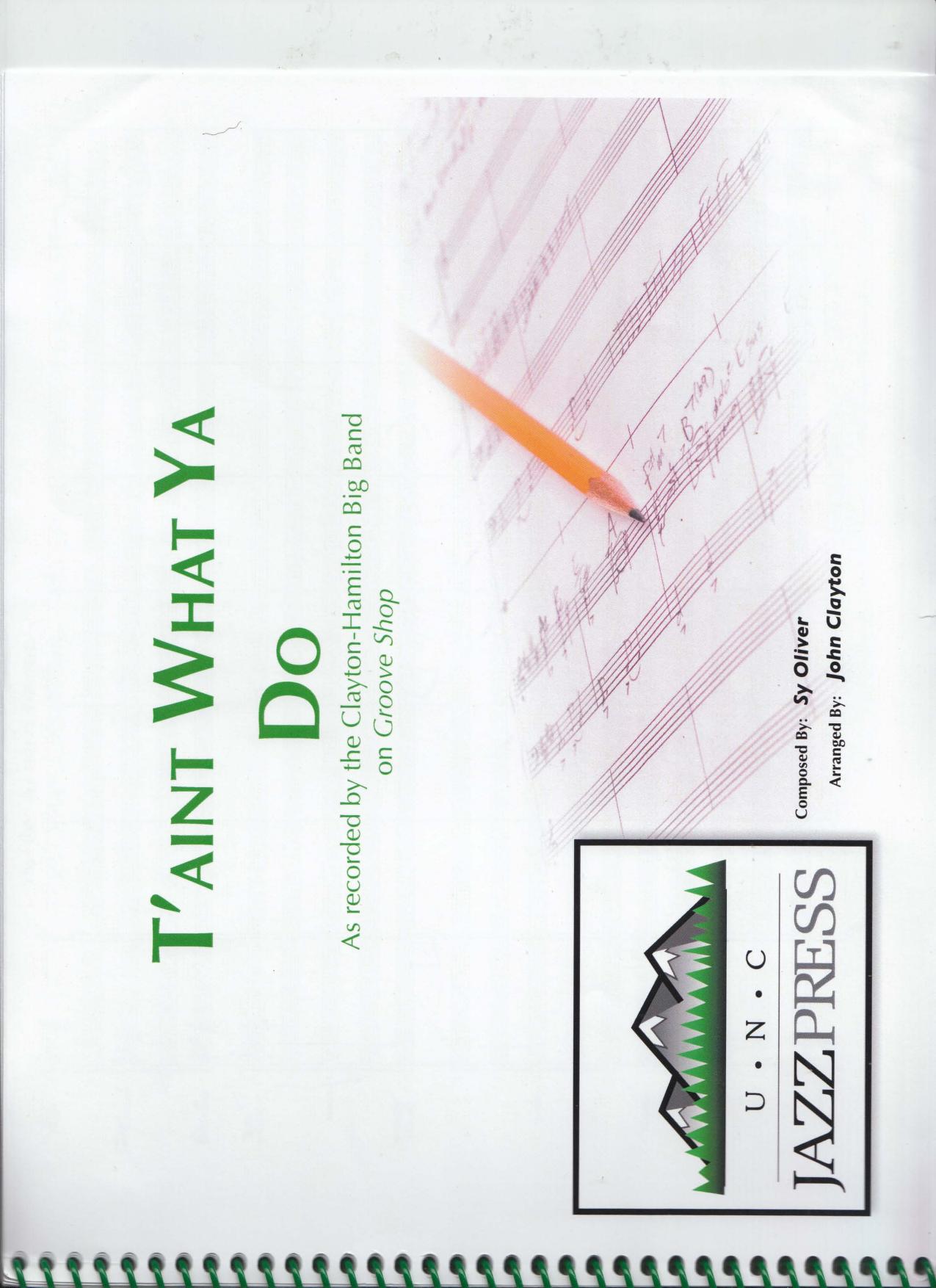
Tain't What Ya Do (J.Clayton) sheet music preview

Tain't What Ya Do (J.Clayton)

Composed by Sy Oliver

Arranged by John Clayton

  • Ensemble: Big Band
  • Pages: 66
  • Instruments (17): Eb Alto Sax 1, Eb Alto Sax 2, Bb Tenor Sax 1, Bb Tenor Sax 2, Baritone Sax, Bb Trumpet 1, Bb Trumpet 2, Bb Trumpet 3, Bb Trumpet 4, Trombone 1, Trombone 2, Trombone 3, Trombone 4, Guitar, Piano, Bass, Drums
  • Difficulty: advanced
  • Content: Individual Parts
  • Format: PDF Download (Instant)
  • Price: $24.99

Originally written by Sy Oliver and James "Trummy" Young for the legendary Jimmie Lunceford Orchestra in 1939, "'Tain't What Ya Do (It's the Way That Cha Do It)" stands as one of the defining novelty swing anthems of the big band era. Sy Oliver's genius for infectious groove, clever lyricism, and punchy horn writing transformed the tune into an instant classic that bridged popular appeal with sophisticated jazz arrangement. John Clayton’s contemporary big band adaptation revitalizes this historical blueprint through a modern lens, honoring the playful, high-energy spirit of the 1930s while injecting the harmonic depth, rhythmic sophistication, and precision-engineered voicings characteristic of the Clayton-Hamilton lineage. Propelled by a driving, medium-tempo swing feel in 4/4 time, the arrangement radiates an irrepressible sense of joy and swagger. Clayton structures the chart to balance tightly knit ensemble passages with moments of loose, blues-soaked interaction. The emotional trajectory shifts seamlessly from cheeky, muted brass statements to roaring, wide-open shout choruses that demand dynamic control and stylistic agility. The key center supports brilliant brass bell tones and allows the woodwinds to bite through the ensemble texture, generating an authentic vintage warmth infused with contemporary big band muscle. Clayton’s distinct structural approach relies heavily on transparent section interplay, clever counterpoint, and meticulous dynamic shading. Rather than simply recycling vintage riffs, he reimagines the thematic material through inventive harmonic substitutions and crafty voicing distributions across the 18-instrument ensemble. The saxophones navigate intricate, interwoven solis that require absolute rhythmic unison, while the brass section utilizes stylized plunger effects and crisp articulation to mimic the vocal cadence of the original recordings. The rhythm section functions as an organic engine, with walking bass lines and subtle piano comps that lock tightly into the traditional swing pocket. Throughout the 66 pages—which include a comprehensive conductor score—melodic duties are shared dynamically across the entire band, preventing monotony and highlighting individual section strengths. Featured solo spaces provide improvisers a spacious platform to stretch out over classic blues-based changes, anchored by robust background figures from the brass and reeds. Technical demands center on articulation precision, accurate swing subdivision at moderate tempos, and the stylistic maturity needed to execute dynamic swells and drops convincingly. Advanced high school, collegiate, and professional jazz ensembles will find this chart exceptionally rewarding. It serves as a masterclass in historical stylistic interpretation, requiring mature section playing and a deep understanding of swing placement. Directors will appreciate how the detailed score notes and transparent orchestration allow advanced groups to elevate their articulation, blend, and rhythmic cohesion to a professional standard. Achieving an authentic performance of this chart requires meticulous attention to articulation and groove. Set the tempo at a comfortable medium-swing clip; pushing the metronome too fast will compromise the heavy, relaxed backbeat essential to the style. The primary technical hurdle lies in maintaining absolute rhythmic unity between the rhythm section's ride cymbal/bass drum syncopation and the horns' short, detached notes. Ensembles must practice staccato passages with a warm, fat tone rather than a pinched, dry sound. Conductors should pay close attention to dynamic contrast, particularly during the transition from secretive, muted brass moments to explosive, unmuted shout choruses. Saxophone solis require light, airy tonguing and fluid air support to keep the eighth-note lines bouncing forward. Encourage brass players to execute falls, doits, and optional plunger effects with stylistic taste rather than exaggeration, ensuring they complement rather than overpower the underlying harmony. Rehearsals should initially focus separately on the rhythm section pocket before layering the horns, ensuring that the bass and drums establish a heavy, unyielding foundation. Q: What instruments and parts are included in this arrangement? A: This 66-page publication is scored for an 18-instrument big band, including two alto saxophones, two tenor saxophones, baritone saxophone, standard brass instrumentation, a full rhythm section, and a complete conductor score. Q: What is the difficulty level of this arrangement? A: It is graded as an advanced work (Grade 5), making it best suited for accomplished high school bands, university ensembles, and professional big bands with strong section leaders and experienced soloists. Q: What is the historical background of the music? A: The composition was originally co-written by Sy Oliver and Trummy Young, becoming a massive swing-era hit for the Jimmie Lunceford Orchestra in 1939 before being reimagined by John Clayton. Q: What makes John Clayton's arrangement unique? A: Clayton updates the classic 1930s novelty swing aesthetic with sophisticated contemporary harmonic extensions, clever counterpoint, and meticulously crafted section solis that showcase modern big band dynamics. Q: What is the recommended tempo and performance duration? A: The chart is designed for a medium-swing tempo in 4/4 time, typically clocking in at around three to four minutes depending on the length of the improvised solo choruses.

Questions and answers

What is included in the Tain't What Ya Do (J.Clayton) PDF?
The verified current file contains a conductor score and individual parts across 66 pages.
How many instruments or parts are listed for Tain't What Ya Do (J.Clayton)?
The verified instrumentation list contains 17 entries for this Big Band arrangement.
Who is credited for Tain't What Ya Do (J.Clayton)?
Composer: Sy Oliver. Arranger: John Clayton.
What difficulty is listed for Tain't What Ya Do (J.Clayton)?
The verified difficulty level is advanced.
Can I preview Tain't What Ya Do (J.Clayton) before buying?
Yes. The product page provides a preview generated from the current PDF file.
How is Tain't What Ya Do (J.Clayton) delivered?
After successful payment, the digital PDF is made available for download. The displayed price is $24.99.

Musicians Also Search For

Tain't What Ya Do John Clayton PDFTain't What Ya Do John Clayton sheet musicTain't What Ya Do arranged by John ClaytonJohn Clayton big band chartsJohn Clayton jazz arrangements PDFTain't What Ya Do Sy Oliver sheet musicTain't What Ya Do Sy Oliver big band arrangementsSy Oliver big band chartsTain't What Ya Do big band arrangementsTain't What Ya Do big band PDF downloadTain't What Ya Do jazz sheet musicbig band sheet music downloadTain't What Ya Do conductor score PDFTain't What Ya Do individual parts downloadTain't What Ya Do sheet music PDFbuy Tain't What Ya Do sheet musicdownload Tain't What Ya Do PDFTain't What Ya Do jazz chartsbest John Clayton big band arrangementsSy Oliver arranged by John ClaytonTain't What Ya Do printable sheet musicbig band repertoire PDF

All arrangements by John Clayton All Sy Oliver sheet music