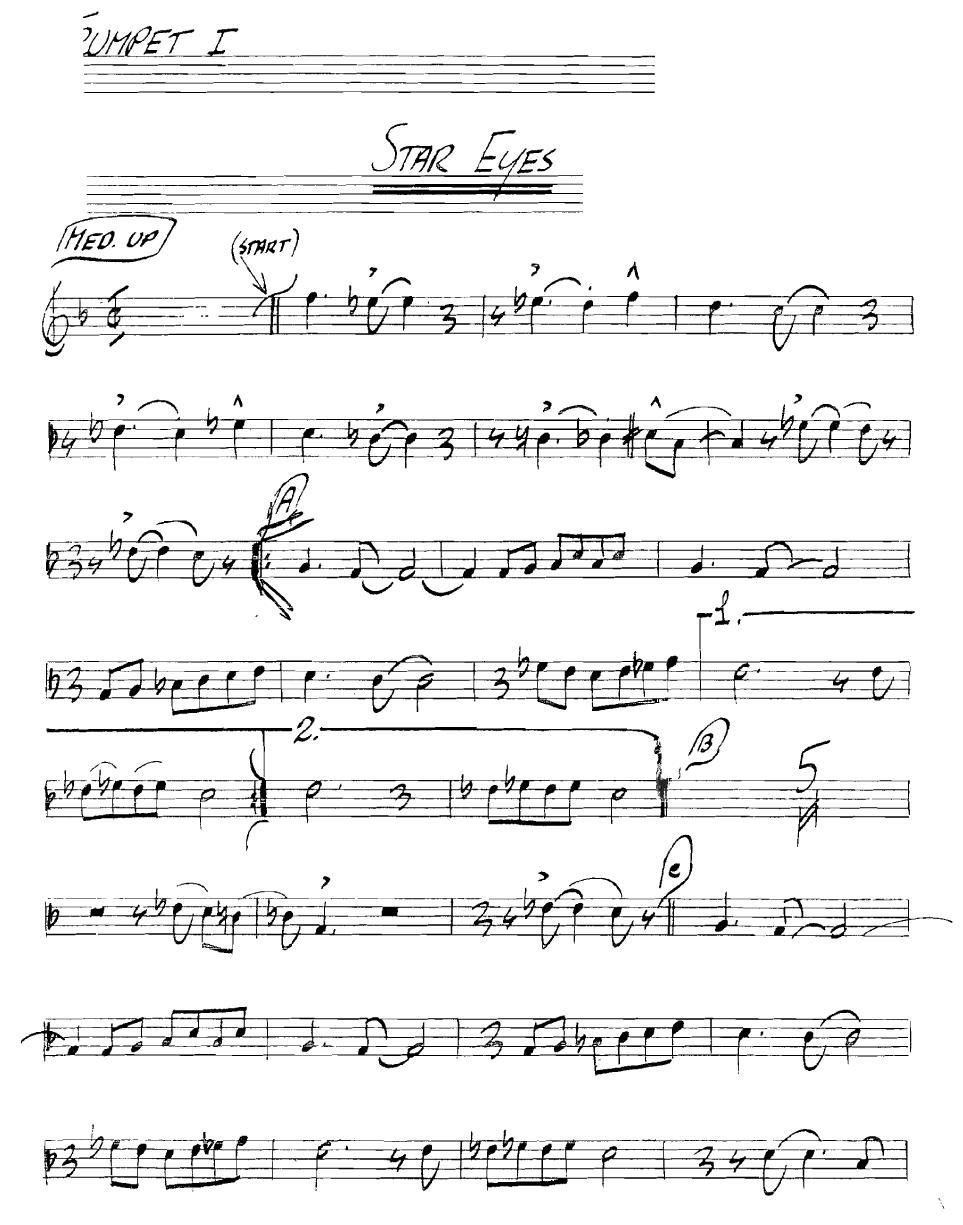
Star Eyes - 4 horns + Rhythm - Montrose - Dave Pell Octet
Composed by Gene de Paul
- Ensemble: Small Ensemble
- Pages: 26
- Instruments (7): Trumpet, Tenor Sax, Baritone Sax, Trombone, Piano, Bass, Drums
- Difficulty: easy
- Content: Individual Parts
- Format: PDF Download (Instant)
- Price: $12.99
Gene de Paul's "Star Eyes," a timeless ballad originally penned in 1943, quickly ascended to jazz standard status, becoming a beloved vehicle for improvisation and sophisticated arrangements. Its initial fame was cemented through big band recordings by artists like Jimmy Dorsey and Helen Forrest, but it was the bebop era that truly embraced its intricate harmonic structure, making it a staple for improvisers from Charlie Parker to Stan Getz. The tune's AABA form, often featuring a bridge that modulates to the relative major, provides a fertile ground for melodic development and harmonic exploration, establishing its enduring appeal across generations of jazz musicians. This particular arrangement, inspired by the cool, West Coast aesthetic of the Dave Pell Octet, captures the sophisticated, understated elegance characteristic of that mid-20th-century sound. This arrangement of "Star Eyes" is set at a relaxed, medium swing tempo, typically around 120-130 BPM, in the key of C major, evoking a cool and contemplative mood. The energy is refined rather than boisterous, prioritizing clarity of line and nuanced harmonic interplay. The arranger, though unknown, demonstrates a keen understanding of the Dave Pell Octet's signature sound: tight, often unison or harmonized horn lines that maintain a light, articulate feel. Expect sophisticated voicings that lean towards open harmonies, avoiding dense clusters in favor of a transparent texture. The rhythm section provides a steady, unobtrusive foundation, allowing the horns to float above with melodic grace. There are subtle dynamic shifts and carefully placed accents that contribute to the overall polished presentation, reflecting the era's emphasis on precision and melodicism. The arrangement features the melody initially carried by the trumpet, often doubled or harmonized by the tenor saxophone, creating a classic small-group sound. The baritone saxophone and trombone provide a warm, supportive harmonic backdrop, occasionally stepping forward with counter-melodies or rhythmic figures. Following the head, there are ample opportunities for featured solos, typically for trumpet and tenor saxophone, allowing improvisers to navigate the tune's familiar changes. The technical challenges lie less in extreme range or rapid-fire passages, and more in achieving precise articulation, blend, and balance within the small ensemble. The rewarding aspect of performing this chart is in mastering its subtle swing feel and the intricate interplay between the horn voices, culminating in a polished, professional sound that truly captures the essence of West Coast cool jazz. This arrangement is ideally suited for college-level jazz ensembles, advanced community bands, or professional small groups seeking to expand their repertoire with an authentic, classic jazz sound. Its demands on blend, intonation, and rhythmic precision make it an excellent teaching tool for developing ensemble cohesiveness, while the solo sections offer valuable improvisational practice over a standard form. While high school bands with strong lead players and a dedicated rhythm section could approach it, the nuanced stylistic interpretation required suggests a more experienced ensemble will unlock its full potential. Approach "Star Eyes" with a relaxed, medium swing feel; aim for a quarter note around 120-130 BPM, emphasizing a smooth, legato eighth-note interpretation. The primary technical challenge lies in achieving precise blend and balance among the four horns, particularly in unison and harmonized passages, requiring careful attention to intonation and matching articulations. Ensure the rhythm section maintains a light, steady pulse without overpowering the horns. The piano should comp with restraint, utilizing open voicings. No special techniques like mutes or falls are explicitly notated, but a subtle, controlled vibrato from the brass and woodwinds will enhance the cool jazz aesthetic. Rehearsal time should focus on refining horn voicings for clarity and transparency, and ensuring soloists understand the harmonic progression to maintain the arrangement's sophisticated mood. Q: What instruments are included in this "Star Eyes" arrangement? A: This arrangement is scored for a 4-horn front line plus rhythm section. The specific instrumentation includes Trumpet, Tenor Saxophone, Baritone Saxophone, Trombone, Piano, Bass, and Drums, totaling 7 instruments. Q: What is the difficulty level of this arrangement? A: This arrangement is considered medium-advanced. It requires strong ensemble blend, precise intonation, and a nuanced understanding of cool jazz articulation, making it suitable for college-level or advanced community jazz ensembles. Q: What musical style and historical context does this arrangement represent? A: This arrangement embodies the cool jazz style of the West Coast, specifically drawing inspiration from the sound of the Dave Pell Octet. It reflects the mid-20th-century aesthetic of sophisticated, understated swing and melodic clarity. Q: What makes this particular arrangement of "Star Eyes" unique? A: Its uniqueness lies in its authentic emulation of the Dave Pell Octet's signature sound, featuring tight, often unison or harmonized horn lines with transparent voicings, and a focus on refined ensemble interplay over overt technical flash. Q: What is the typical performance duration and tempo for this piece? A: "Star Eyes" in this arrangement is typically performed at a medium swing tempo, around 120-130 beats per minute. A full performance, including solos, usually ranges from 4 to 6 minutes depending on the number and length of improvisations.
Musicians Also Search For
Star Eyes - 4 horns + Rhythm - Montrose - Dave Pell Octet Gene de Paul sheet music • Star Eyes - 4 horns + Rhythm - Montrose - Dave Pell Octet Gene de Paul small ensemble arrangement • Gene de Paul small ensemble charts • Star Eyes - 4 horns + Rhythm - Montrose - Dave Pell Octet small ensemble arrangement • Star Eyes - 4 horns + Rhythm - Montrose - Dave Pell Octet small ensemble PDF download • Star Eyes - 4 horns + Rhythm - Montrose - Dave Pell Octet jazz ensemble sheet music • small ensemble sheet music instant download • Star Eyes - 4 horns + Rhythm - Montrose - Dave Pell Octet individual parts download • Star Eyes - 4 horns + Rhythm - Montrose - Dave Pell Octet sheet music with parts • buy Star Eyes - 4 horns + Rhythm - Montrose - Dave Pell Octet sheet music online • download Star Eyes - 4 horns + Rhythm - Montrose - Dave Pell Octet PDF • Star Eyes - 4 horns + Rhythm - Montrose - Dave Pell Octet jazz chart • Star Eyes - 4 horns + Rhythm - Montrose - Dave Pell Octet printable sheet music • small ensemble repertoire PDF