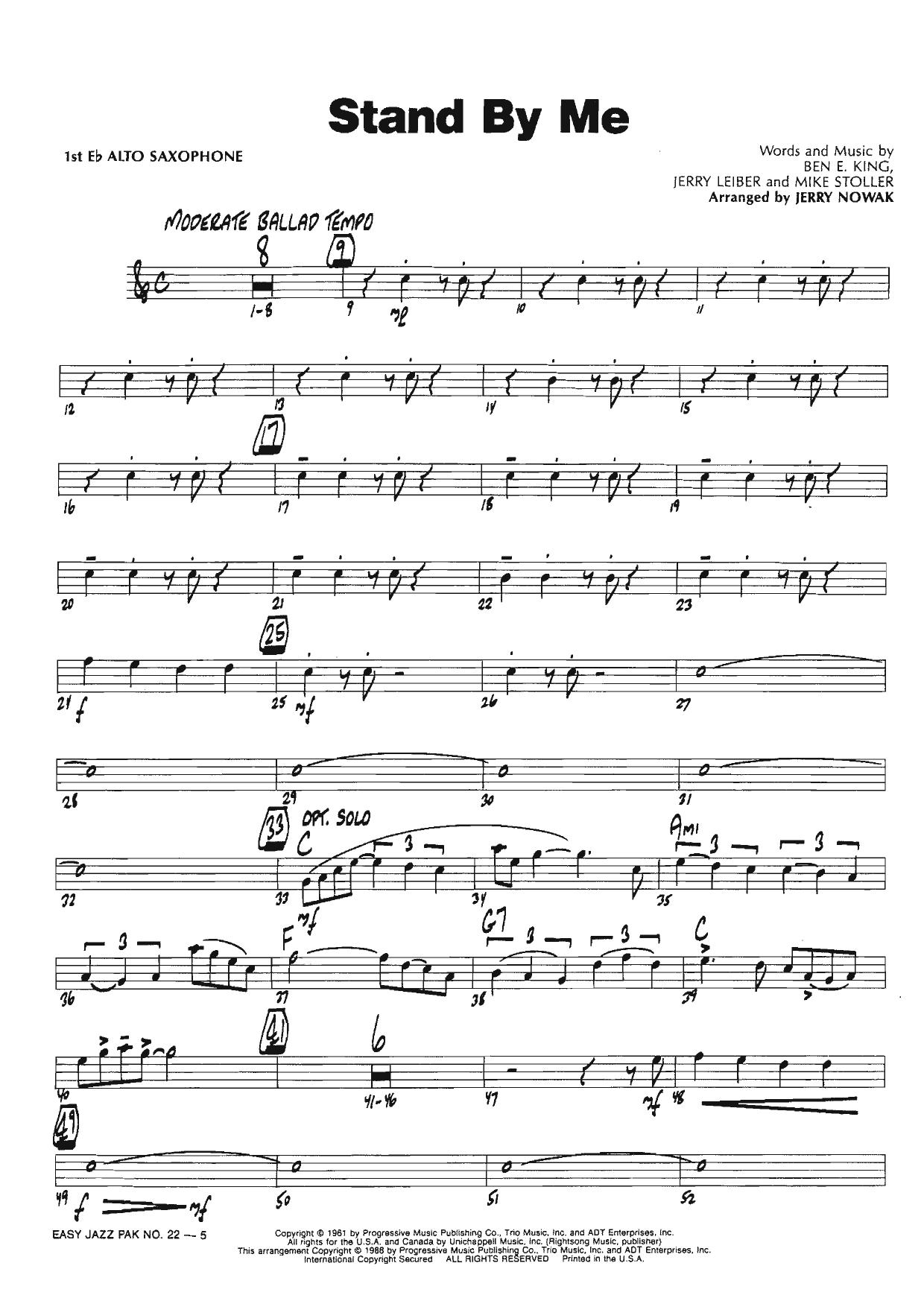
Stand By Me (J.Nowak) sheet music preview

Stand By Me (J.Nowak)

Composed by Ben E. King

Arranged by Jerry Nowak

  • Ensemble: Big Band
  • Pages: 31
  • Instruments (15): 1st Eb Alto Saxophone, 2nd Eb Alto Saxophone, 1st Bb Tenor Saxophone, 2nd Bb Tenor Saxophone, Eb Baritone Saxophone, 1st Bb Trumpet, 2nd Bb Trumpet, 3rd Bb Trumpet, 1st Trombone, 2nd Trombone, 3rd Trombone, Guitar, Piano, Bass, Drums
  • Difficulty: medium
  • Content: Individual Parts
  • Format: PDF Download (Instant)
  • Price: $24.99

Ben E. King co-wrote and recorded "Stand By Me" in 1961, cementing its status as an enduring masterpiece of early 1960s rhythm and blues that seamlessly bridges the gap between classic soul and timeless American popular songcraft. Built upon an iconic, cyclical bassline originally conceived by Leiber and Stoller, the tune has transcended its origins to become a versatile canvas for jazz interpreters worldwide. Jerry Nowak’s masterwork big band adaptation infuses this legendary vocal anthem with a sophisticated contemporary jazz vernacular, transforming a familiar pop-soul ballad into an engaging, highly textured instrumental vehicle designed to showcase a modern ensemble's dynamic control and stylistic versatility. Rooted in a relaxed, infectious medium-groove feel rather than a rigid straight-eighth or traditional fast swing, this arrangement operates in a comfortable tempo that encourages deep pocket playing and expressive articulation. The harmonic language expands tastefully beyond the original three-chord progression, introducing rich extended voicings, subtle chromatic passing tones, and clever reharmonizations in the brass and lower reeds that elevate the emotional weight of the melody. The mood transitions smoothly from reflective and intimate to jubilant and full-bodied, evoking a powerful sense of nostalgia tempered by a driving, optimistic forward momentum that keeps both performers and audiences thoroughly engaged from the downbeat to the final chord. Nowak distributes the thematic material intelligently across the entire ensemble, ensuring that every section shares the spotlight. The opening statements frequently feature warm, harmonized saxophones or expressive muted brass before opening up into lush, tutti ensemble passages. Rather than relying on a complex, breakneck shout chorus, Nowak constructs a gradual, soaring climax that utilizes dynamic terracing and rich chordal stacking to build tension naturally. Featured solo opportunities are open and accessible, allowing developing improvisers to stretch out over standard blues-derived changes while giving experienced soloists enough harmonic room to craft meaningful, lyrical statements. Advanced high school ensembles, collegiate jazz orchestras, and accomplished community big bands will find this chart to be an exceptionally rewarding addition to their libraries. While the technical demands—such as independent saxophone voicings, accurate dynamic control, and maintaining a consistent groove—require a mature rhythm section and attentive horn players, the arrangement avoids excessive pyrotechnics or extreme ranges. This makes it an ideal choice for festival performance, spring concerts, or stylistic education, effectively teaching students how to balance popular song idioms with sophisticated jazz arrangement techniques without sacrificing the soul of the original composition. Success with this arrangement hinges entirely on the rhythm section establishing a deep, unhurried groove right from the opening measure. The drummer should maintain a crisp, steady backbeat on beats two and four with a subtle ride cymbal pattern that breathes, avoiding any tendency to rush the medium tempo. Horn players must pay close attention to articulation markings; short notes should be clipped and buoyant, while sustained lines require a warm, vocal-like vibrato reminiscent of a soul horn section. Pay special attention to the dynamic contrast between the intimate verse statements and the fuller, brass-heavy refrain choruses. Conductors should rehearse the ensemble in sections first, ensuring that the inner voicings in the trombones and tenor saxophones are balanced and clearly audible beneath the lead trumpet line. Encourage soloists to prioritize melodic phrasing and tone quality over rapid-fire execution, staying true to the vocal heritage of the original Ben E. King classic. Q: What specific instruments and parts are included in this 31-page big band arrangement? A: The instrumentation consists of a standard 17-piece big band lineup: 5 saxophones (Alto 1, Alto 2, Tenor 1, Tenor 2, Baritone), 4 trumpets, 4 trombones, and a full four-piece rhythm section comprising piano, guitar, bass, and drums. Q: What is the designated difficulty level for Jerry Nowak's "Stand By Me"? A: This chart is graded as medium difficulty, making it exceptionally well-suited for advanced high school bands, college ensembles, and community jazz orchestras looking for solid stylistic substance without extreme technical hurdles. Q: What is the musical style and historical background of this specific arrangement? A: Based on Ben E. King’s 1961 R&B masterpiece, this arrangement reinterprets the iconic soul standard through a sophisticated jazz lens, utilizing a relaxed medium-groove feel and enriched harmonic voicings. Q: What makes this particular big band arrangement unique compared to other versions? A: Jerry Nowak’s treatment elevates a simple pop tune into a dynamic chart by employing clever reharmonizations, conversational soli writing across sections, and a gradual, beautifully stacked dynamic climax rather than a standard high-pressure shout chorus. Q: What is the recommended performance duration and tempo feel for this piece? A: The arrangement is set in a comfortable, driving medium groove (approximately 116 to 124 BPM) and typically runs around 3 to 4 minutes in length depending on the length of the open solo sections.

Questions and answers

What is included in the Stand By Me (J.Nowak) PDF?
The verified current file contains individual parts across 31 pages.
How many instruments or parts are listed for Stand By Me (J.Nowak)?
The verified instrumentation list contains 15 entries for this Big Band arrangement.
Who is credited for Stand By Me (J.Nowak)?
Composer: Ben E. King. Arranger: Jerry Nowak.
What difficulty is listed for Stand By Me (J.Nowak)?
The verified difficulty level is medium.
Can I preview Stand By Me (J.Nowak) before buying?
Yes. The product page provides a preview generated from the current PDF file.
How is Stand By Me (J.Nowak) delivered?
After successful payment, the digital PDF is made available for download. The displayed price is $24.99.

Musicians Also Search For

Stand By Me Jerry Nowak PDFStand By Me Jerry Nowak sheet musicStand By Me arranged by Jerry NowakJerry Nowak big band chartsJerry Nowak jazz arrangements PDFStand By Me Ben E. King sheet musicStand By Me Ben E. King big band arrangementsBen E. King big band chartsStand By Me big band arrangementsStand By Me big band PDF downloadStand By Me jazz sheet musicbig band sheet music downloadStand By Me individual parts downloadStand By Me sheet music PDFbuy Stand By Me sheet musicdownload Stand By Me PDFStand By Me jazz chartsbest Jerry Nowak big band arrangementsBen E. King arranged by Jerry NowakStand By Me printable sheet musicbig band repertoire PDF

All arrangements by Jerry Nowak All Ben E. King sheet music