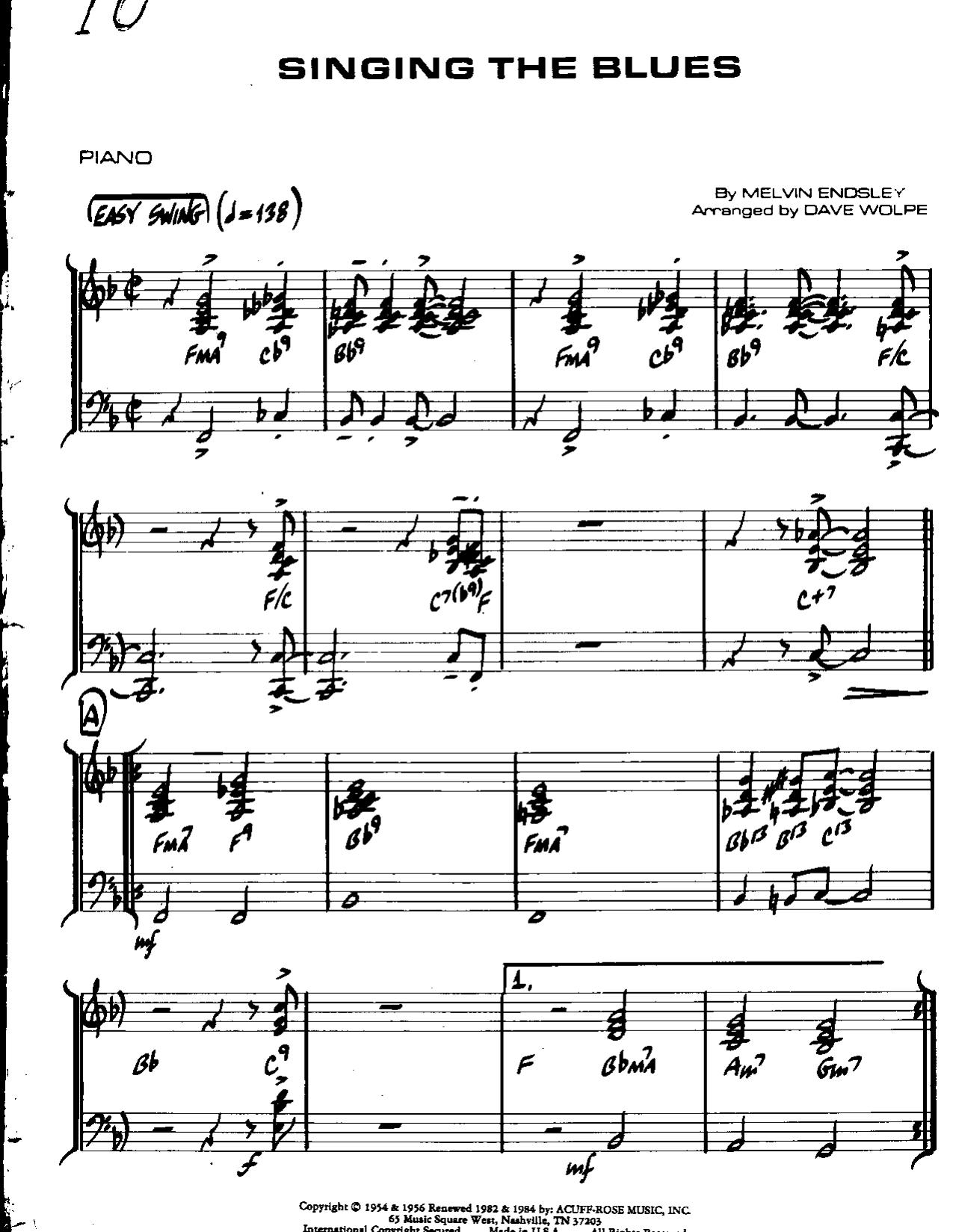
Singing the Blues (D.Wolpe)
Composed by Melvin Endsley
Arranged by Dave Wolpe
- Ensemble: Small Ensemble
- Style: Swing
- Pages: 6
- Difficulty: easy
- Content: Sheet Music
- Format: PDF Download (Instant)
- Price: $12.99
"Singing the Blues," originally penned by Melvin Endsley in 1954, transcended its country roots to become a pop phenomenon in 1956, most famously through chart-topping versions by Marty Robbins and Guy Mitchell. Endsley, who composed the piece at just 20 years old despite being wheelchair-bound from polio, imbued the song with themes of heartbreak and resilience, reflecting a profound optimism where the act of singing itself transforms sorrow into strength. While not a traditional jazz standard in its inception, its widespread popularity and blues-infused melodic structure have made it a fertile ground for jazz interpretation, bridging the gap between mid-century American popular music and the improvisational world of jazz. The piece embodies the era's sentimentality while offering a robust framework for swing-era stylings. Dave Wolpe's small ensemble arrangement of "Singing the Blues" reimagines this classic with a medium swing feel, typically set in a comfortable key that allows for rich harmonic exploration without excessive technical strain. Wolpe, a prolific and highly respected arranger known for his work with the Glenn Miller Orchestra and other notable ensembles, consistently brings a polished, accessible, yet musically sophisticated approach to his charts. His signature style often includes well-crafted voicings that make smaller ensembles sound fuller, engaging soli sections that highlight different instrument groups, and dynamic shout choruses that build excitement. This arrangement likely features his characteristic attention to melodic clarity and rhythmic drive, ensuring that the inherent charm of Endsley's composition shines through while being firmly rooted in the jazz idiom. Musically, this arrangement evokes a mood of sophisticated nostalgia, blending the song's original poignant undertones with the uplifting energy of swing. The melody is typically carried by lead instruments, often with harmonized lines from other ensemble members, creating a warm, full sound. While specific solo sections are integral to jazz arrangements, Wolpe's charts often provide clear indications for improvised solos, allowing musicians to express themselves within the established harmonic framework. The technical challenges are thoughtfully balanced, focusing on ensemble blend, rhythmic precision in the swing feel, and nuanced interpretation rather than extreme ranges or complex fingerings. Performing this arrangement is rewarding due to its familiar melody, the opportunity for expressive improvisation, and the satisfying collective sound achieved through Wolpe's expert scoring. This small ensemble arrangement is ideally suited for high school, college, and community jazz ensembles looking to expand their repertoire with a recognizable tune presented in a fresh, engaging jazz style. Its six pages suggest a concise yet complete arrangement, perfect for groups seeking a piece that offers musical depth without requiring extensive rehearsal time often associated with larger, more complex charts. The clear notation and thoughtful structure make it an excellent teaching tool for developing swing feel, ensemble dynamics, and improvisational skills in a small group setting. Conductors should establish a solid medium swing tempo, emphasizing a relaxed yet propulsive rhythmic feel from the rhythm section. Pay close attention to articulation, encouraging a light, detached approach to eighth notes typical of swing. Key technical challenges include maintaining precise ensemble blend and balance during harmonized melody lines and soli sections. Encourage musicians to listen across the ensemble, particularly between similar instruments, to achieve a cohesive sound. For any improvised solos, provide clear guidance on chord changes and encourage melodic development within the bluesy framework of the piece. Rehearsal tips include isolating tricky rhythmic figures or harmonic passages and practicing them slowly before integrating them into the full tempo. Ensure the rhythm section lays down a consistent groove, with the bass providing a walking line and drums offering a supportive swing pattern. **Q: What instruments/parts are included in this arrangement?** A: This is a small ensemble arrangement, typically including parts for a lead melody instrument (e.g., trumpet, alto saxophone), other horn parts for harmony and counter-melodies, and a standard jazz rhythm section (piano, bass, drums, and often guitar). The specific instrumentation will be detailed on the score. **Q: What is the difficulty level of "Singing the Blues (D.Wolpe)"?** A: This arrangement is generally considered appropriate for intermediate-level ensembles, such as advanced high school, college, or community jazz bands. It offers musical challenges related to swing feel and ensemble playing but avoids overly complex technical demands. **Q: What is the musical style and historical context of this piece?** A: This arrangement is in a medium swing style, interpreting Melvin Endsley's popular 1954 country song. It bridges the gap between mid-20th-century American popular music and the jazz idiom, offering a nostalgic yet vibrant swing interpretation of a widely recognized tune. **Q: What makes Dave Wolpe's arrangement of "Singing the Blues" unique?** A: Dave Wolpe is renowned for his accessible yet sophisticated arranging style, featuring expertly crafted voicings, engaging soli sections, and dynamic shout choruses that make small ensembles sound full and vibrant. His treatment brings a fresh, swinging perspective to this classic melody. **Q: What is the typical performance duration or tempo for this arrangement?** A: As a medium swing piece, the tempo is generally moderate, allowing for a relaxed yet energetic feel. The performance duration is typically around 3-5 minutes, depending on the number and length of improvised solos.
Musicians Also Search For
Singing the Blues Dave Wolpe PDF • Singing the Blues Dave Wolpe sheet music • Singing the Blues arranged by Dave Wolpe • Dave Wolpe small ensemble charts • Dave Wolpe jazz arrangements PDF • Singing the Blues Melvin Endsley sheet music • Singing the Blues Melvin Endsley small ensemble arrangement • Melvin Endsley small ensemble charts • Singing the Blues small ensemble arrangement • Singing the Blues small ensemble PDF download • Singing the Blues jazz ensemble sheet music • small ensemble sheet music instant download • Singing the Blues sheet music with parts • Singing the Blues Swing chart • Swing small ensemble arrangements • buy Singing the Blues sheet music online • download Singing the Blues PDF • Singing the Blues jazz chart • best Dave Wolpe small ensemble arrangements • Melvin Endsley songs arranged by Dave Wolpe • Singing the Blues printable sheet music • small ensemble repertoire PDF