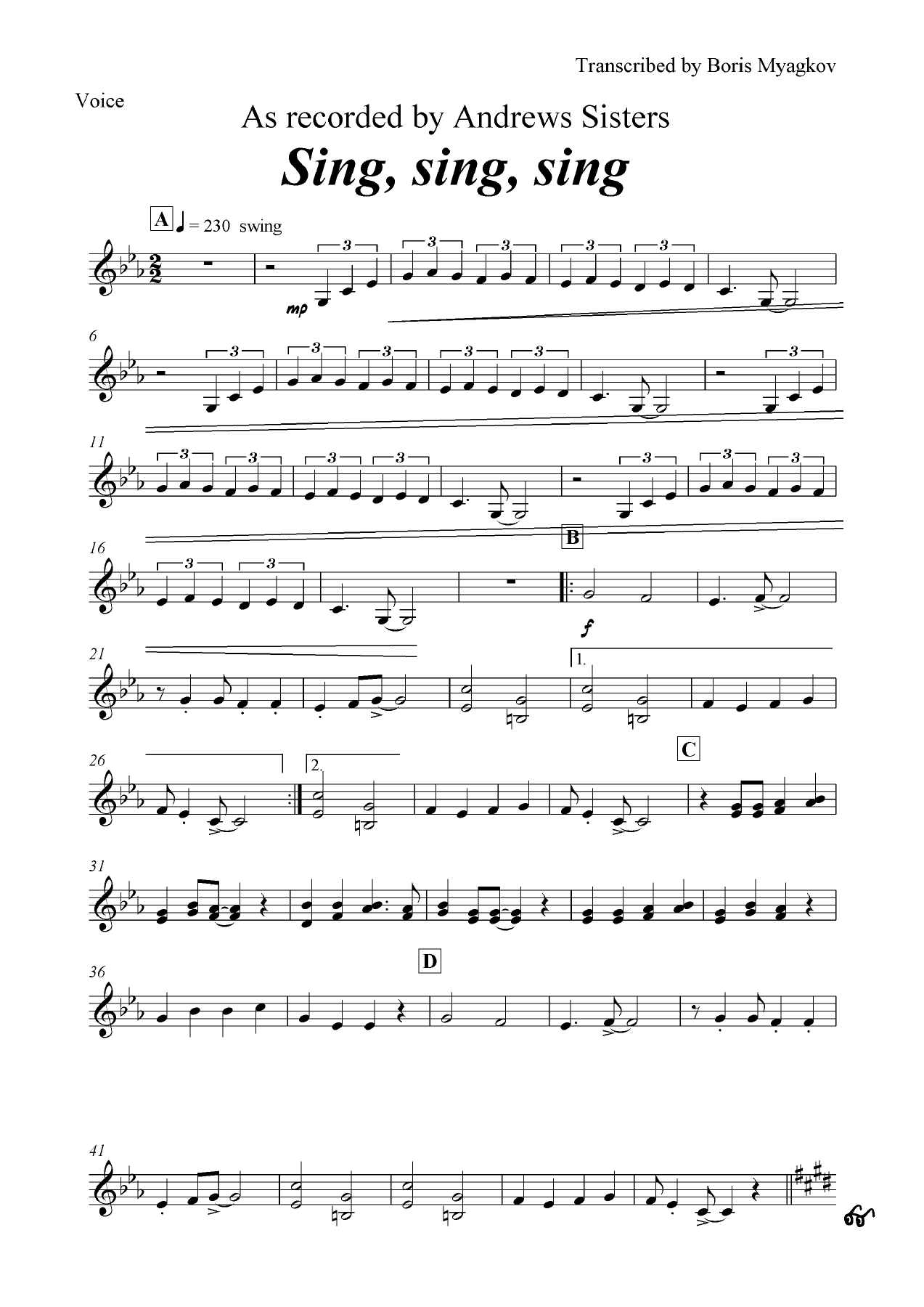
Sing, Sing, Sing (M.X)
Composed by Louis Prima
- Ensemble: Big Band Vocal
- Style: Swing
- Pages: 51
- Instruments (19): Voice, Clarinet, Alto Sax 1, Alto Sax 2, Tenor Sax, Baritone Sax, Trumpet 1, Trumpet 2, Trumpet 3, Trumpet 4, Trumpet 5, Trombone 1, Trombone 2, Trombone 3, Bass Trombone, Banjo, Accordion, Bass, Drum Set
- Difficulty: advanced
- Content: Individual Parts
- Format: PDF Download (Instant)
- Price: $24.99
Louis Prima's iconic "Sing, Sing, Sing" stands as an enduring anthem of the Swing Era, originally composed in 1936 and immortalized by Benny Goodman's electrifying 1938 Carnegie Hall performance. This piece isn't just a jazz standard; it's a cultural touchstone that encapsulates the unbridled energy and rhythmic sophistication of the big band sound. Characterized by its driving tom-tom beat, infectious clarinet melody, and powerful brass interjections, it evokes the grandeur of the dance halls and the sheer exhilaration of swing music at its peak. The original recording, particularly Goodman's, is renowned for its extended form, featuring prominent drum solos and a relentless build-up of intensity, making it a definitive showcase for both individual virtuosity and ensemble power. Mr. X's arrangement of "Sing, Sing, Sing (M.X)" masterfully reinterprets this classic for the contemporary big band while retaining its essential swing character. The musical character is an exhilarating, up-tempo swing, typically performed at a brisk quarter note around 180-200 BPM, maintaining the original's relentless drive. While the original is often in A-flat major, Mr. X's version may feature strategic key changes or modulations to enhance the dynamic arc and provide fresh harmonic colors, building on the bluesy foundations of the original. The mood is celebratory and high-energy, designed to ignite both performers and audience. Mr. X's distinctive approach often involves intricate counter-melodies in the saxophones, punchy brass soli sections that demand precision, and a meticulously crafted shout chorus that builds to a thrilling climax. Expect his signature extended harmonies and sophisticated voicings to add depth without sacrificing the piece's raw swing power. Performance of "Sing, Sing, Sing (M.X)" is a rewarding challenge that showcases the entire ensemble. The iconic melody is initially carried by the clarinet (or lead alto sax, for flexibility), before being passed to the brass and sax sections in powerful soli statements. This arrangement features a prominent, extended drum solo, crucial for capturing the spirit of the original, and offers opportunities for improvised solos over the familiar changes, typically for trumpet, tenor saxophone, or clarinet. Technical challenges include the demanding tempo, precise ensemble articulation, dynamic control, and the stamina required for the brass section. The piece demands excellent rhythmic cohesion and a strong sense of swing from every musician. Specific musical moments, such as the gradual introduction of instruments, the call-and-response between sections, and the explosive final shout chorus, are designed to create a captivating performance. This arrangement is ideally suited for advanced high school, college, community, and professional big bands. Its demands on individual technique, ensemble blend, and rhythmic precision make it an excellent vehicle for developing seasoned musicianship. Bands with strong lead players and a powerful rhythm section will particularly excel. The sheer joy and historical significance of "Sing, Sing, Sing" make it a guaranteed crowd-pleaser and a cornerstone of any big band's repertoire, offering both a nod to jazz history and a vibrant, contemporary performance experience. "Sing, Sing, Sing (M.X)" requires a relentless, driving up-tempo swing feel, with the quarter note ideally between 180-200 BPM. The drum part is foundational, demanding a strong, consistent tom-tom groove throughout, particularly in the opening and during the solo sections. Articulation must be sharp and unified, especially in the brass soli sections; emphasize short, punchy staccatos and precise cut-offs. Lead trumpet players should aim for a bright, powerful sound, while the lead alto (or clarinet) needs a clear, penetrating tone for the melody. Technical challenges include maintaining stamina at tempo, particularly for the brass, and executing the intricate ensemble figures with precision. Rehearse the shout chorus in smaller sections to ensure rhythmic accuracy and dynamic shaping before combining. The extended drum solo is critical; encourage the drummer to study Gene Krupa's original for inspiration on building intensity and thematic development. Ensure all falls and scoops are executed cleanly and uniformly across sections for maximum impact. Dynamic contrasts are key to building excitement; emphasize the gradual crescendos and sudden forte bursts. Q: What instruments and parts are included in this arrangement? A: This arrangement includes full parts for a standard big band instrumentation: 5 saxophones (AATTB), 4 trumpets, 4 trombones, guitar, piano, bass, drums, and a dedicated vocal chart (if a vocalist is used, otherwise the melody is covered by lead alto/clarinet). Q: What is the difficulty level of "Sing, Sing, Sing (M.X)"? A: This arrangement is rated as Advanced. It requires strong individual technique, excellent ensemble precision, and stamina from all players, making it suitable for advanced high school, college, community, and professional big bands. Q: What musical style and historical context does this arrangement represent? A: This arrangement is in the classic Swing style, paying homage to Louis Prima's 1936 composition and Benny Goodman's iconic 1938 recording. It captures the high-energy, dance-oriented big band sound of the late 1930s. Q: What makes Mr. X's arrangement of "Sing, Sing, Sing" unique? A: Mr. X's arrangement is distinguished by its sophisticated voicings, intricate counter-melodies in the saxophones, powerful brass soli sections, and a meticulously crafted shout chorus that builds to a thrilling climax, all while retaining the original's infectious energy. Q: What is the typical performance duration and tempo for this piece? A: The typical performance duration for "Sing, Sing, Sing (M.X)" is approximately 4-6 minutes, depending on the length of improvised solos and the drum feature. It is performed at an exhilarating up-tempo swing, ideally between 180-200 beats per minute.
Questions and answers
- What is included in the Sing, Sing, Sing (M.X) PDF?
- The verified current file contains a conductor score and individual parts across 51 pages.
- How many instruments or parts are listed for Sing, Sing, Sing (M.X)?
- The verified instrumentation list contains 19 entries for this Big Band Vocal arrangement.
- Who is credited for Sing, Sing, Sing (M.X)?
- Composer: Louis Prima.
- What difficulty is listed for Sing, Sing, Sing (M.X)?
- The verified difficulty level is advanced.
- What style is listed for Sing, Sing, Sing (M.X)?
- The catalog lists the style as Swing.
- Can I preview Sing, Sing, Sing (M.X) before buying?
- Yes. The product page provides a preview generated from the current PDF file.
- How is Sing, Sing, Sing (M.X) delivered?
- After successful payment, the digital PDF is made available for download. The displayed price is $24.99.
Musicians Also Search For
Sing, Sing, Sing Louis Prima sheet music • Sing, Sing, Sing Louis Prima big band vocal arrangements • Louis Prima big band vocal charts • Sing, Sing, Sing big band vocal arrangements • Sing, Sing, Sing big band vocal PDF download • Sing, Sing, Sing jazz sheet music • big band vocal sheet music download • Sing, Sing, Sing conductor score PDF • Sing, Sing, Sing individual parts download • Sing, Sing, Sing sheet music PDF • Sing, Sing, Sing Swing charts • Swing big band vocal arrangements • buy Sing, Sing, Sing sheet music • download Sing, Sing, Sing PDF • Sing, Sing, Sing jazz charts • Sing, Sing, Sing printable sheet music • big band vocal repertoire PDF