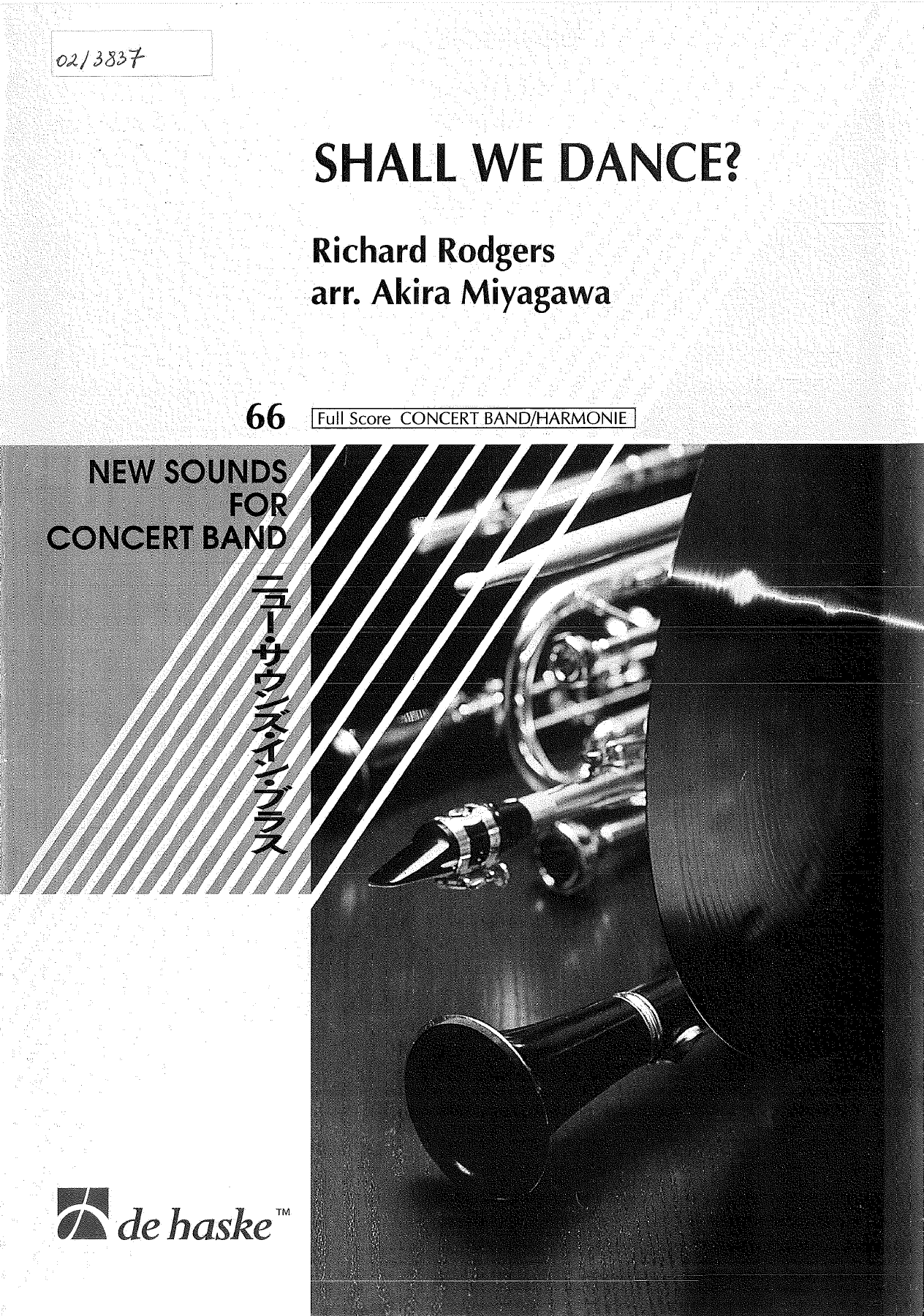
Shall We Dance (A.Miyagawa) sheet music preview

Shall We Dance (A.Miyagawa)

Composed by Richard Rodgers

Arranged by A.Miyagawa

  • Ensemble: Concert Band
  • Style: Musical Theatre
  • Pages: 114
  • Difficulty: advanced
  • Content: Sheet Music
  • Format: PDF Download (Instant)
  • Price: $22.99

Richard Rodgers' timeless "Shall We Dance?" originates from the 1951 musical film *The King and I*, a golden-age Broadway masterpiece that solidified Rodgers and Hammerstein's legacy as unparalleled composers of theatrical song. While not traditionally categorized as a jazz standard, its enduring melody and sophisticated harmonic structure have made it a favorite for reinterpretation across various genres. The original piece, sung by Deborah Kerr and Yul Brynner, embodies the elegance and romanticism of mid-20th-century musical theatre, characterized by its graceful waltz tempo and soaring melodic lines. It evokes a sense of refined joy and burgeoning romance, capturing the iconic ballroom scene where the King of Siam learns to dance Western style. Miyagawa's arrangement, while honoring this theatrical heritage, reimagines the piece for the modern concert band, blending its inherent charm with contemporary ensemble textures. A.Miyagawa's distinctive approach to "Shall We Dance" for concert band transforms the original 3/4 waltz into a vibrant and dynamic experience, while retaining its fundamental emotional core. The arrangement masterfully navigates between moments of lush, sweeping lyricism and sections of rhythmic drive, often employing a flexible tempo feel that allows for expressive rubato in the initial statements before settling into a more consistent, yet still fluid, pulse. Miyagawa is known for their imaginative scoring, and here, they utilize the full spectrum of the concert band's timbre. Expect rich, layered voicings across the woodwind and brass sections, creating a tapestry of sound that supports the iconic melody. The arrangement frequently features interplay between different instrumental families, with woodwind soli passages contrasting with powerful brass fanfares, showcasing the ensemble's versatility. Performance of this arrangement offers both technical challenges and immense musical rewards. The melody is artfully distributed, initially appearing in the upper woodwinds (flutes, clarinets) for a delicate, ethereal quality, then transitioning to the brass (trumpets, horns) for broader, more majestic statements. There are no explicit improvised solo sections, but the arrangement provides ample opportunities for expressive phrasing and dynamic contrast, particularly in the thematic development sections where Miyagawa introduces subtle harmonic extensions and counter-melodies. Technical demands include intricate rhythmic figures, precise articulation, and the ability to maintain a cohesive ensemble sound through varying dynamics and textures. The piece culminates in a grand, uplifting finale that truly showcases the power and brilliance of the full concert band, leaving both performers and audience with a sense of exhilaration. This arrangement is ideally suited for advanced high school, college, community, and professional concert bands. Its sophisticated scoring and nuanced musicality require an ensemble with strong individual players and a conductor capable of shaping a compelling narrative. The 114 pages of score and parts reflect the depth and detail of Miyagawa's writing, promising a substantial and enriching performance experience. It serves as an excellent program choice for concerts that aim to bridge the gap between traditional musical theatre repertoire and contemporary concert band literature, offering a fresh perspective on a beloved classic. Conductors should approach "Shall We Dance (A.Miyagawa)" with an emphasis on lyrical phrasing and dynamic control. While the original is a waltz, Miyagawa's arrangement often implies a broader, more flexible 3/4 feel, allowing for expressive rubato in the opening and transitional sections. Maintain a consistent, yet flowing, pulse during the main thematic statements. Key technical challenges include achieving blend and balance across the diverse instrumentation, particularly in the layered woodwind and brass voicings. Pay close attention to articulation markings, ensuring clarity in rhythmic passages and legato smoothness in melodic lines. Rehearsal time should be dedicated to shaping the long melodic phrases and coordinating dynamic swells and diminuendos. No special techniques like mutes or extended brass effects are required, focusing instead on pure tone production and ensemble precision. The grand finale requires strong brass and percussion presence without overpowering the woodwinds. Q: What instruments are included in this arrangement? A: This arrangement is scored for a full concert band, encompassing standard woodwind, brass, percussion, and string bass parts. The 114 pages include a comprehensive score and individual parts for each instrument. Q: What is the difficulty level of this arrangement? A: This arrangement is considered advanced, suitable for high school, college, community, and professional concert bands. It requires strong individual musicianship and a cohesive ensemble capable of nuanced musicality. Q: What musical style and historical context does "Shall We Dance" represent? A: "Shall We Dance" originates from the 1951 musical film *The King and I*, representing the golden age of Broadway musical theatre. A.Miyagawa's arrangement reinterprets this classic for concert band while retaining its elegant and romantic character. Q: What makes A.Miyagawa's arrangement of "Shall We Dance" unique? A: Miyagawa's arrangement is unique for its imaginative scoring, transforming the original waltz into a dynamic concert band piece with rich, layered voicings, interplay between instrumental families, and sophisticated harmonic extensions, all while honoring the original's melodic charm. Q: What is the typical performance duration and tempo feel for this piece? A: The typical performance duration is approximately 4-5 minutes. The tempo feel is a flexible 3/4, allowing for expressive rubato in certain sections, evolving into a consistent yet flowing waltz tempo for the main themes.

Musicians Also Search For

Shall We Dance A.Miyagawa PDFShall We Dance A.Miyagawa sheet musicShall We Dance arranged by A.MiyagawaA.Miyagawa concert band chartsA.Miyagawa jazz arrangements PDFShall We Dance Richard Rodgers sheet musicShall We Dance Richard Rodgers concert band arrangementRichard Rodgers concert band chartsShall We Dance concert band arrangementShall We Dance concert band PDF downloadShall We Dance jazz ensemble sheet musicconcert band sheet music instant downloadShall We Dance sheet music with partsShall We Dance Musical Theatre chartMusical Theatre concert band arrangementsbuy Shall We Dance sheet music onlinedownload Shall We Dance PDFShall We Dance jazz chartbest A.Miyagawa concert band arrangementsRichard Rodgers songs arranged by A.MiyagawaShall We Dance printable sheet musicconcert band repertoire PDF

All arrangements by A.Miyagawa All Richard Rodgers sheet music