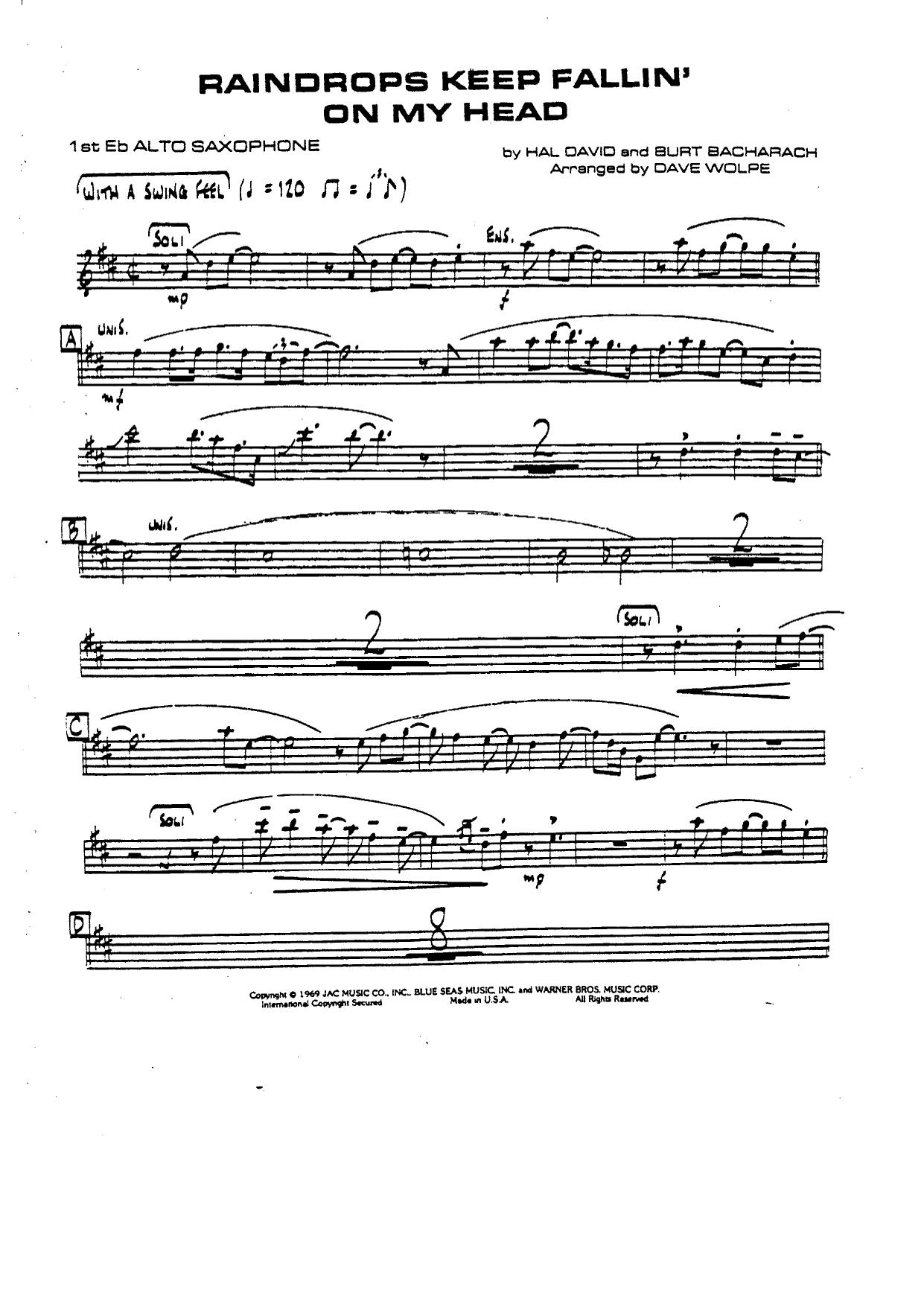
Raindrops Keep Falling On My Head (D.Wolpe)
Composed by Burt Bacharach
Arranged by Dave Wolpe
- Ensemble: Big Band
- Pages: 36
- Instruments (17): 1st Eb Alto Saxophone, 2nd Eb Alto Saxophone, 1st Bb Tenor Saxophone, 2nd Bb Tenor Saxophone, Eb Baritone Saxophone, 1st Bb Trumpet, 2nd Bb Trumpet, 3rd Bb Trumpet, 4th Bb Trumpet, 1st Trombone, 2nd Trombone, 3rd Trombone, Bass Trombone, Guitar, Piano, Bass, Drums
- Difficulty: medium
- Content: Individual Parts
- Format: PDF Download (Instant)
- Price: $24.99
Burt Bacharach and Hal David’s timeless composition "Raindrops Keep Fallin' on My Head," originally introduced in the 1969 motion picture *Butch Cassidy and the Sundance Kid* and famously popularized by B.J. Thomas, occupies a unique space where sophisticated pop craftsmanship meets effortless cool. Capturing the optimistic, sun-drenched yet reflective spirit of late-1960s cinematic songwriting, the tune has long invited jazz interpretation due to its deceptive harmonic depth and memorable melodic contours. When legendary arranger Dave Wolpe applied his pen to the chart, he transformed this Academy Award-winning pop classic into a masterclass of accessible big band arranging, blending a breezy, driving swing feel with sophisticated horn voicings that highlight the inherent jazz qualities of Bacharach's original writing. At a comfortable medium-swing tempo, Wolpe’s chart immediately establishes an infectious groove that balances laid-back relaxation with forward momentum. The arrangement opens with a bright, conversational vamp before trading the iconic melody smoothly across the ensemble. Brass and reed sections engage in clever call-and-response figures, punctuated by tasty drum fills and subtle guitar or piano comping guidelines. The emotional landscape shifts fluidly from playful nostalgia to exuberant communal joy, driven by rich extended harmonies, clever chromatic voice-leading, and classic big band dynamic contours that keep both performers and listeners thoroughly engaged from the downbeat to the final chord. Wolpe is widely celebrated for his uncanny ability to write charts that sound remarkably sophisticated while remaining remarkably accessible to developing players. In this arrangement, he utilizes tight saxophone solis and traditional block-voicing for the brass that maximize the ensemble's resonance without demanding hyper-extended range or virtuosic gymnastics. The arrangement features open solo space—typically designated for trumpet or alto saxophone—allowing individual players to stretch out over standard blues-infused changes derived from the tune's bridge. A well-crafted shout chorus builds the tension naturally, utilizing dynamic contrast and rhythmic syncopation before dropping back down for a clever, memorable tag ending that leaves a lasting impression on the audience. Advanced high school groups, college jazz ensembles, and professional community big bands will find this chart to be an exceptionally rewarding addition to their repertoire. Because Wolpe carefully balances educational utility with authentic jazz style, sections can focus heavily on articulation, section blend, and light, driving swing phrasing without getting bogged down by overly dense polyrhythms or extreme technical hurdles. It serves as an ideal program centerpiece for any concert looking to bridge the gap between audience-pleasing nostalgia and genuine, swinging big band artistry. Achieving the authentic, buoyant feel of this Dave Wolpe chart requires strict attention to light, articulated swing phrasing. The rhythm section is the engine room here; the drummer should maintain a steady, unhurried ride cymbal pattern with a gentle hi-hat chick on beats two and four, avoiding heavy heavy-handedness to keep the texture transparent. Horn players must pay close attention to marked dynamic contrasts, ensuring that background figures remain strictly subservient to whichever section or soloist is carrying the primary thematic material. Pay special attention to short, clipped accents on off-beats to maximize the rhythmic "bounce" inherent to the arrangement. Rehearsals should initially isolate the saxophone soli to lock in intonation and unified articulation before blending it with the brass counter-lines. No specialized mutes are strictly required, allowing the band to focus entirely on pure tone quality, blend, and swinging integration. Q: What instruments and parts are included in this big band arrangement? A: The 36-page instrumentation package includes a standard 17-instrument big band setup: 5 saxophones (Alto 1, Alto 2, Tenor 1, Tenor 2, Baritone), 4 trumpets, 4 trombones, and a full rhythm section comprising piano, bass, drums, and guitar. Q: What is the difficulty level of this arrangement? A: This chart is graded as medium-easy to medium, making it an ideal fit for accomplished high school jazz bands, college ensembles, and community big bands looking for accessible yet authentic swing repertoire. Q: What musical style and historical context does this chart represent? A: It is arranged in a classic medium-swing style, taking Burt Bacharach's 1969 Academy Award-winning pop hit from *Butch Cassidy and the Sundance Kid* and adapting it into the tradition of mid-century big band jazz. Q: What makes Dave Wolpe's arrangement unique? A: Wolpe expertly balances rich, sophisticated harmonic voicings and a brilliant shout chorus with transparent scoring that keeps technical demands manageable, allowing developing ensembles to sound polished and professional. Q: What is the recommended tempo and performance duration for this piece? A: The arrangement is set at a comfortable medium-swing tempo (around 120-126 BPM), resulting in a performance duration of approximately 3 to 4 minutes depending on the length of the improvised solos.
Questions and answers
- What is included in the Raindrops Keep Falling On My Head (D.Wolpe) PDF?
- The verified current file contains individual parts across 36 pages.
- How many instruments or parts are listed for Raindrops Keep Falling On My Head (D.Wolpe)?
- The verified instrumentation list contains 17 entries for this Big Band arrangement.
- Who is credited for Raindrops Keep Falling On My Head (D.Wolpe)?
- Composer: Burt Bacharach. Arranger: Dave Wolpe.
- What difficulty is listed for Raindrops Keep Falling On My Head (D.Wolpe)?
- The verified difficulty level is medium.
- Can I preview Raindrops Keep Falling On My Head (D.Wolpe) before buying?
- Yes. The product page provides a preview generated from the current PDF file.
- How is Raindrops Keep Falling On My Head (D.Wolpe) delivered?
- After successful payment, the digital PDF is made available for download. The displayed price is $24.99.
Musicians Also Search For
Raindrops Keep Falling On My Head Dave Wolpe PDF • Raindrops Keep Falling On My Head Dave Wolpe sheet music • Raindrops Keep Falling On My Head arranged by Dave Wolpe • Dave Wolpe big band charts • Dave Wolpe jazz arrangements PDF • Raindrops Keep Falling On My Head Burt Bacharach sheet music • Raindrops Keep Falling On My Head Burt Bacharach big band arrangements • Burt Bacharach big band charts • Raindrops Keep Falling On My Head big band arrangements • Raindrops Keep Falling On My Head big band PDF download • Raindrops Keep Falling On My Head jazz sheet music • big band sheet music download • Raindrops Keep Falling On My Head individual parts download • Raindrops Keep Falling On My Head sheet music PDF • buy Raindrops Keep Falling On My Head sheet music • download Raindrops Keep Falling On My Head PDF • Raindrops Keep Falling On My Head jazz charts • best Dave Wolpe big band arrangements • Burt Bacharach arranged by Dave Wolpe • Raindrops Keep Falling On My Head printable sheet music • big band repertoire PDF