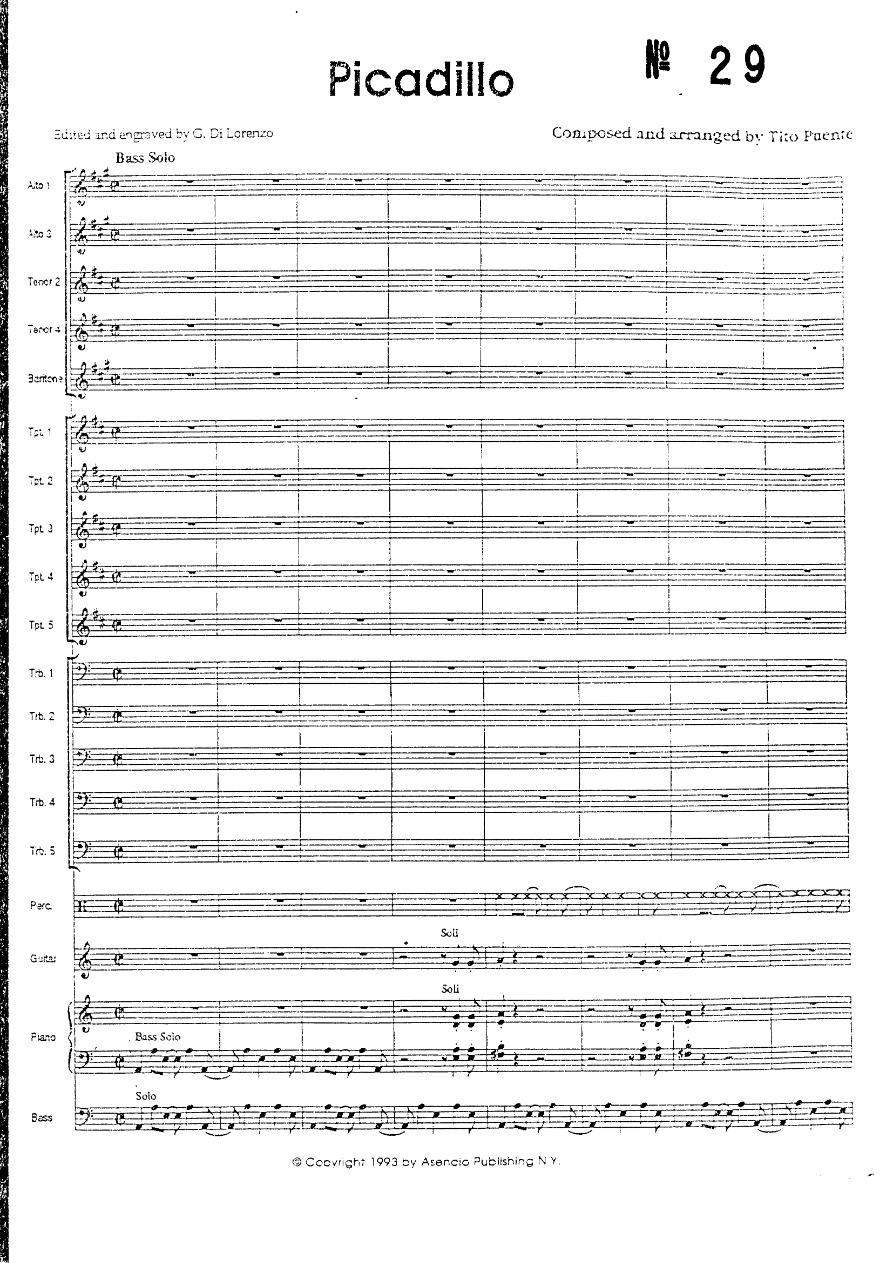
Picadillo (T.Puente)
Composed by Tito Puente
Arranged by T. Puente
- Ensemble: Big Band
- Style: Salsa
- Pages: 50
- Instruments (17): Alto Saxophone 1, Alto Saxophone 2, Tenor Saxophone 1, Tenor Saxophone 2, Baritone Saxophone, Trumpet 1, Trumpet 2, Trumpet 3, Trumpet 4, Trombone 1, Trombone 2, Trombone 3, Bass Trombone, Piano, Bass, Drums, Guitar
- Difficulty: advanced
- Content: Individual Parts
- Format: PDF Download (Instant)
- Price: $18.99
## SECTION 1: Description Tito Puente's "Picadillo" stands as an iconic testament to the golden age of Latin jazz, a vibrant mambo standard that first captivated audiences in the mid-20th century. Composed and famously recorded by the "King of Latin Music" himself, Tito Puente, this piece embodies the electrifying energy and sophisticated rhythmic complexity that defined his groundbreaking contributions to popular music. Originating in the 1950s, "Picadillo" is more than just a song; it's a cultural touchstone, a definitive example of the mambo craze that swept the globe, showcasing Puente's unparalleled ability to fuse traditional Cuban rhythms with big band jazz instrumentation and improvisation. Its enduring popularity makes it a cornerstone of the Latin jazz repertoire, instantly recognizable for its infectious groove and exhilarating melodic lines. This arrangement, penned by Tito Puente himself, presents "Picadillo" in its most authentic and exhilarating big band form. The musical character is defined by an unrelenting, up-tempo Latin groove, specifically a driving mambo feel in 4/4 time. The primary key is typically C minor, lending a dramatic and fiery intensity to the melodic contours. The mood is celebratory, energetic, and undeniably danceable, evoking the vibrant atmosphere of a 1950s Palladium Ballroom performance. Puente's arranging approach is distinctive for its masterfully orchestrated brass and saxophone soli sections, which weave intricate counter-melodies and call-and-response patterns over the powerful rhythm section. Expect robust, full-ensemble shout choruses that build tension and excitement, punctuated by sharp, precise rhythmic figures that demand tight ensemble playing. The arrangement features the melody initially carried by the saxophone section, often in unison or tight harmonies, before being passed to the brass. There are ample opportunities for featured solos, typically for tenor saxophone and trumpet, allowing improvisers to explore the rich harmonic landscape of the mambo. Technical challenges include the demanding tempo, requiring exceptional rhythmic precision from all sections, particularly the rhythm section's intricate percussion layers. The brass sections will need strong endurance and articulation for the rapid-fire figures and sustained high notes. Performing "Picadillo" is incredibly rewarding due to its infectious energy and the sheer joy it brings to both musicians and audiences. The interplay between sections, the explosive dynamics, and the opportunity to lock into such a powerful groove make it a standout performance piece. This arrangement is ideally suited for college and advanced high school jazz ensembles, as well as community and professional big bands. Its authenticity and the demand for rhythmic accuracy and ensemble blend make it an excellent vehicle for developing sophisticated Latin jazz performance skills. Bands with strong rhythm sections and confident soloists will find this piece particularly rewarding, as it provides a comprehensive workout in the mambo style, pushing musicians to achieve a high level of precision and stylistic understanding. ## SECTION 2: Performance Notes Conductors should emphasize a relentless, driving mambo feel from the outset, ensuring the rhythm section establishes a solid foundation with clear articulation of the clave. The tempo should be bright and consistent, around quarter note = 200-220 bpm, allowing for both rhythmic clarity and exhilarating energy. A key technical challenge lies in the precise articulation and rhythmic accuracy required from the brass and saxophone sections during the rapid soli passages and shout choruses; encourage a unified, staccato approach where marked, with clean releases. For the rhythm section, particular attention should be paid to the conga and timbale parts, which are integral to the authentic mambo feel and must interlock seamlessly with the bass and piano. Rehearsal tips include isolating fast rhythmic figures and practicing them slowly with a metronome, gradually increasing tempo. Encourage soloists to immerse themselves in the mambo style, focusing on rhythmic phrasing and melodic improvisation that complements the piece's character. ## SECTION 3: FAQ Q: What instruments and parts are included in this arrangement? A: This arrangement is scored for a standard 17-piece big band, including Alto Saxophone 1 & 2, Tenor Saxophone 1 & 2, Baritone Saxophone, Trumpet 1-4, Trombone 1-4, Piano, Bass, Drums, and auxiliary percussion (e.g., congas, timbales). Q: What is the difficulty level of this "Picadillo" arrangement? A: This arrangement is considered advanced, suitable for college, community, and professional big bands, as well as highly skilled high school ensembles. It demands strong rhythmic precision, advanced articulation, and endurance from all sections. Q: What is the musical style and historical context of "Picadillo"? A: "Picadillo" is a classic up-tempo mambo in the Latin jazz style, composed and arranged by Tito Puente. It originated in the 1950s and is a definitive example of the era's vibrant Latin dance music. Q: What makes this specific arrangement by T. Puente unique? A: This arrangement is unique because it is penned by Tito Puente himself, offering an authentic and definitive interpretation of his iconic mambo. It features his signature intricate brass and saxophone soli, powerful shout choruses, and a demanding, exhilarating rhythmic framework. Q: What is the typical performance duration and tempo for this piece? A: The typical performance duration for "Picadillo" is approximately 4-6 minutes, depending on the number and length of improvised solos. It is performed at a fast, driving mambo tempo, generally around quarter note = 200-220 bpm.