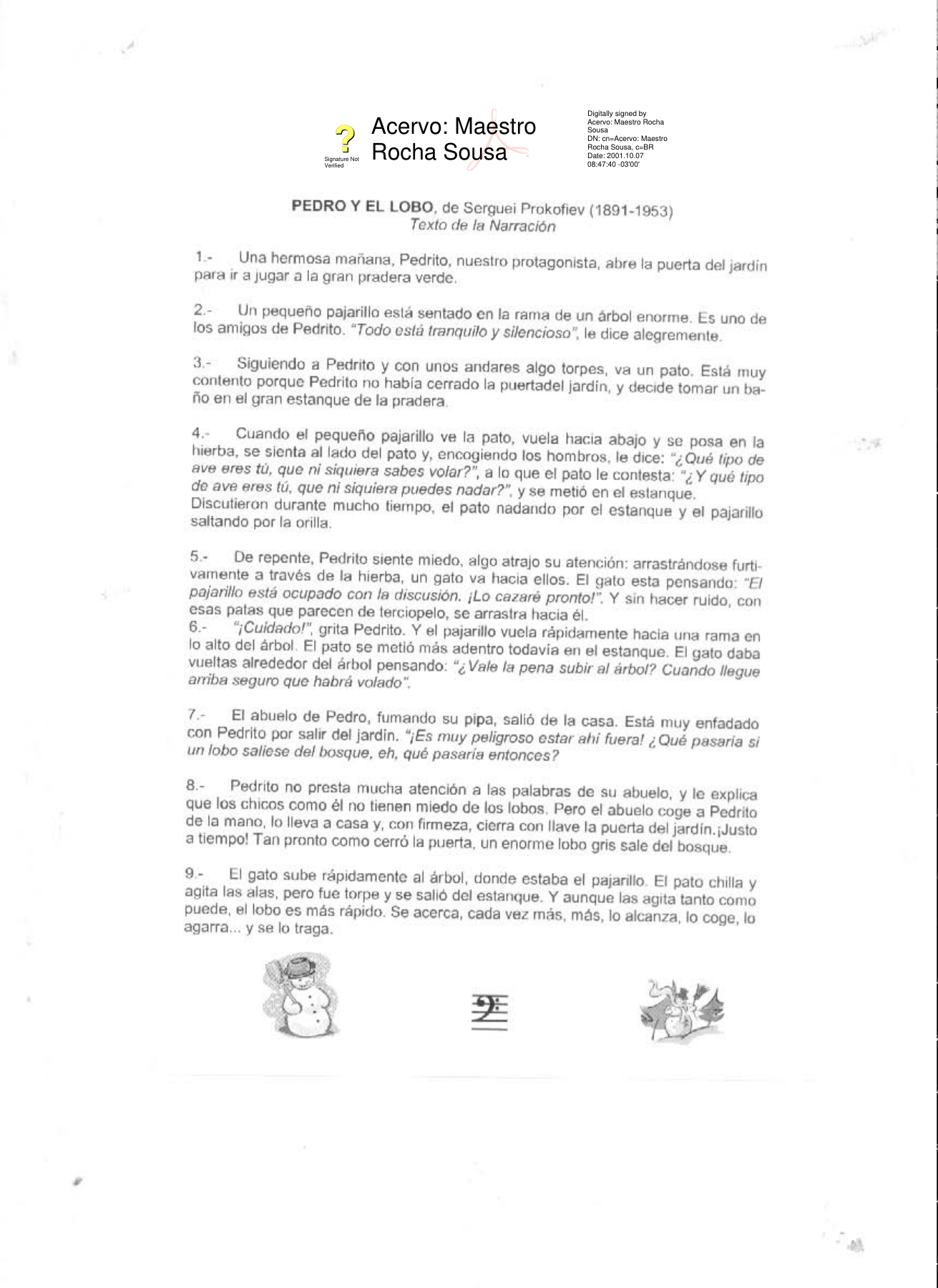
Peter And Wolf (J.Curnow) sheet music preview

Peter And Wolf (J.Curnow)

Composed by Sergei Prokofiev

Arranged by Jim Curnow

  • Ensemble: Concert Band
  • Style: Film Music
  • Pages: 108
  • Difficulty: advanced
  • Content: Sheet Music
  • Format: PDF Download (Instant)
  • Price: $22.99

Sergei Prokofiev's iconic "Peter and the Wolf" (Op. 67), originally composed in 1936, stands as a cornerstone of classical music literature designed to introduce children to the instruments of the orchestra. This timeless symphonic fairy tale, renowned for its vivid characterizations through specific instrumental timbres and leitmotifs, has transcended its original educational purpose to become a beloved narrative work performed globally. While not a jazz standard in its original form, its enduring popularity and the distinct musical personalities of its characters offer fertile ground for reinterpretation across various genres, making it a natural candidate for adaptation into the expansive and expressive idiom of the concert band. The original's masterful storytelling through sound, where each character—from the bird (flute) to the wolf (French horns)—is instantly recognizable, continues to captivate audiences of all ages. Jim Curnow's masterful arrangement of "Peter and the Wolf" for concert band transforms Prokofiev's orchestral masterpiece into a vibrant and accessible experience for contemporary ensembles. Rather than attempting a literal transcription, Curnow approaches the original with a keen understanding of the modern concert band's capabilities, employing a rich palette of wind, brass, and percussion colors to reimagine the familiar themes. The musical character maintains the original's narrative flow and emotional arc, transitioning seamlessly from the playful innocence of Peter's theme to the ominous tension of the wolf's entrance and the triumphant, albeit bittersweet, ending. While the original is a classical work, Curnow's treatment imbues it with a cinematic grandeur, leveraging the full dynamic range and timbral diversity of the concert band to create a soundscape reminiscent of classic film scores—epic, evocative, and deeply engaging. Curnow’s signature arranging style is evident throughout this 108-page score. Known for his robust orchestrations and pedagogically sound writing, he effectively distributes the original's melodic and harmonic material across the concert band, ensuring every section contributes meaningfully. Expect soaring woodwind lines, powerful brass fanfares, and intricate percussion writing that enhances the dramatic narrative. While maintaining Prokofiev's melodic integrity, Curnow employs sophisticated voicings and dynamic contrasts that elevate the piece beyond a mere arrangement, making it a significant work in its own right. The arrangement features prominent melodic statements shared among various sections, allowing for showcasing individual instrumental groups. Technical challenges include precise articulation, dynamic control across a wide range, and maintaining rhythmic clarity through Prokofiev's often intricate melodic contours. The rewarding aspect lies in bringing this beloved story to life with the rich sonorities of a concert band, offering both performers and audiences a fresh perspective on a classic. This arrangement is ideally suited for advanced high school, collegiate, and community concert bands. Its demands for nuanced phrasing, excellent intonation, and rhythmic precision require an ensemble with solid fundamental skills and a mature musical understanding. The extensive score provides ample material for study and performance, making it an excellent choice for a concert program centerpiece or an educational outreach performance. The opportunity to explore a narrative piece with such distinct musical characterizations makes it a highly engaging and enriching experience for musicians and listeners alike. Conductors should prioritize clarity of articulation and dynamic contrast to effectively convey Prokofiev's narrative through Curnow's arrangement. The tempo markings are generally faithful to the original's pacing, but flexibility is key to emphasizing the dramatic shifts; allow for rubato in lyrical passages and maintain rhythmic drive during more intense sections. A primary technical challenge lies in balancing the intricate woodwind lines with the powerful brass, ensuring transparency without sacrificing impact. Focus on precise ensemble entrances and releases, particularly in the rapid character changes. Rehearsal time should be dedicated to developing distinct timbral qualities for each character's theme—for instance, a light, agile flute for the bird versus a dark, sustained bassoon for the grandfather. Percussionists must be meticulous with their cues and dynamics, as their parts are crucial for storytelling. No special extended techniques are explicitly required, but expressive phrasing and careful attention to musical storytelling will elevate the performance. Q: What instruments and parts are included in this arrangement? A: This concert band arrangement includes a full complement of standard wind, brass, and percussion parts, typically encompassing flutes, oboes, clarinets, bassoons, saxophones, trumpets, French horns, trombones, euphonium, tuba, and a comprehensive percussion section including timpani, snare drum, bass drum, cymbals, and other orchestral percussion as specified in the score. Q: What is the difficulty level of Jim Curnow's "Peter and the Wolf" arrangement? A: This arrangement is considered advanced, suitable for high school, collegiate, and community concert bands. It demands strong technical proficiency, advanced musicality, precise articulation, and a mature understanding of dynamics and ensemble balance. Q: What musical style does this arrangement represent, and what is its historical context? A: While the original "Peter and the Wolf" is a classical symphonic fairy tale from 1936, Jim Curnow's arrangement for concert band reinterprets it with a grand, cinematic musical style, leveraging the full timbral and dynamic range of the modern concert band. Q: What makes Jim Curnow's arrangement of "Peter and the Wolf" unique? A: Curnow's arrangement is unique for its skillful adaptation of Prokofiev's orchestral masterpiece to the concert band idiom, maintaining the original's narrative integrity while employing sophisticated voicings, robust orchestrations, and dynamic contrasts that highlight the band's capabilities, creating a fresh and powerful interpretation. Q: What is the approximate performance duration or typical tempo of this piece? A: The performance duration of "Peter and the Wolf" typically ranges from 25 to 30 minutes, depending on the conductor's interpretation and chosen tempos. The piece features a variety of tempos, from moderate and lyrical to brisk and energetic, reflecting the narrative's progression.

Musicians Also Search For

Peter And Wolf Jim Curnow PDFPeter And Wolf Jim Curnow sheet musicPeter And Wolf arranged by Jim CurnowJim Curnow concert band chartsJim Curnow jazz arrangements PDFPeter And Wolf Sergei Prokofiev sheet musicPeter And Wolf Sergei Prokofiev concert band arrangementSergei Prokofiev concert band chartsPeter And Wolf concert band arrangementPeter And Wolf concert band PDF downloadPeter And Wolf jazz ensemble sheet musicconcert band sheet music instant downloadPeter And Wolf sheet music with partsPeter And Wolf Film Music chartFilm Music concert band arrangementsbuy Peter And Wolf sheet music onlinedownload Peter And Wolf PDFPeter And Wolf jazz chartbest Jim Curnow concert band arrangementsSergei Prokofiev songs arranged by Jim CurnowPeter And Wolf printable sheet musicconcert band repertoire PDF

All arrangements by Jim Curnow All Sergei Prokofiev sheet music