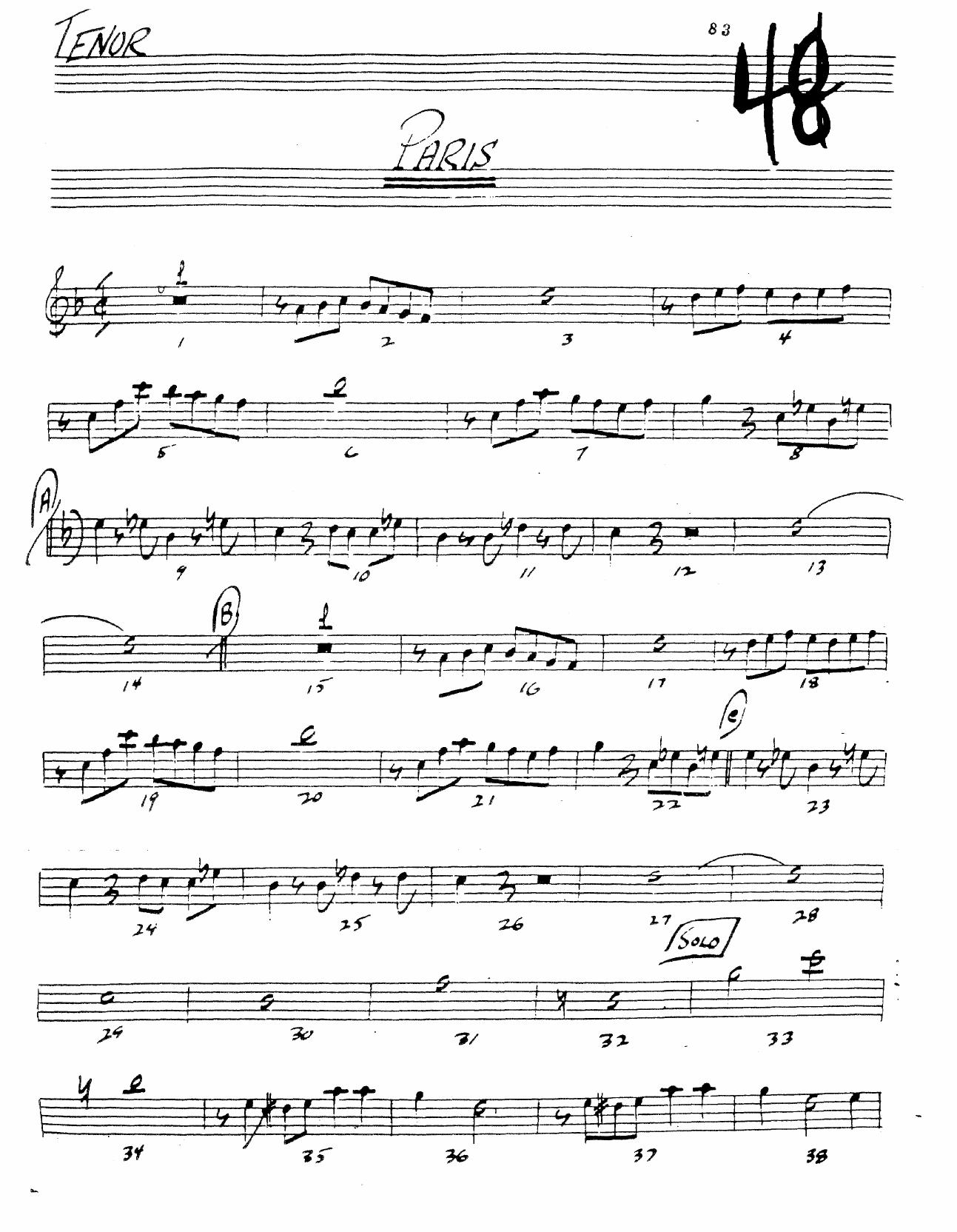
Paris In The Springtime - Dave Pell Octet - Ts,Bs,Trp,Trb+Rhythm sheet music preview

Paris In The Springtime - Dave Pell Octet - Ts,Bs,Trp,Trb+Rhythm

Composed by Jerome Kern

  • Ensemble: Small Ensemble
  • Pages: 27
  • Instruments (8): Tenor Saxophone, Baritone Saxophone, Trumpet, Trombone, Drums, Bass, Guitar, Piano
  • Difficulty: easy
  • Content: Individual Parts
  • Format: PDF Download (Instant)
  • Price: $12.99

Jerome Kern's "Paris In The Springtime" emerges from the golden age of American songwriting, a sophisticated and evocative tune that captures the romantic essence of its title. Composed in 1932 for the Broadway musical *Music in the Air*, this piece quickly became a beloved standard, embodying the elegance and melodic richness characteristic of the Great American Songbook. While not as frequently performed as some of Kern's other works, it maintains a cherished place among connoisseurs of classic jazz and show tunes, often celebrated for its flowing melodic lines and harmonic ingenuity. Its enduring appeal lies in its ability to transport listeners to a world of Parisian charm and wistful romance, making it a perfect vehicle for jazz interpretation. This particular arrangement, inspired by the distinctive sound of the Dave Pell Octet, presents "Paris In The Springtime" as a medium-swing exploration in the key of C major. The overall mood is one of sophisticated cool, characterized by a relaxed yet propulsive groove that invites both introspection and gentle rhythmic sway. The arrangement maintains a consistent medium swing feel throughout, eschewing abrupt tempo changes for a smooth, cohesive journey. The energy is understated but vibrant, allowing the melodic beauty of Kern's composition to shine through. The Dave Pell Octet's signature approach, known for its West Coast cool jazz aesthetic, emphasizes clean lines, transparent voicings, and a refined ensemble sound. The arranger's treatment of this standard is a masterclass in small ensemble writing, showcasing the unique blend of a four-horn front line (Tenor Sax, Baritone Sax, Trumpet, Trombone) against a supportive rhythm section (Piano, Bass, Drums). The melody is initially carried by the tenor saxophone, offering a warm, lyrical interpretation, often doubled or harmonized subtly by other horns to create a rich texture without sacrificing clarity. Distinctive features include tightly voiced soli sections where the horns move as a unified block, reminiscent of the Pell Octet's precise ensemble work. While there isn't a traditional shout chorus, the arrangement builds intensity through layered counterpoint and dynamic contrasts, particularly in the ensemble passages. Solos are featured for both the tenor saxophone and trumpet, allowing for individual improvisation over the tune's elegant chord changes. The technical challenges lie primarily in achieving a seamless blend and precise articulation within the horn section, as well as maintaining the consistent, relaxed swing feel. The reward for performers is the opportunity to inhabit a classic cool jazz sound, delivering a performance that is both technically polished and emotionally resonant. This arrangement is ideally suited for college-level jazz ensembles, community big bands with strong section players, or professional small groups seeking to expand their repertoire with a sophisticated, historically informed piece. Its demands on blend, intonation, and rhythmic precision make it an excellent teaching tool for developing ensemble cohesion, while the solo opportunities provide space for individual expression within a structured framework. Conductors should emphasize a relaxed, medium-swing feel from the outset, maintaining a consistent pulse without rushing. The primary technical challenge lies in achieving a precise, balanced blend within the four-horn front line, particularly during the tightly voiced soli sections. Encourage players to listen across the section and match articulation and dynamics carefully. The rhythm section should lay down a steady, unobtrusive foundation, with the bass providing a walking line that propels the swing without becoming overly aggressive. Piano voicings should be sparse and supportive, complementing the horns. No special techniques like plunger mutes or falls are explicitly notated, allowing for a clean, West Coast-style delivery. Rehearsal time should focus on intonation within the horn voicings and ensuring a cohesive ensemble sound that evokes the cool jazz aesthetic. Q: What instruments and parts are included in this arrangement? A: This arrangement is scored for a small jazz ensemble of seven instruments: Tenor Saxophone, Baritone Saxophone, Trumpet, Trombone, Piano, Bass, and Drums. All individual parts are included. Q: What is the difficulty level of "Paris In The Springtime - Dave Pell Octet"? A: This arrangement is rated as medium-advanced. It requires proficient instrumentalists capable of navigating intricate ensemble voicings, maintaining precise intonation, and executing improvised solos over standard jazz changes. Q: What musical style and historical context does this arrangement represent? A: This arrangement is firmly rooted in the cool jazz style of the 1950s, specifically inspired by the Dave Pell Octet. The original composition by Jerome Kern dates back to 1932, placing it within the Great American Songbook tradition. Q: What makes this specific arrangement unique compared to other versions of "Paris In The Springtime"? A: This arrangement stands out for its faithful recreation of the Dave Pell Octet's signature sound, characterized by a four-horn front line, tight voicings, and a relaxed, medium-swing feel. It offers a sophisticated, understated interpretation of the classic standard. Q: What is the typical performance duration and tempo for this piece? A: The typical performance duration for this arrangement is approximately 3:30 to 4:30 minutes, depending on the length of the improvised solos. It is designed to be performed at a consistent medium swing tempo, around 120-130 beats per minute.

Questions and answers

What is included in the Paris In The Springtime - Dave Pell Octet - Ts,Bs,Trp,Trb+Rhythm PDF?
The verified current file contains individual parts across 27 pages.
How many instruments or parts are listed for Paris In The Springtime - Dave Pell Octet - Ts,Bs,Trp,Trb+Rhythm?
The verified instrumentation list contains 8 entries for this Small Ensemble arrangement.
Who is credited for Paris In The Springtime - Dave Pell Octet - Ts,Bs,Trp,Trb+Rhythm?
Composer: Jerome Kern.
What difficulty is listed for Paris In The Springtime - Dave Pell Octet - Ts,Bs,Trp,Trb+Rhythm?
The verified difficulty level is easy.
Can I preview Paris In The Springtime - Dave Pell Octet - Ts,Bs,Trp,Trb+Rhythm before buying?
Yes. The product page provides a preview generated from the current PDF file.
How is Paris In The Springtime - Dave Pell Octet - Ts,Bs,Trp,Trb+Rhythm delivered?
After successful payment, the digital PDF is made available for download. The displayed price is $12.99.

Musicians Also Search For

Paris In The Springtime - Dave Pell Octet - Ts,Bs,Trp,Trb+Rhythm Jerome Kern sheet musicParis In The Springtime - Dave Pell Octet - Ts,Bs,Trp,Trb+Rhythm Jerome Kern small ensemble arrangementsJerome Kern small ensemble chartsParis In The Springtime - Dave Pell Octet - Ts,Bs,Trp,Trb+Rhythm small ensemble arrangementsParis In The Springtime - Dave Pell Octet - Ts,Bs,Trp,Trb+Rhythm small ensemble PDF downloadParis In The Springtime - Dave Pell Octet - Ts,Bs,Trp,Trb+Rhythm jazz sheet musicsmall ensemble sheet music downloadParis In The Springtime - Dave Pell Octet - Ts,Bs,Trp,Trb+Rhythm individual parts downloadParis In The Springtime - Dave Pell Octet - Ts,Bs,Trp,Trb+Rhythm sheet music PDFbuy Paris In The Springtime - Dave Pell Octet - Ts,Bs,Trp,Trb+Rhythm sheet musicdownload Paris In The Springtime - Dave Pell Octet - Ts,Bs,Trp,Trb+Rhythm PDFParis In The Springtime - Dave Pell Octet - Ts,Bs,Trp,Trb+Rhythm jazz chartsParis In The Springtime - Dave Pell Octet - Ts,Bs,Trp,Trb+Rhythm printable sheet musicsmall ensemble repertoire PDF

All Jerome Kern sheet music