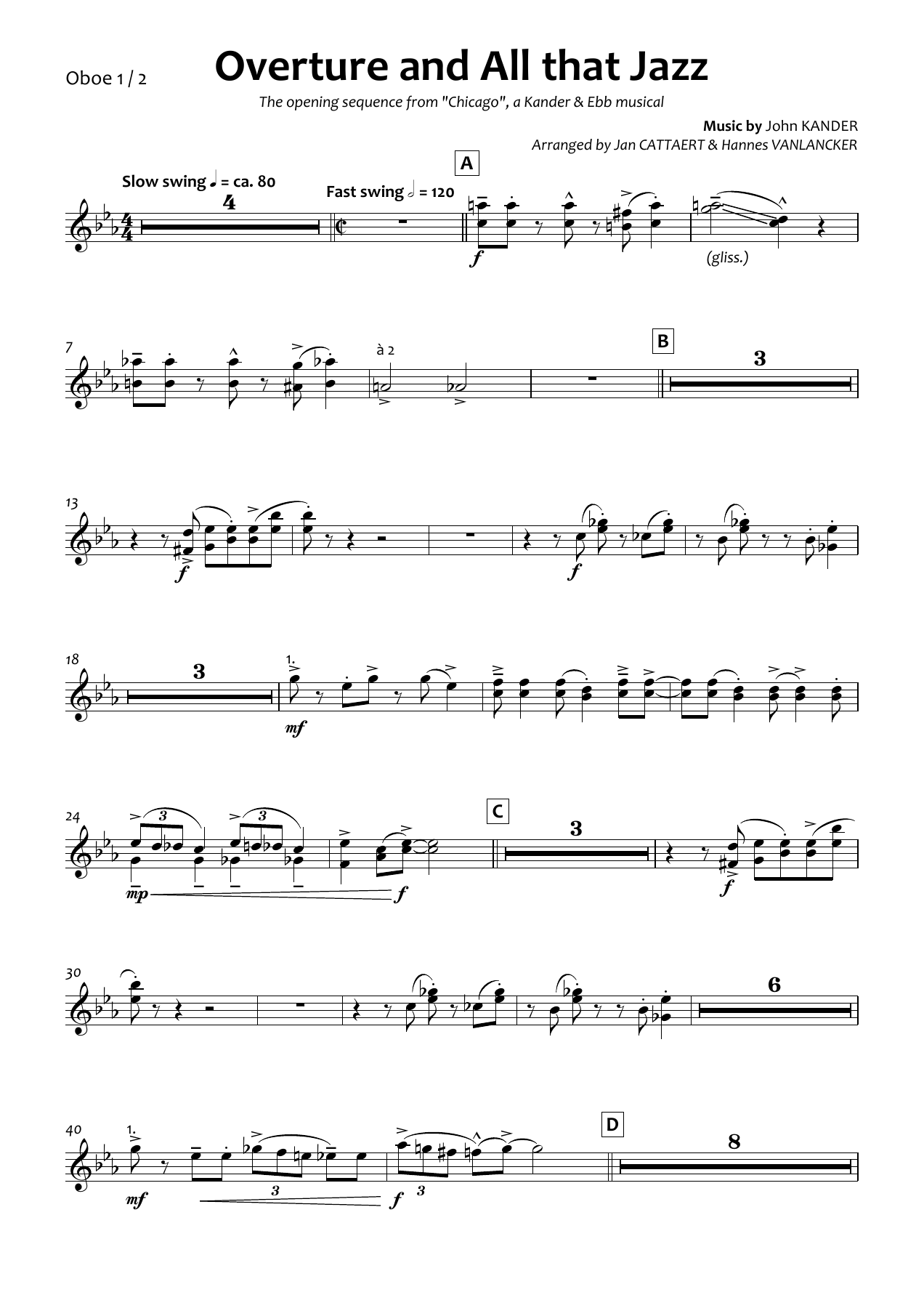
Oboe 1&2 (J.Vanlancker)
Composed by John KANDER
Arranged by Jan CATTAERT & Hannes VANLANCKER
- Ensemble: Concert Band
- Style: Traditional
- Pages: 4
- Difficulty: easy
- Content: Sheet Music
- Format: PDF Download (Instant)
- Price: $22.99
John Kander's "Oboe 1&2," originally penned for the iconic musical *Chicago*, stands as a testament to the enduring appeal of Broadway's Golden Age and its sophisticated blend of jazz and theatricality. Composed in 1975, the original work, with lyrics by Fred Ebb, quickly became a cornerstone of musical theatre, celebrated for its sharp wit, dramatic flair, and memorable melodies. While perhaps not a jazz standard in the traditional sense of a tune frequently re-interpreted by improvisers, its distinctive melodic and harmonic language, rooted in a classic Broadway-jazz aesthetic, lends itself remarkably well to instrumental exploration. The piece embodies a vibrant, often cynical, yet undeniably captivating energy, reflecting the Roaring Twenties setting of the musical. Its inherent theatricality and rhythmic drive make it a compelling choice for ensembles seeking material that bridges the gap between traditional concert repertoire and the dynamic world of jazz-influenced performance. This arrangement by Jan CATTAERT & Hannes VANLANCKER reimagines Kander's theatrical gem for concert band with a distinctly traditional musical style, emphasizing clarity, balance, and a rich orchestral texture. The arrangement maintains a bright, medium-tempo swing feel, typically around 120-130 BPM, allowing for both rhythmic precision and expressive melodic lines. While the original might evoke a darker, more cynical mood, this transcription elevates the inherent melodic beauty and rhythmic buoyancy, presenting it in a more celebratory, yet still sophisticated, light. The key signature is likely to be accessible, often in C or F major, ensuring a comfortable range for most instruments while allowing for vibrant harmonic colors. CATTAERT & VANLANCKER's approach is characterized by intelligent orchestration, ensuring that each section of the concert band contributes meaningfully to the overall tapestry without overwhelming the core melodic material. The arrangement skillfully distributes the melodic responsibilities, often featuring the woodwind section, particularly the clarinets and flutes, carrying the primary melodic statements, sometimes in unison or harmonized soli passages. The brass, while providing robust support and harmonic depth, also gets opportunities for punchy rhythmic figures and occasional counter-melodies. There are no extended improvised solos in this traditional concert band setting; instead, the focus is on ensemble precision and the collective interpretation of the written material. Technical challenges include maintaining a consistent swing eighth-note feel throughout the ensemble, precise articulation, and careful dynamic control to highlight the arrangement's nuanced voicings. The rewarding aspect lies in the opportunity to perform a well-known, engaging tune with a full, balanced sound, allowing the concert band to explore a repertoire piece with a strong theatrical lineage and a vibrant, accessible character. This makes it particularly suitable for advanced high school, community, and college concert bands looking to expand their repertoire with a piece that is both musically enriching and audience-friendly. Conductors should emphasize a consistent medium-swing eighth-note feel from the outset, ensuring that the rhythm section (if present, or implied by the wind parts) establishes a solid groove. Articulation is key; distinguish between legato phrases and crisp, detached figures to bring out the inherent rhythmic vitality. Pay close attention to dynamic contrasts, particularly in the soli sections, to create shape and prevent the arrangement from sounding flat. The main melodic lines, often in the upper woodwinds, require careful balancing to project clearly over the accompanying figures in the brass and lower reeds. Rehearsal should focus on precise ensemble entrances and cut-offs, especially in rhythmic interjections. While no special techniques like plunger mutes are typically required for a traditional concert band setting, ensure brass players maintain a warm, blended tone. The overall goal is a spirited, unified performance that captures the sophisticated energy of Kander's original while showcasing the concert band's expressive capabilities. Q: What instruments or parts are included in this arrangement? A: This arrangement is specifically for concert band, which typically includes full woodwind sections (flutes, oboes, clarinets, saxophones), brass sections (trumpets, horns, trombones, euphoniums, tubas), and a percussion section. The title "Oboe 1&2" indicates specific, perhaps prominent, parts for oboes within the larger concert band instrumentation. Q: What is the difficulty level of "Oboe 1&2 (J.Vanlancker)" for concert band? A: This arrangement is generally considered suitable for advanced high school, community, and college concert bands. It requires good ensemble precision, consistent articulation, and the ability to maintain a medium-swing feel, making it an engaging challenge without being overly virtuosic. Q: What musical style and historical context does this arrangement represent? A: This arrangement is in a traditional musical style, drawing from the original Broadway composition by John Kander for the musical *Chicago* (1975). It embodies a sophisticated, jazz-influenced theatrical sound characteristic of Broadway's mid-20th century, presented in a classic concert band setting. Q: What makes Jan CATTAERT & Hannes VANLANCKER's arrangement of "Oboe 1&2" unique? A: This arrangement distinguishes itself through its intelligent orchestration for concert band, which highlights the melodic beauty and rhythmic drive of Kander's original while maintaining a traditional, balanced sound. It focuses on ensemble precision and rich harmonic voicings rather than improvised solos, offering a fresh perspective on a well-known theatrical piece. Q: What is the typical performance duration and tempo of this piece? A: While exact duration can vary with interpretation, this medium-tempo swing piece typically performs in the range of 2-3 minutes. The recommended tempo is around 120-130 BPM, ensuring a lively and engaging performance.
Musicians Also Search For
Oboe 1&2 Jan CATTAERT & Hannes VANLANCKER PDF • Oboe 1&2 Jan CATTAERT & Hannes VANLANCKER sheet music • Oboe 1&2 arranged by Jan CATTAERT & Hannes VANLANCKER • Jan CATTAERT & Hannes VANLANCKER concert band charts • Jan CATTAERT & Hannes VANLANCKER jazz arrangements PDF • Oboe 1&2 John KANDER sheet music • Oboe 1&2 John KANDER concert band arrangement • John KANDER concert band charts • Oboe 1&2 concert band arrangement • Oboe 1&2 concert band PDF download • Oboe 1&2 jazz ensemble sheet music • concert band sheet music instant download • Oboe 1&2 sheet music with parts • Oboe 1&2 Traditional chart • Traditional concert band arrangements • buy Oboe 1&2 sheet music online • download Oboe 1&2 PDF • Oboe 1&2 jazz chart • best Jan CATTAERT & Hannes VANLANCKER concert band arrangements • John KANDER songs arranged by Jan CATTAERT & Hannes VANLANCKER • Oboe 1&2 printable sheet music • concert band repertoire PDF