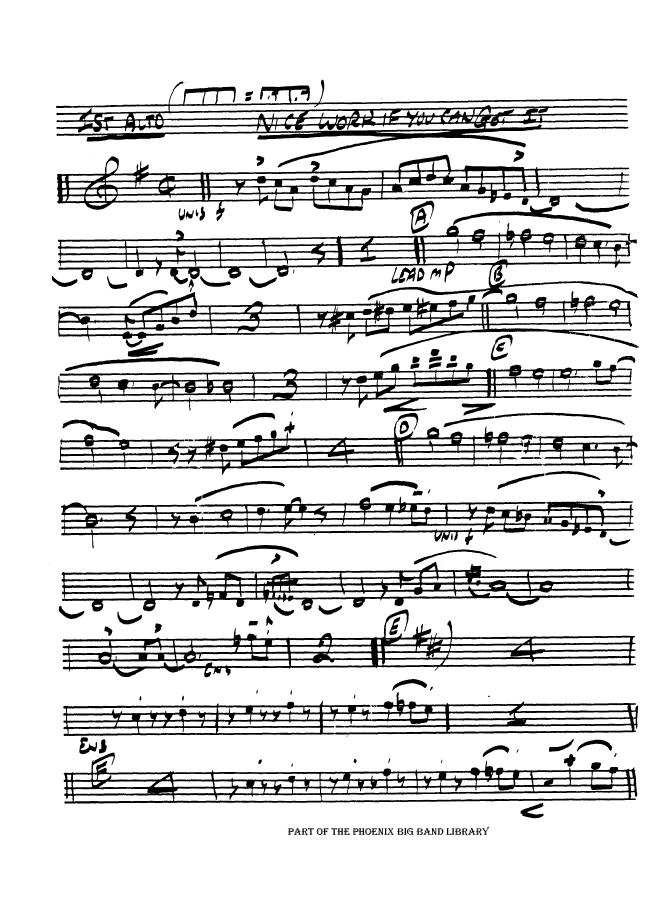
Nice Work If You Can Get It (J.Farley)
Composed by George Gershwin
Arranged by John Farley
- Ensemble: Big Band
- Pages: 25
- Instruments (16): 1st Alto Saxophone, 2nd Alto Saxophone, 1st Tenor Saxophone, 2nd Tenor Saxophone, Baritone Saxophone, 1st Trumpet, 2nd Trumpet, 3rd Trumpet, 4th Trumpet, 1st Trombone, 2nd Trombone, 3rd Trombone, 4th Trombone, Piano, Bass, Drums
- Difficulty: medium
- Content: Individual Parts
- Format: PDF Download (Instant)
- Price: $24.99
George and Ira Gershwin introduced "Nice Work If You Can Get It" in the 1937 musical *Damsel in Distress*, starring Fred Astaire, quickly cementing the tune as an indispensable pillar of the Great American Songbook. Throughout the mid-20th century, the composition transitioned effortlessly from Broadway staple to bebop and mainstream jazz vehicle, interpreted by legendary artists like Ella Fitzgerald, Frank Sinatra, and Oscar Peterson. Its infectious, optimistic melody and sophisticated harmonic progression make it a perennial favorite for jazz improvisers who relish its clever interplay between major and minor tonicizations. John Farley’s sophisticated big band interpretation frames this timeless classic in a brisk, invigorating medium-up swing tempo. Operating with a polished traditionalist aesthetic infused with modern harmonic color, Farley opens with an understated, rhythmic vamp before introducing the primary theme through crisp brass interjections and a flowing saxophone statement. The arrangement radiates an effervescent, high-spirited energy, evoking the golden era of swing while incorporating contemporary chord substitutions that enrich the Gershwin blueprint without obscuring its vintage charm. The overall mood shifts seamlessly from playful sophistication during the head arrangements to an exhuberant, full-ensemble momentum. Farley’s chart distinguishes itself through masterfully crafted sax soli sections that balance intricate linear movement with rich, block-chord voicings reminiscent of the classic Basie and Ellington libraries. The harmonic framework utilizes extended extensions—sharp-11s and flat-13s—that provide modern color tones for the rhythm section while remaining accessible to advanced scholastic ensembles. A dynamic, multi-tiered shout chorus serves as the structural climax of the arrangement, building tension through ascending brass counter-lines before dropping back into a sleek, understated tag ending that leaves audiences captivated. Advanced high school, collegiate, and professional community big bands will find this arrangement an ideal centerpiece for festival programs or formal concerts. The writing demands clean articulation, precise stylistic uniformity on swing eighth notes, and a cohesive rhythm section capable of maintaining a relentless, driving pocket. Solo opportunities are provided for tenor saxophone and piano, allowing featured improvisers ample space to stretch out over standard changes. Balancing demanding ensemble interplay with rewarding, crowd-pleasing moments, this chart stands out as an essential, high-impact addition to any advanced jazz library. Achieving the authentic, driving feel of this chart requires meticulous attention to the rhythm section, particularly the drummer, who must maintain a consistent, feather-light ride cymbal pattern at a brisk medium-up tempo. The bass player should anchor the ensemble with a steady walking quarter-note line, locking closely with the ride cymbal to create an irresistible forward momentum. Horn players must focus heavily on uniform articulation; short notes should be crisp and dry, while accented long notes need proper support without aggressive over-blowing. Pay close attention to the dynamic contrasts between the background figures and the featured soloists—horns should back off significantly to allow the melody and solo lines to breathe. The sax soli demands absolute rhythmic unison, requiring the section to rehearse slowly with a metronome before ramping up to performance speed. Conductors should ensure the brass section balances its volume during the shout chorus so that the high-register accents project brilliantly without masking the underlying harmonic movement in the lower reeds. Q: What instruments and parts are included in this big band arrangement? A: Scored for a standard 11-instrument ensemble, the instrumentation specifically includes Alto Saxophone, Baritone Saxophone, Bass, Drum Set, Piano, and complementary horn parts designed to fill out a dynamic jazz band texture. Q: What is the difficulty level of this arrangement? A: This chart is best suited for advanced high school, collegiate, and professional community big bands due to its brisk tempo, demanding sax soli passages, and requirement for tight ensemble articulation. Q: What is the musical style and historical context of the piece? A: Written in a classic medium-up swing style, this arrangement honors the 1937 George and Ira Gershwin standard while incorporating modern harmonic voicings inspired by the golden era of big band jazz. Q: What makes John Farley’s arrangement unique? A: Farley’s treatment stands out through its clever harmonic reharmonizations, intricate saxophone soli sections, and a meticulously constructed shout chorus that builds maximum tension before a sleek, understated ending. Q: What is the recommended performance duration and tempo for this chart? A: The arrangement is designed to be performed at a brisk medium-swing tempo (around 180-192 BPM), resulting in a performance duration of approximately 3.5 to 4 minutes depending on solo lengths.
Questions and answers
- What is included in the Nice Work If You Can Get It (J.Farley) PDF?
- The verified current file contains individual parts across 25 pages.
- How many instruments or parts are listed for Nice Work If You Can Get It (J.Farley)?
- The verified instrumentation list contains 16 entries for this Big Band arrangement.
- Who is credited for Nice Work If You Can Get It (J.Farley)?
- Composer: George Gershwin. Arranger: John Farley.
- What difficulty is listed for Nice Work If You Can Get It (J.Farley)?
- The verified difficulty level is medium.
- Can I preview Nice Work If You Can Get It (J.Farley) before buying?
- Yes. The product page provides a preview generated from the current PDF file.
- How is Nice Work If You Can Get It (J.Farley) delivered?
- After successful payment, the digital PDF is made available for download. The displayed price is $24.99.
Musicians Also Search For
Nice Work If You Can Get It John Farley PDF • Nice Work If You Can Get It John Farley sheet music • Nice Work If You Can Get It arranged by John Farley • John Farley big band charts • John Farley jazz arrangements PDF • Nice Work If You Can Get It George Gershwin sheet music • Nice Work If You Can Get It George Gershwin big band arrangements • George Gershwin big band charts • Nice Work If You Can Get It big band arrangements • Nice Work If You Can Get It big band PDF download • Nice Work If You Can Get It jazz sheet music • big band sheet music download • Nice Work If You Can Get It individual parts download • Nice Work If You Can Get It sheet music PDF • buy Nice Work If You Can Get It sheet music • download Nice Work If You Can Get It PDF • Nice Work If You Can Get It jazz charts • best John Farley big band arrangements • George Gershwin arranged by John Farley • Nice Work If You Can Get It printable sheet music • big band repertoire PDF